Fishing Calendar App
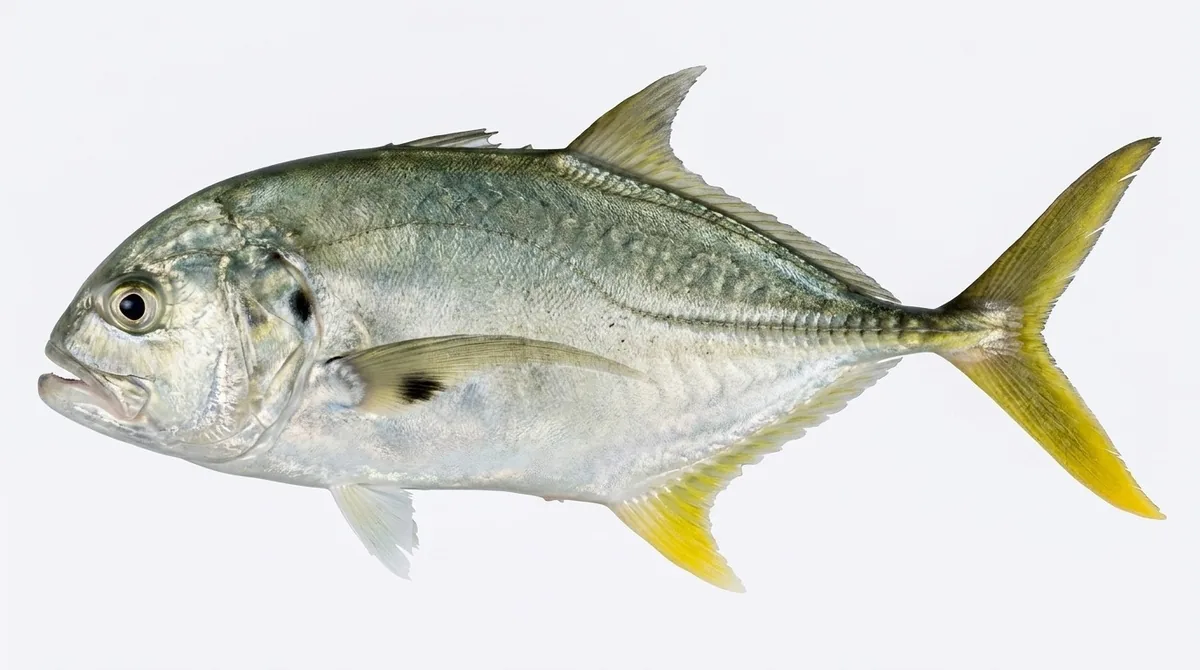
Crevalle jack
Caranx hippos
- Saltwater
- Least Concern
- Max length
- 124 cm
- Class
- Teleostei
- Order
- Carangiformes
- Family
- Carangidae
- Genus
- Caranx
- Atlantic, Eastern Central
- Atlantic, Northwest
- Atlantic, Southeast
- Atlantic, Southwest
- Atlantic, Western Central
- Pacific, Eastern Central
About the crevalle jack
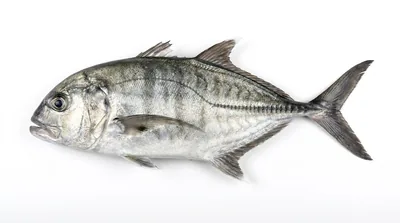
The crevalle jack (Caranx hippos), also known as the common jack, black-tailed trevally, couvalli jack, black cavalli, jack crevale, or yellow cavalli is a common species of large marine fish classified within the jack family, Carangidae. The crevalle jack is distributed across the tropical and temperate waters of the Atlantic Ocean, ranging from Nova Scotia, Canada to Uruguay in the western Atlantic and Portugal to Angola in the eastern Atlantic, including the Mediterranean Sea. It is distinguishable from similar species by its deep body, fin colouration and a host of more detailed anatomical features, including fin ray and lateral line scale counts. It is one of the largest fish in the genus Caranx, growing to a maximum known length of 124 cm and a weight of 32 kg, although is rare at lengths greater than 60 cm. The crevalle jack inhabits both inshore and offshore waters to depths of around 350 m, predominantly over reefs, bays, lagoons and occasionally estuaries. Young fish dispersed north by currents in the eastern Atlantic are known to migrate back to more tropical waters before the onset of winter; however, if the fish fail to migrate, mass mortalities occur as the temperature falls below the species' tolerance.
The crevalle jack is a powerful, predatory fish, with extensive studies showing the species consumes a variety of small fish, with invertebrates such as prawns, shrimps, crabs, molluscs and cephalopods also of minor importance. Dietary shifts with both age, location and season have been demonstrated, which led some researchers to postulate the species is indiscriminant in its feeding habits. The crevalle jack reaches maturity at 55 cm in males and 66 cm in females, with spawning taking place year round, although peaks in activity have been documented in several sites. The larval and juvenile growth has been extensively studied, with the oldest known individual 17 years of age. The crevalle jack is an important species to commercial fisheries throughout its range, with annual catches ranging between 1000 and 30 000 tonnes over its entire range. It is taken by a variety of netting methods, including purse nets, seines and gill nets, as well as hook-and-line methods. The crevalle jack is also a revered gamefish, taken both by lures and bait. The species is considered of good to poor quality table fare, and is sold fresh, frozen, or preserved, or as fishmeal or oil at market. The crevalle jack is closely related to both the Pacific crevalle jack and the longfin crevalle jack, the latter of which has been extensively confused with the true crevalle jack until recently.
Habitat
The crevalle jack lives in both inshore and offshore habitats, with larger adults preferring deeper waters than juveniles. In the inshore environment, crevalle jack inhabit shallow flats, sandy bays, beaches, seagrass beds, shallow reef complexes and lagoons. The species is also known to enter brackish waters, with some individuals known to penetrate far upstream; however, like most euryhaline species, they generally do not penetrate very far upriver.
The water salinities where the species has been reported from range from 0% to 49%, indicating the species can adapt to a wide range of waters. Studies in West Africa found marked differences in the sex ratios of populations in brackish waters, with females very rarely seen in such environments once they are mature. Research in the coastal waters of Ghana suggests the availability of food is the primary control on the species distribution in inshore waters.
Adults that move offshore generally do not leave continental shelf waters, however still penetrate to depths of 350 m, and possibly deeper. These individuals live on the outer shelf edges, sill reefs and upper slopes of the deep reef, and tend to be more solitary than juveniles. Adults have also been sighted around the large oil rig platforms throughout the Gulf of Mexico, where they use the man-made structure like a reef to hunt prey. The larvae and young juveniles of the species live pelagically offshore along the continental shelf and slope, and are also known to congregate around oil platforms, as well as natural floating debris such as sargassum mats.
Distribution
The crevalle jack inhabits the tropical and temperate waters of the Atlantic Ocean, ranging extensively along both the eastern American coastline and the western African and European coastlines. In the western Atlantic, the southernmost record comes from Uruguay, with the species ranging north along the Central American coastline, and throughout the Caribbean and many of the numerous archipelagos within. The species is found throughout the Greater Antilles, however it is absent from the leeward Lesser Antilles, with its distribution being patchy throughout other Caribbean archipelagos. From the Gulf of Mexico, its distribution extends north along the U.S. coast and as far north as Nova Scotia in Canada, also taking in several northwest Atlantic islands. The crevalle jack is also known from Saint Helena Island in the southern Atlantic Ocean.
In the eastern Atlantic, the southernmost record comes from Angola, with the species distributed north along the west African coastline up to West Sahara and Morocco, with its distribution also including much of the Mediterranean Sea. In the Mediterranean, its range extends as far east as Libya in the south and Turkey in the north, and includes most of the northern Mediterranean, including Greece, Italy and Spain. The species' northernmost record in the eastern Atlantic comes from Portugal, with the species also known to inhabit many of the northeastern Atlantic islands, including Cape Verde, Madeira Island, and the Canary Islands.
Many older publications list the species range as from the eastern Pacific, which now is known to represent the Pacific crevalle jack and is considered a distinct species. There are also often mentions of the species erroneously having circumtropical and Indian Ocean distributions, with these records probably attributable to similar Indo-Pacific species, namely the blacktip trevally and giant trevally. The species distribution overlaps that of the similar longfin crevalle jack in the eastern Atlantic, with careful identification needed to distinguish the two. Within the Atlantic, confusion with both longfin crevalle jack and horse-eye jack, Caranx latus, have also led to erroneous records being made, with Smith-Vaniz and Carpenter suggesting this occurred in the Mediterranean, and the species may actually be absent from waters north of Mauritania.
Behaviour
The crevalle jack is a powerful predatory fish which predominantly takes other small fishes as prey at all stages of its life, with various invertebrates generally being of secondary importance to its diet. Several studies conducted on the species' diet over its range have found other aspects of its diet vary widely, including the specific types of prey the species takes and the change in diet with age. The most detailed of these studies was conducted in the Southern USA, which showed the species diet comprised between 74% and 94% fish. The remainder of the diet was various prawns, shrimps, crabs, molluscs and stomatopods. The types of fish taken varied throughout the range, with members of Clupeidae, Sparidae, Carangidae and Trichiuridae all taken in variable amounts, usually with members of one family dominating the local diet. The percentage of various invertebrates also was highly variable, with penaeid shrimps, portunid crabs, stomatopods and squid being of importance to different populations. The study also indicated young crevalle jack predominantly take clupeids, adding sparids and later carangids to their diets as they grow larger. The larger individuals also took much higher amounts of invertebrates, and also small quantities of seagrass, indicating larger fish are more opportunistic. This general change in diet with age also seems spatially variable, with young crevalle jack in both Maryland and Puerto Rico consuming almost exclusively crustaceans, including shrimps, crabs (and juvenile tarpon) in Maryland and harpacticoid copepods in Puerto Rico before moving to fish-dominated diets later in life. Research in Ghana shows a pattern somewhat intermediate to the previous two locations; adults take larger fish, predominantly Engraulis guineensis and Sardinella eba, while juvenile fish take smaller fishes such as Epiplatys sexfasciatus or juvenile caridean and penaeid shrimps.
The widely variable diet of the species throughout its life stages led authors in the 1950s and 1960s to conclude the species was indiscriminate in its feeding habits, eating whatever was locally available. The diets of the populations in both the southern USA and Ghana also varied quite markedly by season and year, which led the authors of both these studies to agree with these earlier conclusions. Recent laboratory studies, however, have shown the species may have preferences for certain sizes of prey. In these experiments, the fish were presented with a range of size classes of the same prey species, Menidia beryllina, with the results showing they prefer to take the smallest size class possible, which contrasts with more aggressive predators, such as bluefish. Both adults and juveniles feed throughout the day, generally becoming inactive at night. During some feeding periods recorded in Ghana, digestion in the species was so rapid that food becomes unidentifiable within four to five hours of consumption. The crevalle jack is also an important prey species itself, taken by larger fish, such as billfish and sharks, as well as seabirds. As well as being preyed on during its adult stage, the spawn of the crevalle jack is known to be eaten by planktivorous organisms, including whale sharks in the Caribbean.
Description from Wikipedia, available under CC BY-SA.
Where the crevalle jack lives
Distribution data from GBIF (DOI: 10.15468/dl.8rzs8d).
Also known as
- Common jack
- Crevalle
- Jack
- Black cavalli
- Black-tailed trevally
- Couvalli jack
- Trevally
- Yellow cavalli
- Caballa
- Jurel común
- Carangue crevalle
- Cavalla
- Karanks atlantycki
- Atlantski trnobok
- Sorella castanyola
- Paardmakreel
- Большой каранкс
- شيم حصاني
- شيم حصانى
- Кревал
- Αλογοκοκκάλι
- شاهگیش دمسیاه
- צנינית היפוס
- Каранг великий
- 馬鰺
Where to catch crevalle jack
- Cape Cod Bay United States Bay · Massachusetts
- Cape Fear River United States River · North Carolina
- Chesapeake Bay United States Estuary · Maryland and Virginia
- Delaware Bay United States Bay · Delaware-New Jersey
- Florida Bay (Everglades) United States Bay · Florida
- Florida Keys United States Coast · Florida