Fishing Calendar App
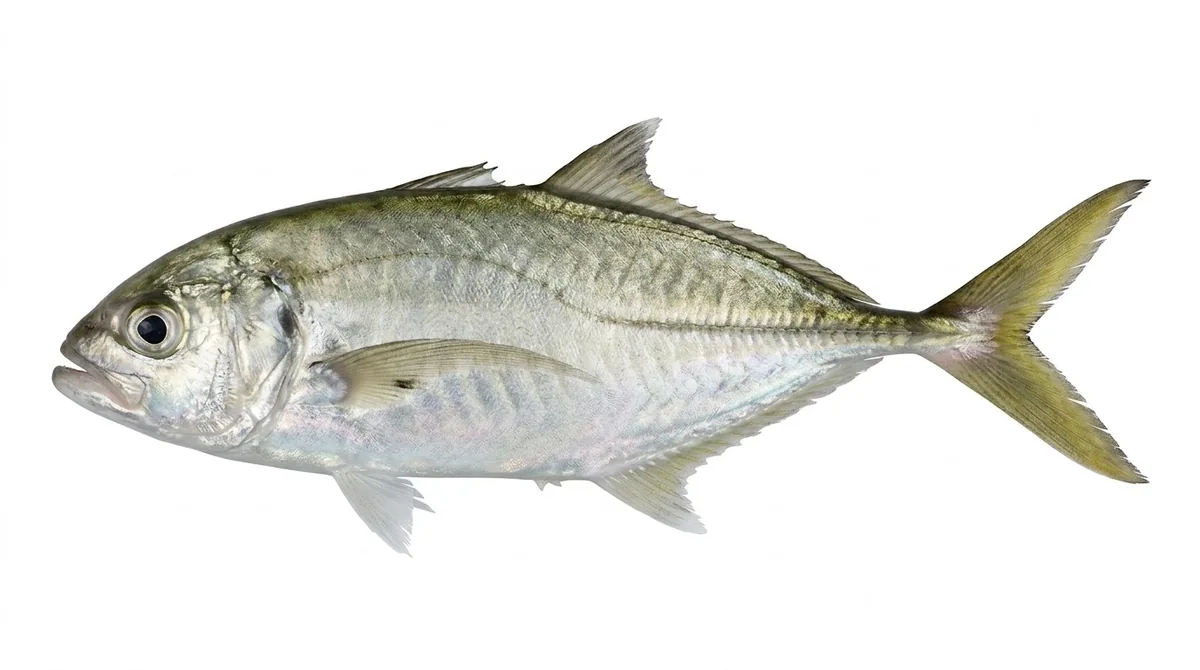
Blue runner
Caranx crysos
- Saltwater
- Least Concern
- Max length
- 70 cm
- Class
- Teleostei
- Order
- Carangiformes
- Family
- Carangidae
- Genus
- Caranx
- Atlantic, Eastern Central
- Atlantic, Northwest
- Atlantic, Southwest
- Atlantic, Western Central
- Mediterranean and Black Sea
About the blue runner
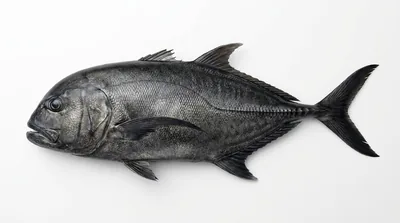
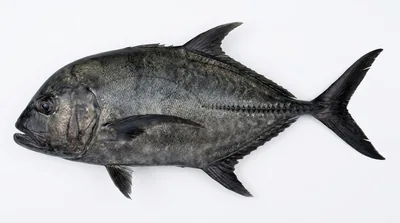
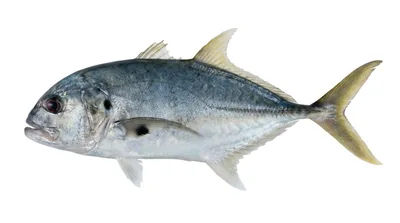
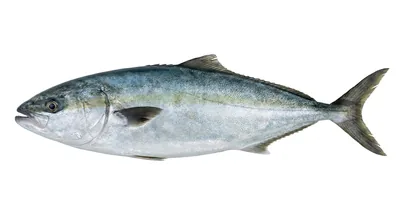
The blue runner (Caranx crysos), also known as the bluestripe jack, Egyptian scad, hardtail jack, or hardnose, is a common species of moderately large marine fish classified in the jack family, Carangidae. The blue runner is distributed across the Atlantic Ocean, ranging from Brazil to Canada in the western Atlantic and from Angola to Great Britain including the Mediterranean in the east Atlantic. The blue runner is distinguished from similar species by several morphological features, including the extent of the upper jaw, gill raker count, and lateral line scale counts. The blue runner is known to reach a maximum length of 70 cm and 5.05 kg in weight, but is much more common below 35 cm. The species inhabits both inshore and offshore environments, predominantly over reefs, but it is known to congregate around large, man-made, offshore structures such as oil platforms. Juveniles tend to inhabit shallower reef and lagoon waters, before moving to deeper waters as adults.
The blue runner is a schooling, predatory fish, predominantly taking fish in inshore environments, as well as various crustaceans and other invertebrates. Fish living offshore feed nearly exclusively on zooplankton. The species reaches sexual maturity between 225 and 280 mm across its range, with spawning occurring offshore year-round, although this peaks during the warmer months. Larvae and juveniles live pelagically, often under sargassum mats or jellyfish until they move inshore. The blue runner is of high importance to fisheries, with an annual catch between 6000 and 7000 tonnes taken from the Americas in the last five years. The species is also a light-tackle gamefish, taking baits, lures, and flies, but is often used as bait itself, being a mediocre table fish. Some suggest that the eastern Pacific species Caranx caballus, the green jack, may be conspecific with C. crysos, although this currently remains unresolved.
Habitat
The blue runner is primarily an inshore fish throughout most of its range, but it is known to live on reefs in water depths greater than 100 m. Throughout much of its Central American range, it is quite rare inshore, instead more commonly sighted on the outer reefs. The blue runner is primarily a semipelagic fish, inhabiting both inshore reefs and the outer shelf edges, sill reefs, and upper slopes of the deep reef. Those individuals on shallower reefs often move between reef patches over large sand expanses. Juvenile fish are also known to inhabit the shallow waters of inshore lagoons, taking refuge around mangroves or in seagrass amongst coral reef patches. Fishermen have also taken the species in the Mississippi Delta, indicating it can tolerate lower salinities in almost estuarine environments.
Blue runner are easily attracted to any large underwater or floating device, either natural or man made. Several studies have shown the species congregates around floating, buoy-like fish aggregating devices, both in shallower waters and in extremely deep (2500 m) waters, indicating the species may move around pelagically. In these situations, blue runner always form small aggregations at the water surface, while other larger species tend to congregate slightly deeper. A number of investigations around oil and gas platforms in the Gulf of Mexico have found blue runner congregate in large numbers around these in the warmer months, where they modify their feeding behavior to take advantage of the structure. Purpose-built artificial reefs and marine aquaculture cage structures are also known to attract the species, with the former having the added benefit of dispersing wayward food scraps.
Distribution
The blue runner is extensively distributed throughout the tropical and temperate waters of the Atlantic Ocean, ranging widely along both the eastern American coastline and the western African and European coastlines. In the western Atlantic, the species' southernmost record comes from Maceio, Brazil, with the species ranging north along the Central American coastline, and throughout the Caribbean and the numerous archipelagos throughout. From the Gulf of Mexico, its distribution extends north along the U.S. coast and as far north as Nova Scotia in Canada, also taking in several north-west Atlantic islands. The blue runner is also present on several central Atlantic islands, making its distribution Atlantic-wide.
In the eastern Atlantic, the southernmost record is from Angola, with the blue runner distributed extensively along the west African coast north to Morocco and into the Mediterranean Sea. The blue runner is found throughout the Mediterranean, having been recorded from nearly all the countries on its shores. The species is rarely found north of Portugal in the north-east Atlantic, although records do exist of isolated catches from Madeira Island and Galicia, Spain. The furthest north it has been reported is southern Great Britain, where two specimens were taken in 1992 and 1993. A trend has been seen of having this and other tropical species found further north more often, with publications indicating the blue runner has recently established stable populations in the Canary Islands, where it had been rarely sighted. Some authors have attributed this northward migration to rising sea surface temperatures, possibly the result of climate change.
Behaviour
The blue runner is a fast-swimming predator, which primarily takes small, benthic fishes as prey in inshore waters. Studies on the species' diet on both side of the Atlantic have shown similar results. A Puerto Rican study found the species supplements its fish-dominated diet with crabs, shrimp, copepods, and other small crustaceans. More detailed research in Cape Verde found as well as fish, blue runner take shrimp, prawns, lobsters, jellyfish, and other small invertebrates. The diet of juveniles is more zooplankton-dominated, with young fish predominantly taking cyclopoid and calanoid copepods, and gradually moving to a more fish-based diet. Adults living offshore or aggregating around oil and gas platforms tend to have less fish in their diet, foraging extensively on larger zooplankton during the summer, with larval decapods and stomatopods, hyperiid amphipods, pteropods, and larval and juvenile fishes also taken.
Studies around these platforms has found blue runner feed with equal intensity during both day and night, with larger prey such as fish taken preferentially at night, with smaller crustaceans taken during the day. Blue runner are one of a number of carangids known to forage in small schools alongside actively feeding spinner dolphins (Stenella longirostris), taking advantage of any scraps of food left by the feeding mammals, or any organisms displaced while they forage. The species is also known to eat the dolphins' excrement. As well as being important predators, they are also important prey to many larger species, including fishes, birds, and dolphins.
Description from Wikipedia, available under CC BY-SA.
Where the blue runner lives
Distribution data from GBIF (DOI: 10.15468/dl.8rzs8d).
Also known as
- Hardtail
- Bluestripe jack
- Egyptian scad
- Hardnose
- Jack
- Hardtail jack
- Leccia
- Cojinua negra
- Cojinuda negra
- Jurel
- Carangue coubali
- Carangue jaune
- Pompano
- Sorella del sud
- Kpetometsiyi
- Sinipiikkimakrilli
- Trakun balığı
- Золотистый каранкс
- شيم أزرق
- شيم ازرق
- Златист кревал
- Τραχούρι
- شاهگیش دمسفت
- கும்புளாப் பாரை
- 金鰺
Where to catch blue runner
- Dubrovnik Coast Croatia Coast · Dubrovnik-Neretva
- Istria Coast Croatia Coast · Istria
- Kornati Archipelago Croatia Archipelago · Šibenik-Knin
- Kvarner Gulf Croatia Gulf · Kvarner
- Neretva Delta Croatia Delta · live river data
- Pag Channel Croatia Channel · Zadar