Fishing Calendar App
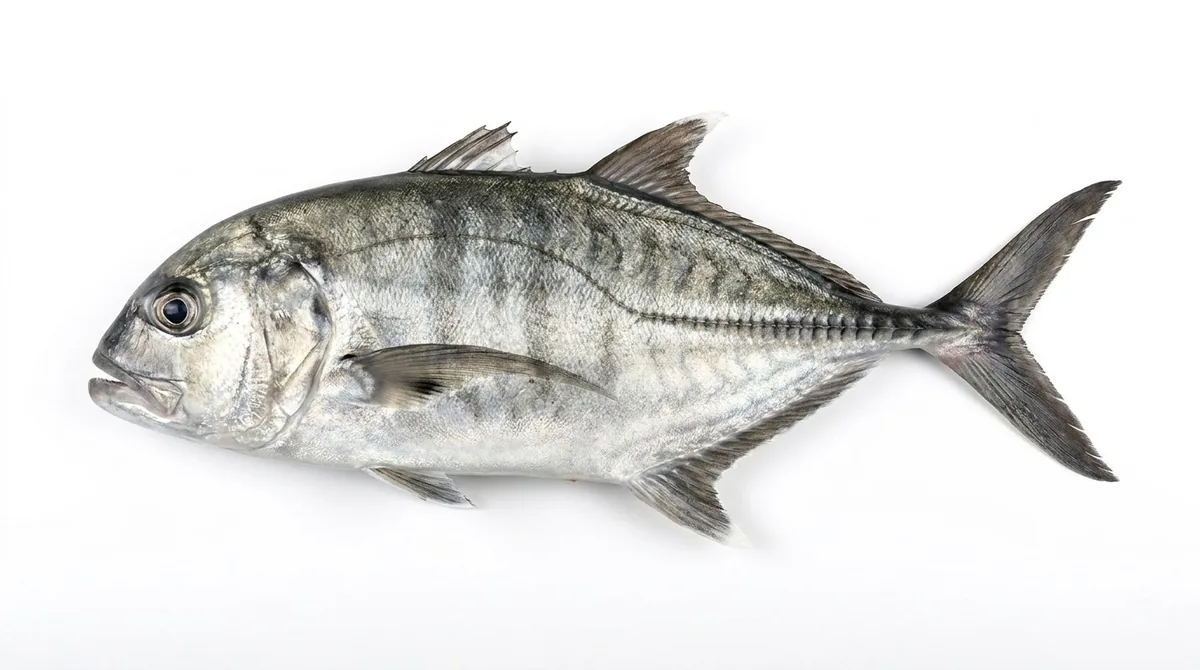
Bigeye trevally
Caranx sexfasciatus
- Freshwater & Saltwater
- Least Concern
- Max length
- 120 cm
- Class
- Teleostei
- Order
- Carangiformes
- Family
- Carangidae
- Genus
- Caranx
- Africa - Inland waters
- Asia - Inland waters
- Indian Ocean, Eastern
- Indian Ocean, Western
- North America - Inland waters
- Oceania - Inland waters
- Pacific, Eastern Central
- Pacific, Northwest
- Pacific, Southeast
- Pacific, Western Central
About the bigeye trevally
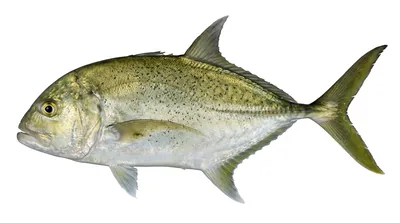
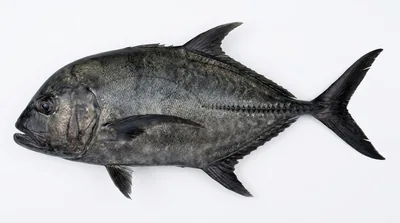
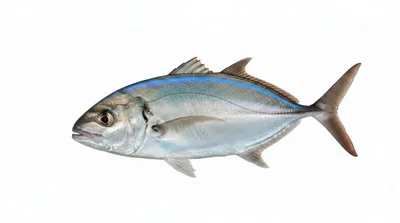
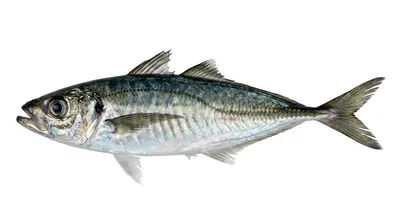
The bigeye trevally (Caranx sexfasciatus), also known as the bigeye jack, great trevally, six-banded trevally and dusky jack, is a species of widespread large marine fish classified in the jack family Carangidae. The bigeye trevally is distributed throughout the tropical waters of the Indian and Pacific Oceans, ranging from South Africa in the west to California and Ecuador in the east, including Australia to the south and Japan in the north. The bigeye trevally is best distinguished by its colouration, having a dark second dorsal fin with a white tip on the lobe, and also possessing a small dark spot on the operculum. Other more detailed anatomical features also set the species apart from other members of Caranx. The species is known to grow to a length of 120 cm and 18 kg.
It is predominantly an inshore fish, inhabiting reefs down to depths of around 100 m in both coastal zones and offshore islands, often venturing into estuaries and sandy bays as juveniles. The bigeye trevally is commonly found in large slow moving schools during the day, becoming active at night when it feeds, taking a variety of fish, crustaceans, cephalopods and other invertebrates. The fish is known to move from a more crustacean dominated diet as a juvenile to a nearly completely fish dominated diet as an adult. Sexual maturity is reached at 42 cm, with spawning occurring in large aggregations occurring at different periods throughout its range, generally between July and March. The bigeye trevally is of moderate importance to fisheries throughout its range, and being of high importance to some artisanal fisheries. It is taken by gill net, purse seine, hook and line and other artisanal fishing methods. It is rated as a fair to good table fish. The species is also considered a good gamefish, taken by lure, bait and spear throughout its range.
Distribution
The bigeye trevally is widely distributed throughout the tropical and subtropical waters of both the Indian and Pacific Oceans. In the Indian Ocean, it ranges from South Africa and Madagascar in the west, along the east African coastline up to both the Red Sea and Persian Gulf. Its range extends east along India, South East Asia, Indonesia and many offshore Indian Ocean islands. The range extends north to Japan and south to Australia in this central Indo-pacific region. In the Pacific Ocean, the bigeye trevally inhabits most of the tropical island groups including Hawaii,
with its range extending east to the western American coastline. In this eastern region of its distribution it has been recorded from the American state of California in the north, including the Gulf of California, and south to Ecuador and the Galapagos Islands.
The bigeye trevally predominantly live in inshore coastal waters, although does occur in pelagic settings far offshore, and around remote islands and seamounts. The species is known to reach depths of around 100 m. It is mostly found over coral and rocky reef complexes as adults, however often moves into more inshore areas in sandy bays and lagoons in small numbers. Those that live offshore often live on deeper seamounts or reefs around offshore islands. The species moves with the tide in some regions, entering shallow lagoonal areas as the tide rises, and moving back to the deeper reefs as it retreats. Juveniles inhabit more inshore, shallower waters around the coast, often venturing into lagoons, tidal flats, mangrove zones and even estuaries. Juvenile bigeye trevally have been reported in rivers from several locations, and are known to penetrate well into the upper reaches of rivers.
As the fish grows, it moves back to deeper waters over reefs. The species has been reported in pelagic open ocean settings, milling around stationary buoys, indicating the species may follow floating debris far out to sea.
Behaviour
The bigeye trevally is a fast-swimming predatory species that has had several studies determine its diet in various places throughout its distribution. As mentioned above, the species is mostly inactive during the day, and feeds at dusk and through the night. The large stationary aggregations break off as the fish move off to hunt in small groups or individually. The species predominantly takes small fish as prey, however supplements its diet with a varied array of invertebrates. These include crustaceans such as shrimps, decapods, copepods and stomatopods, cephalopods, gastropods, jellyfish, sponges and even species of open ocean sea-skater insects. Bigeye trevally were found to be the primary fish predators of these sea-skates, and took far more of these than any other species of carangid. Evidence from South African estuaries indicates there is a shift in the species diet as it grows. Young fish below 200 mm in length take mostly the juveniles of other fish species but still have a significant intake of penaeid shrimps, while fish larger than this take small fish nearly exclusively. The larger fish on reefs tend to move between these reefs regularly, which is thought to be due to prey availability. Bigeye trevally are also an important prey for larger species, ranging from sharks and larger species of carangid to sea lions and various birds.
Description from Wikipedia, available under CC BY-SA.
Where the bigeye trevally lives
Distribution data from GBIF (DOI: 10.15468/dl.8rzs8d).
Also known as
- Bigeye jack
- Six-banded trevally
- Great trevally
- Jurel voraz
- Karanks smugowy
- Carangue
- Carangue à gros yeux
- Mirah mata
- Grootoog-koningvis
- Siniraitapiikkimakrilli
- Kuwe tengkek
- Belokok putih
- Шестиполосый каранкс
- Каранкс шестиполосый
- 줄전갱이
- ギンガメアジ
- ހަލުވި މަސް
- گیشماهی چشمدرشت
- צנינית גדולת-עין
- കണ്ണൻ വറ്റ
- ஊசிப்பாரை
- ปลาสีขน
- Cá khế sáu sọc
- 六帶鰺
Where to catch bigeye trevally
- Arkansas River at Salida United States River · live river data
- Cape Fear River United States River · North Carolina
- Green River (Flaming Gorge) United States River · live river data
- Kenai River United States River · Alaska
- Kentucky Lake United States Reservoir · Kentucky-Tennessee
- Lake Champlain United States Lake · live river data