Fishing Calendar App
Queen parrotfish
Scarus vetula
- Saltwater
- Least Concern
- Max length
- 61 cm
- Class
- Teleostei
- Order
- Eupercaria incertae sedis
- Family
- Labridae
- Genus
- Scarus
- Atlantic, Western Central
About the queen parrotfish
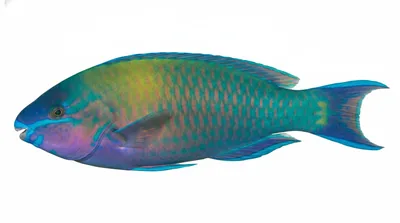
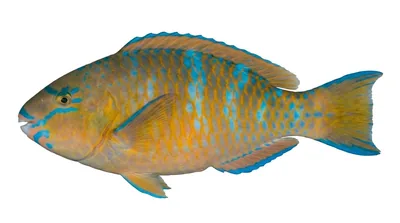
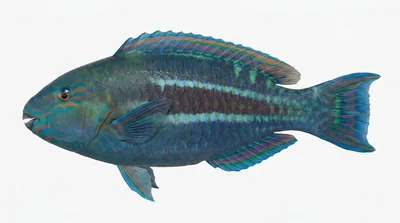
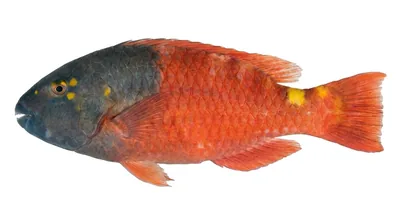
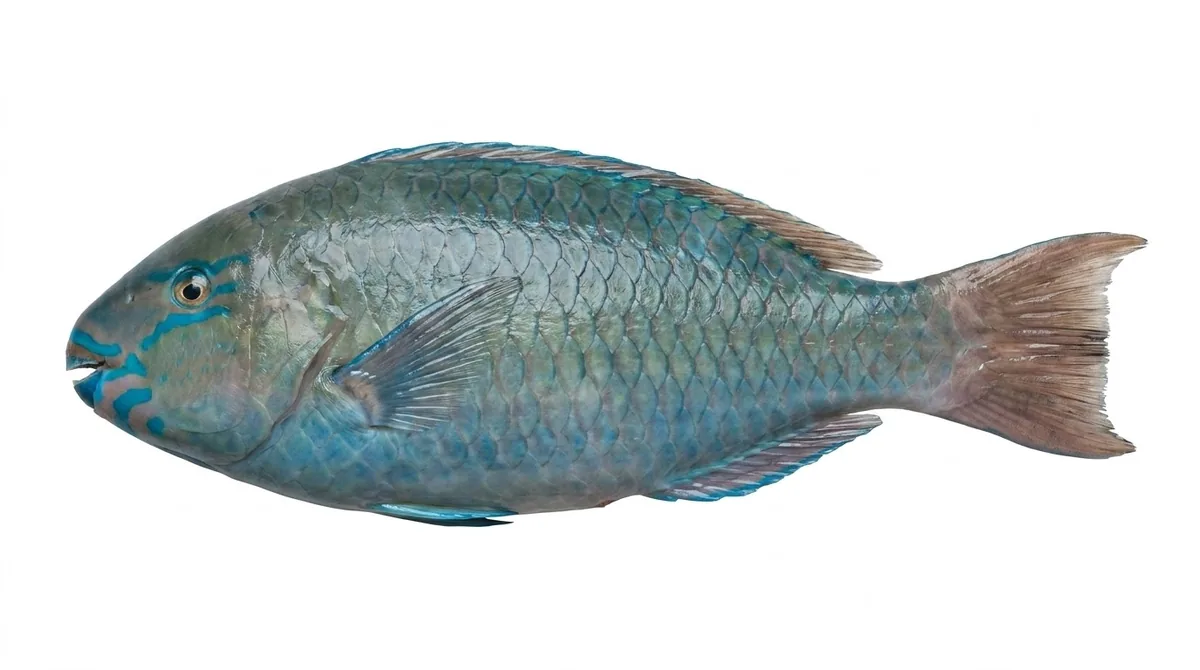
The queen parrotfish (Scarus vetula), is a species of parrotfish or marine ray-finned fish that belongs to the family Labridae, part of the subfamily Scarinae. It is found on reefs in the tropical West Atlantic Ocean and the Caribbean Sea. Other common names include blownose, blue chub, blue parrotfish, blueman, joblin crow parrot, moontail, okra peji and slimy head. The initial phase is female, displaying a reddish-brown color, and quite different in appearance from the bluish-green color of the final phase male. This is a common species throughout its range and the International Union for Conservation of Nature has rated its conservation status as "least concern".
Habitat
The queen parrotfish is native to the tropical West Atlantic Ocean, the Caribbean Sea and the southern Gulf of Mexico. It is found on both rocky and coral reefs at depths down to about 25 m (80 ft). The queen parrotfish feeds primarily on the algal turf it can scrape off surfaces, and coral from coral reefs, but may also eat sponges and other encrusting organisms as it feeds. As part of the Scarus genera, all species display the same feeding mode, as opposed to the Sparisoma genera, which employs 3 distinct feeding modes. In the process, it swallows a lot of mineral particles which are deposited on the seabed as fine sand. Depending on the species and size, different rates of sediment deposition are achieved throughout the reef. It is a diurnal fish, and rests on the seabed or hides in a crevice at night, immersed in a layer of mucus that it exudes and which may help to disguise it from predators. This mucus acts a cocoon, composed of a complex disulphate bonded network or glycoproteins. This protection then serves crucial as queen parrotfish can be preyed on by a variety of predators, such as sharks, groupers and eels. Parrotfishes serve multiple functions in a reef based on their feeding modes, including: scraping, excavating and browsing. These functions are based on differences in jaw morphology that permit different amounts of substrate to be removed. For example, the stoplight parrotfish (Sparisoma viride) is an "excavator" and degrades the surface of coral colonies, but Scarus vetula is a "scraper", causing erosion of carbonate materials from corals but to a lesser extent than S. viride. It has been shown that S. vetula has a higher bite rate than S. viride, which implies that forging behavior is different not only from a morphology perspective, but from a functional perspective. Both species have robust jaws with crenelated margins and strong jaw muscles, and large individuals of S. vetula can do considerable damage to corals as they scrape off their food.
They are protogynous hermaphrodites, where the initial phase is female and the terminal phase is male. They are often found in small groups of four or five, consisting of one final-phase male and several initial-phase females. During courtship, the male constantly circles a female until they join and both simultaneously release spawn into the sea. After fertilization, the eggs hatch and the developing larvae form part of the plankton.
Description from Wikipedia, available under CC BY-SA.
Where the queen parrotfish lives
Distribution data from GBIF (DOI: 10.15468/dl.8rzs8d).
Also known as
- Green parrotfish
- Loro reina
- Pesk-peroked roueel
- ക്വീൻ പാരറ്റ് ഫിഷ്
- 皇后鸚嘴魚
Where to catch queen parrotfish
- Cape Fear River United States River · North Carolina
- Florida Bay (Everglades) United States Bay · Florida
- Florida Keys United States Coast · Florida
- Galveston Bay United States Bay · Texas
- Lake Pontchartrain United States Lake · Louisiana
- Port Aransas United States Coast · Texas