Fishing Calendar App
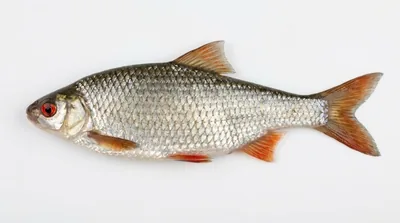
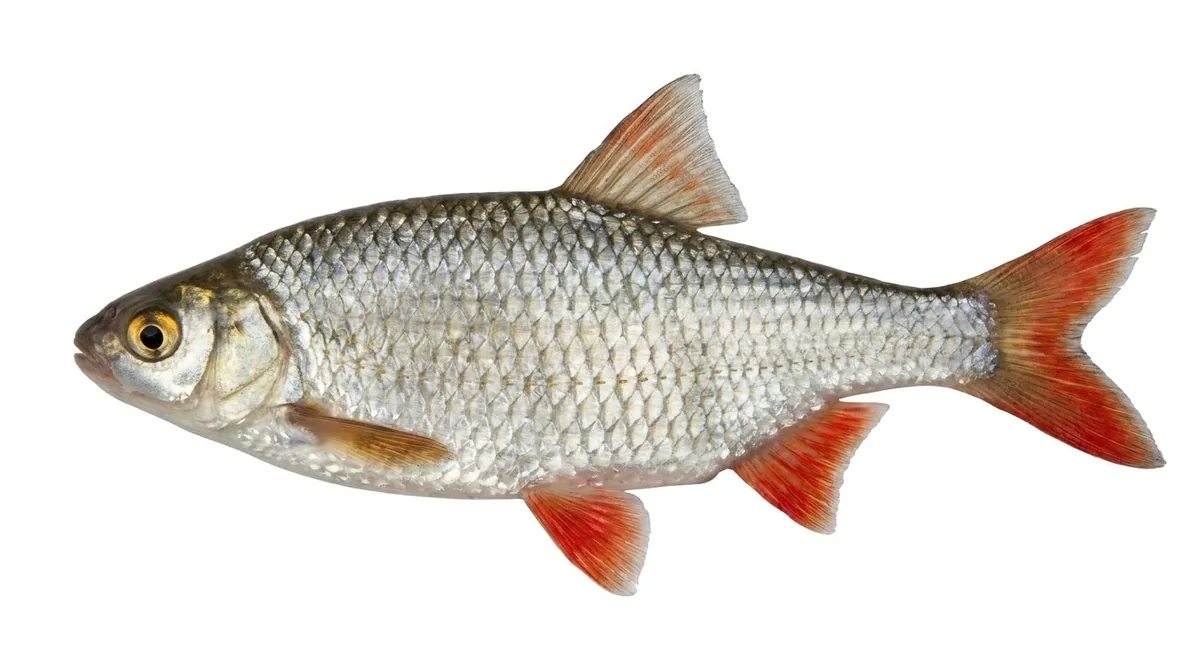
Common rudd
Scardinius erythrophthalmus
- Freshwater
- Least Concern
- Max length
- 50 cm
- Class
- Teleostei
- Order
- Cypriniformes
- Family
- Cyprinidae
- Genus
- Scardinius
- North America - Inland waters
- Asia - Inland waters
- Europe - Inland waters
About the common rudd
The common rudd (Scardinius erythrophthalmus) is a bentho-pelagic freshwater ray-finned fish belonging to the family Leuciscidae. This species is widely spread in Europe and central Asia, around the basins of the North, Baltic, Black, Caspian and Aral seas.
Habitat
Rudd prefer clear waters rich in plants. They also feed on aquatic vegetation when the temperature exceeds 18 °C. They hunt for living prey in the upper levels. They prefer mesotrophic waters, while the roach is sometimes found together with the perch in waters that are nutrient poor. Rudd appear to prefer non-acidic water.
It prefers shallow weedy areas in lakes and river backwaters, where mature females lay up to 200,000 eggs on submerged vegetation. Young rudd eat zooplankton, aquatic insects, and occasionally other small fish. Mature rudd, which are about 18" in length and weigh about 3 pounds, eat mostly aquatic vegetation. The rudd can consume up to 40% of their body weight in vegetation per day, as much as 80% of which is discharged as waste, releasing nutrients into the water column. They can tolerate a wide range of temperatures and water conditions, including eutrophic or polluted waters. In the laboratory rudd readily hybridize with the U.S. golden shiner (Notemigonus crysoleucas). They come in both silver and gold, and are sometimes sold as pond ornamentals.
Maximum lifespan has been reported as 17 years. Sexual maturity has been reported at 2–3 years.
Description from Wikipedia, available under CC BY-SA.
Where the common rudd lives
Distribution data from GBIF (DOI: 10.15468/dl.8rzs8d).
Also known as
- Rudd
- Rdečeperka
- Escardinio
- Gardí
- Rotengle
- Gardon rouge
- Rotfeder
- Rotblei
- Rötel
- Unechtes Rotauge
- Wzdręga
- Sarv
- Sørv
- Rodakė
- Mandog ruz
- Perlín ostrobřichý
- Plita
- Pysgodyn Rhudd
- Rudskalle
- Ruĝokula skardinio
- Roosärg
- Eskardinio begigorri
- Sorva
- Ruán
- Vörösszárnyú keszeg
- Paprastoji raudė
- Rudulis
- Ruisvoorn
- Camuse
- Roșioară
- Scardinius erythropthalmus
- Rotse
- Crvenperka
- Kızılkanat
- Краснопёрка
- Красноперка обыкновенная
- ラッド
- Qızılüzgəc
- Ҡыҙылғанат
- Краснапёрка
- Червеноперка
- Хĕрлĕ çунат
- Κοκκινοφτέρα
- سرخباله معمولی
- ფარფლწითელა
- Якстерь паця
- Писа
- Парсыншылдыр
- Лепе кал
- Бочіця
- Црвенперка
- Кызылканат
- Краснопірка звичайна
- 紅眼魚
- رود المشترك
Where to catch common rudd
- Achensee Austria Lake · Tyrol
- Attersee Austria Lake · live river data
- Danube River at Vienna Austria River · Vienna
- Inn River at Innsbruck Austria River · live river data
- Neusiedler See Austria Lake · live river data
- Traunsee Austria Lake · live river data