Fishing Calendar App
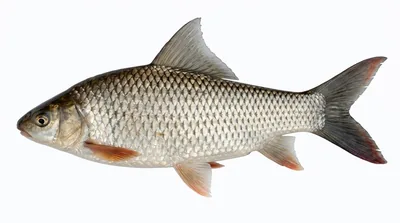
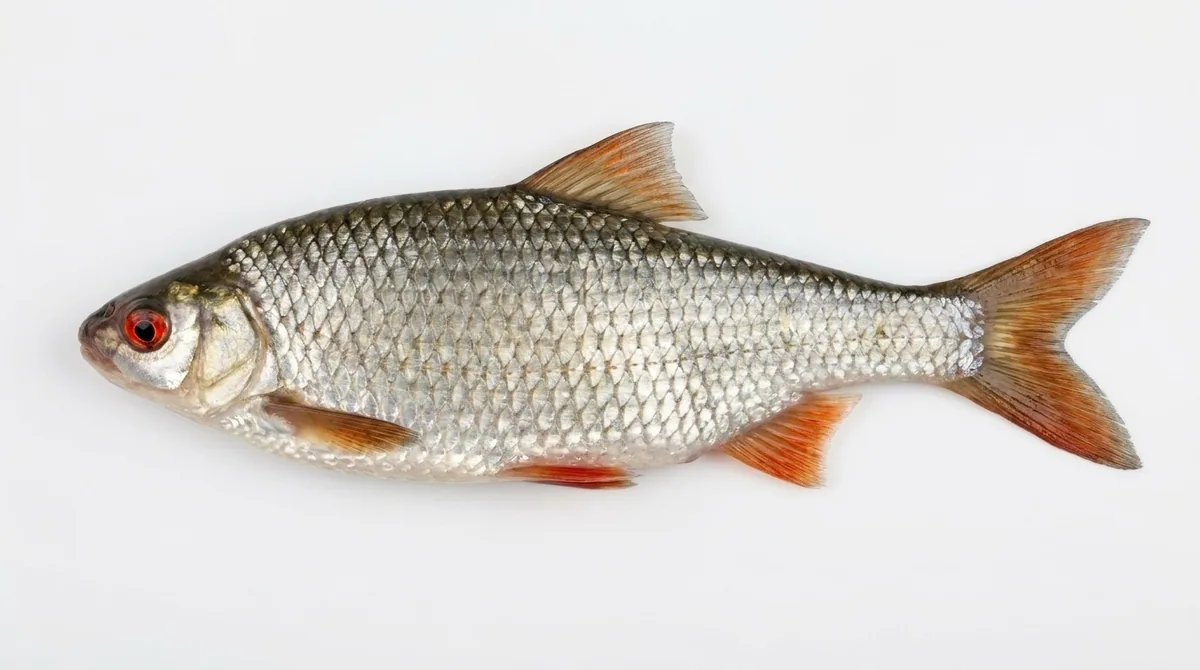
Common roach
Rutilus rutilus
- Freshwater
- Least Concern
- Max length
- 50 cm
- Class
- Teleostei
- Order
- Cypriniformes
- Family
- Cyprinidae
- Genus
- Rutilus
- Asia - Inland waters
- Europe - Inland waters
- Oceania - Inland waters
About the common roach
The roach, or rutilus roach (Rutilus rutilus), also known as the common roach, is a fresh- and brackish-water fish of the family Cyprinidae, native to most of Europe and western Asia. Fish called roach can be any species of the genera Rutilus, Leucos and Hesperoleucus, depending on locality. The plural of the term is also roach.
Habitat
The common roach is very adaptable and can be found in any freshwater ecosystem, ranging from small ponds to the largest rivers and lakes. It feeds at any depth, although its preferred food sources tend to be in shallower water. It tolerates organic pollution and is one of the last species to disappear in polluted waters; it is also often the most numerous cyprinid in nutrient-poor waters. It also tolerates brackish water. Roach survive in temperatures from close to freezing 4 °C (39 °F) up to around 31 °C (88 °F).
In most parts of its distribution, it is the most numerous fish, but it can be surpassed by the common bream in biomass in water bodies with high turbidity and sparse vegetation. The roach is a shoaling fish and is not very migratory with the exception of the oceangoing subspecies. In the cold season, they migrate to feed in deeper waters, whereas they prefer to feed near the surface during warmer weather.
Roach mostly inhabit freshwater ecosystems that are somewhat vegetated, because larval and young fish are protected by the vegetation and the mature fish can use it for food. The common roach eats a wide range of foods, from plant material, bottom-dwelling (benthic) invertebrates, to worms and maggots. Young fish feed mainly on plankton, until they are of a size to use a wider diet. Roach can adapt to environments where invertebrates are scarce by slowing their growth, maintaining slender body shapes, and maturing early.
Roach may live for 15 years or more.
Roach are known to be parasitised by Rhipidocotyle campanula (fluke), Myxobolus muelleri (myxozoa) and Raphidascaris acus (nematode).
Distribution
The common roach is found throughout Europe except for the area around the Mediterranean, and its distribution reaches eastward into Siberia. Eastern Europe and Asia have several subspecies, some with an oceangoing life cycle living around the Caspian and Black Seas. Around the Mediterranean and in northwestern parts of Spain and Portugal, several closely related species occur with no overlap in their distribution.
It was introduced in Australia in the Murray River and coastal drainages of southern New South Wales and Victoria from Europe during the 1860s and 1880s for sport purposes.
Description from Wikipedia, available under CC BY-SA.
Where the common roach lives
Distribution data from GBIF (DOI: 10.15468/dl.8rzs8d).
Also known as
- Roach
- Gardon
- Rotauge
- Plötze
- Schwal
- Mört
- Rdečeoka
- Rutilo
- Płoć
- Mort
- Brōšė
- Mandog
- Crvenookica
- Madrilleta vera
- Plotice obecná
- Płotka
- Rhufell
- Skalle
- Ploto
- Errutilo kontinental
- Särki
- Róiste
- Gardio
- Röts
- Paprastoji kuoja
- Rauda
- Blankvoorn
- Särgi
- Babușcă
- Białka
- Sär'g
- Rossete
- Särg
- Bodorka
- 로치
- Обыкновенная плотва
- Плотва или красноглазка
- Плотва обыкновенная
- ローチ
- Adi külmə
- Сабаҡ
- Бабушка
- Ялаагана
- Чапак
- کولمه معمولی
- Կարմրակն
- Торта балық
- Кельчи
- Црвеноперка
- Улаан нүдэн
- Якшарсӹнзӓ
- Сэрьге
- Кыһыл харах
- Бодорка
- Плітка звичайна
- 湖拟鲤
- 擬鯉
- روش شائع
- Плотка
- Чабак
Where to catch common roach
- Loch Ness United Kingdom Lake · live river data
- River Spey (Speyside) United Kingdom River · live river data
- Achensee Austria Lake · Tyrol
- Attersee Austria Lake · live river data
- Danube River at Vienna Austria River · Vienna
- Inn River at Innsbruck Austria River · live river data