Fishing Calendar App
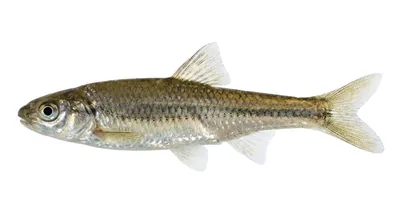
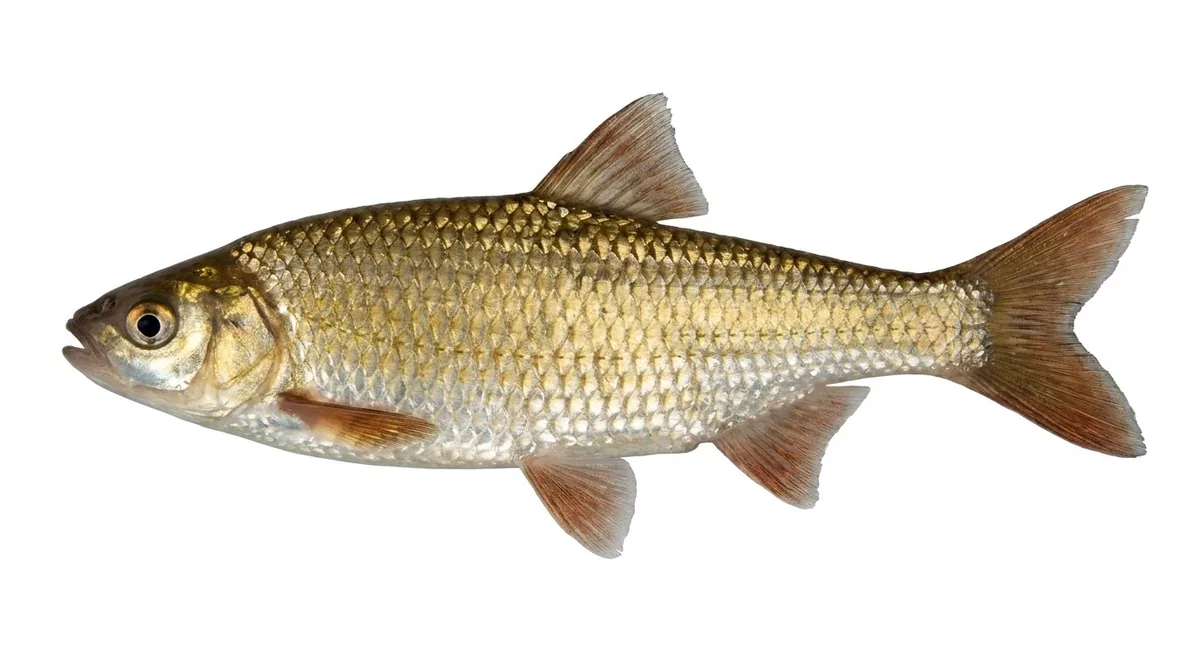
Golden shiner
Notemigonus crysoleucas
- Freshwater
- Least Concern
- Max length
- 37 cm
- Class
- Teleostei
- Order
- Cypriniformes
- Family
- Cyprinidae
- Genus
- Notemigonus
- North America - Inland waters
- Asia - Inland waters
About the golden shiner
The golden shiner (Notemigonus crysoleucas) is a species of freshwater ray-finned fish belonging to the family Leuciscidae. This fish occurs in eastern North America. It is the sole member of its genus. Commonly used as a bait fish, it is probably the most widely pond-cultured fish in the United States. It can be found in Quebec and elsewhere in southeastern Canada west to Manitoba or Saskatchewan, and its French name is Méné jaune or Chatte de l'Est.
Habitat
Golden shiners prefer quiet waters and are therefore found in lakes, ponds, sloughs, and ditches. They are sometimes found in the quietest parts of rivers, and like weedy areas. They are fairly tolerant of pollution, turbidity, and low oxygen content. They can also tolerate temperatures as high as 40 °C (104 °F), which is unusually high for a North American minnow.
Distribution
The golden shiner is found throughout the eastern half of North America, north to the St Lawrence River, Great Lakes, and Lake Winnipeg, and west to the Dakotas and Texas. It is found as far south as southern Florida and Texas. Because of its use as bait, it has also been introduced in many places outside this native range, especially in western North America.
Behaviour
Golden shiners live in large groups (shoals) that roam widely. Several laboratory studies have shown that the movements of a shoal can be determined by a minority of individuals at the front of it. For example, an individual that knows when and where food is available within a large tank can lead many other fish to the right place at the right time of day. If all fish have similar knowledge, there is still a tendency for some individuals to be found always at the front of a moving shoal, possibly because they are intrinsically hungrier and more motivated to find food. Small fish are also found more often at the front of a shoal than larger fish, again possibly because they are more motivated to find food.
Like other minnows, golden shiners are sensitive to the release of an alarm substance, or schreckstoff, contained within special skin cells. If a predator catches and bites into a minnow, the skin is broken, the substance is released, and other minnows in the vicinity can detect the substance and react to it by leaving the area. The substance can also survive intact in the feces of a predator, and minnows can thus detect the presence of a minnow-eating predator through the presence of its feces. In the laboratory, golden shiners were found to react strongly to water that contained feces from snakes that had eaten other golden shiners, but not nearly as much to water laden with feces from snakes that had eaten green swordtails (Xiphophorus hellerii), a fish that does not possess an alarm substance.
Like other fishes, golden shiners have a good daily time sense and can anticipate the arrival of food when this food is made available at the same time of the day or night. They can also do this when there is more than one mealtime a day. This anticipation is expressed as swimming and positioning towards the food source, and other naive individuals can perceive this and join the anticipating fish in the hope of sharing its food.
Golden shiners are also capable of time-place learning (associating different places with different times of day). They can be taught to feed in one part of an aquarium in the morning and a different part in the afternoon; or to feed in one part in the morning, a different part at mid-day, and back to the first part in the afternoon.
Description from Wikipedia, available under CC BY-SA.
Where the golden shiner lives
Distribution data from GBIF (DOI: 10.15468/dl.8rzs8d).
Also known as
- Méné jaune
- Amerikinė kuojažuvė
- درخشنده طلایی
- திரளி
- 金體美鯿
Where to catch golden shiner
- Arkansas River at Salida United States River · live river data
- Cape Fear River United States River · North Carolina
- Green River (Flaming Gorge) United States River · live river data
- Kenai River United States River · Alaska
- Kentucky Lake United States Reservoir · Kentucky-Tennessee
- Lake Champlain United States Lake · live river data