Fishing Calendar App
Common barbel
Barbus barbus
- Freshwater
- Least Concern
- Max length
- 100 cm
- Class
- Teleostei
- Order
- Cypriniformes
- Family
- Cyprinidae
- Genus
- Barbus
- Europe - Inland waters
About the common barbel
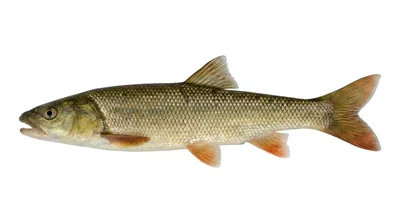
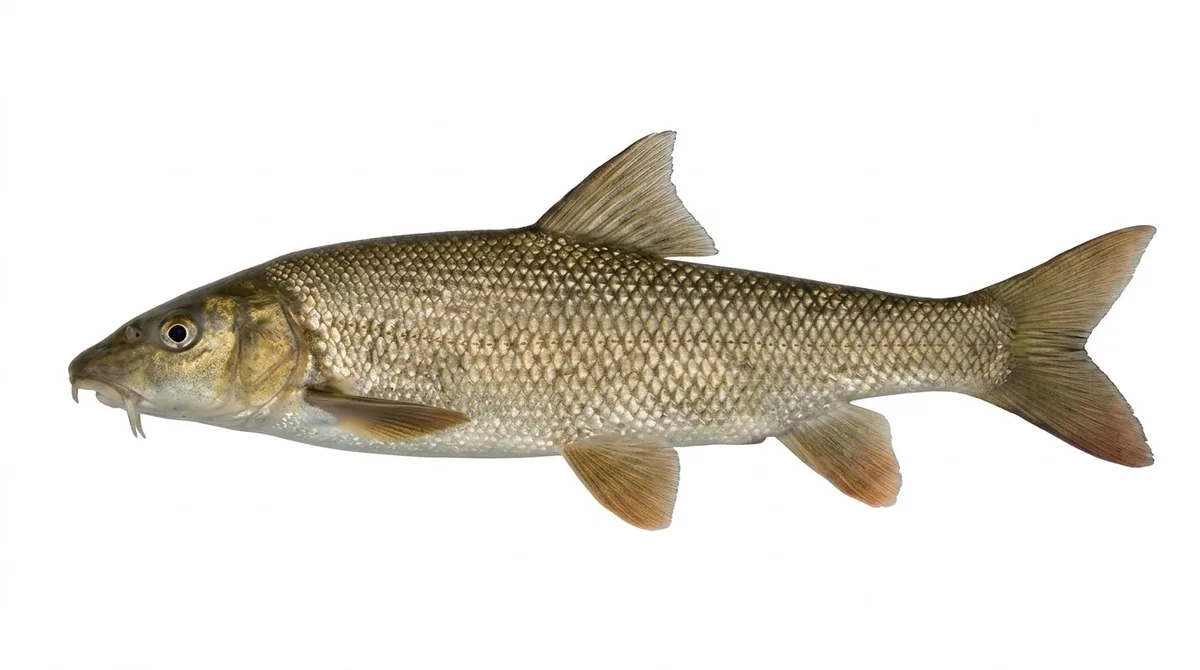
The common barbel (Barbus barbus) is a species of freshwater fish belonging to the family Cyprinidae. It shares the common name 'barbel' with its many relatives in the genus Barbus, of which it is the type species. In Great Britain it is usually referred to simply as the barbel; similar names are used elsewhere in Europe, such as barbeau in France and flodbarb in Sweden. The name derives from the four whiskerlike structures located at the corners of the fish's mouth, which it uses to locate food.
Distribution
B. barbus is native throughout northern and eastern Europe, ranging north and east from the Pyrénées and Alps to Lithuania, Russia and the northern Black Sea basin. It is an adaptable fish which transplants well between waterways, and has become established as an introduced species in several countries including Scotland, Morocco and Italy. Although barbel are native to eastern flowing rivers in England, they have historically been translocated to western flowing rivers, such as the River Severn. Its favoured habitats are the so-called barbel zones in fast-flowing rivers with gravel or stone bottoms, although it regularly occurs in slower rivers and has been successfully stocked in still waters.
Barbel are very abundant in some rivers, often seen in large shoals on rivers such as the Wye. Izaak Walton reported that there were once so many barbel in the Danube that they could be caught by hand, 'eight or ten load at a time' .
Behaviour
The Barbel is a swete fysshe, but it is a quasy meete and perilous for mannys body
Many authors have noted the highly toxic nature of barbel roe when eaten by humans, including Dame Juliana Berners and Charles David Badham. Badham relates the experience of Italian physician Antonio Gazius, who, he says, "took two boluses, and thus describes his sensations: 'At first I felt no inconvenience, but some hours having elapsed, I began to be disagreeably affected, and as my stomach swelled, and could not be brought down again by anise or carminatives, I was soon in a state of great depression and distress.' His countenance was pallid, like a man in a swoon, deadly coldness ensued, violent cholera and vomiting came after until the roe was passed, and then he became all right."
The use of barbel roe as a poison is mentioned in Nostradamus Les Prophéties, century VII, 24 : Despite the risks associated with eating barbel roe, several notable cookery authors have included recipes for barbel in their books. Mrs Beeton, for example, writes that they are in season in the winter months, and suggests simmering them with port and herbs. Also, in The Illustrated London Cookery Book by Frederick Bishop.
Description from Wikipedia, available under CC BY-SA.
Where the common barbel lives
Distribution data from GBIF (DOI: 10.15468/dl.8rzs8d).
Also known as
- Barbel
- Barbo
- Barbo europeo
- Navadna mrena
- Mrena
- Barba común
- Barbo de río
- Barbeau commun
- Barbeau fluviatile
- Barbet
- Barbillon
- Barbot
- Barbu
- Drenek
- Barbe
- Barbern
- Lotusbarbe
- Flussbarbe
- Pigge
- Brzana pospolita
- Brzana
- Flodbarb
- Flodbarbe
- Parma obecná
- Barbo arrunt
- Barbi
- Barbal
- Márna
- Berf
- Paprastasis ūsorius
- Barbeel
- Bàrbioe
- Mreană
- Bayağı bıyıklı balık
- Bårbea
- Обыкновенный усач
- バーベル
- بني أصفر
- بنى اصفر
- Бяла мряна
- زردپر معمولی
- ჩვეულებრივი წვერა
- Каяз
- Марена звичайна
- Вусач
- Мрена
Where to catch common barbel
- Attersee Austria Lake · live river data
- Inn River at Innsbruck Austria River · live river data
- Neusiedler See Austria Lake · live river data
- Traunsee Austria Lake · live river data
- Wolfgangsee Austria Lake · live river data
- Zeller See Austria Lake · live river data