Fishing Calendar App
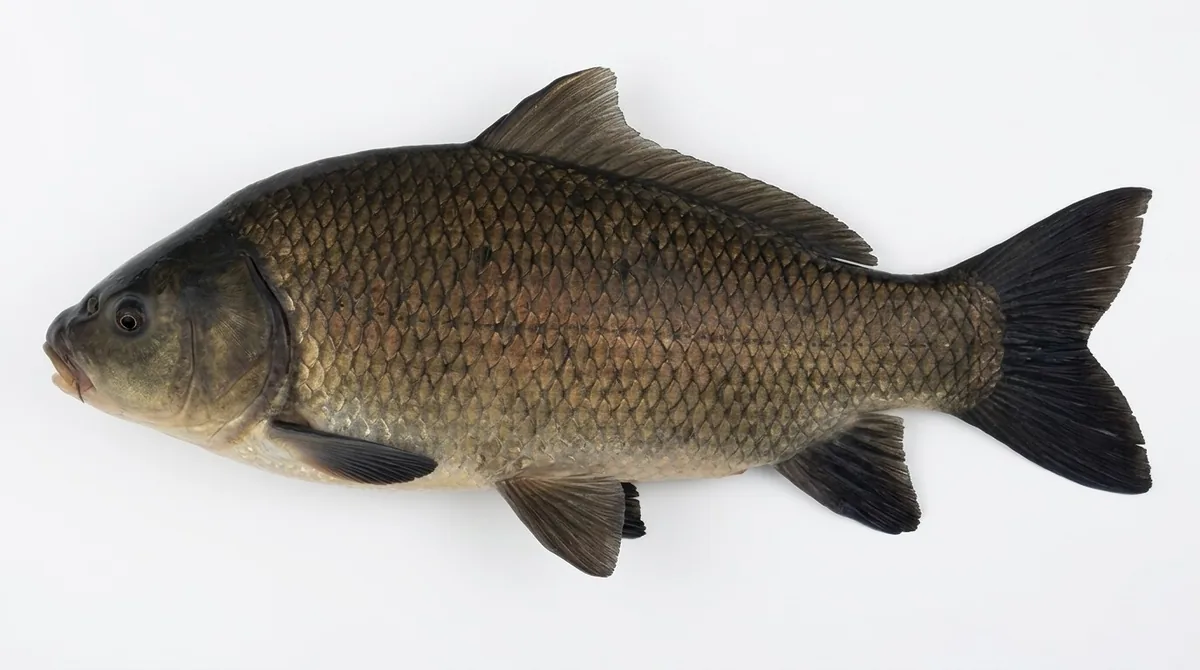
Bigmouth buffalo
Ictiobus cyprinellus
- Freshwater
- Least Concern
- Max length
- 123 cm
- Class
- Teleostei
- Order
- Cypriniformes
- Family
- Catostomidae
- Genus
- Ictiobus
- North America - Inland waters
About the bigmouth buffalo
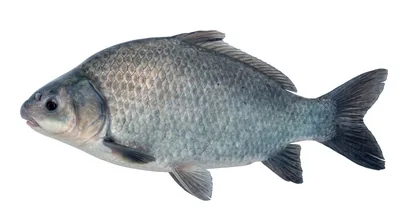
The bigmouth buffalo (Ictiobus cyprinellus) is a fish native to North America that is in decline. It is the largest North American species in the Catostomidae or "sucker" family, and is one of the longest-lived and latest-maturing freshwater fishes, capable of living 148 years and reproducing infrequently. Even at a century old they show no age-related declines, but instead improvements relative to younger individuals, making this species a biological marvel. It is commonly called the marblehead, redmouth buffalo, buffalofish, bernard buffalo, or roundhead. The bigmouth buffalo is not a carp, nor is any other fish in the sucker family. Although they share the same order, each belong to different suborders and are native to separate continents.
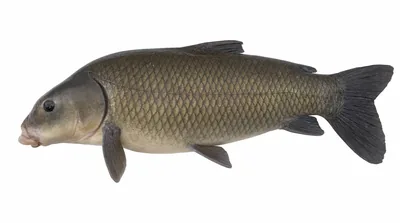
The bigmouth buffalo is typically a brownish olive color with dusky fins, but can vary greatly in color across individuals including melanistic, golden, and even xanthic color morphs. Bigmouth buffalo may also accrue unique black or orange pigmentation markings with age, and in some rare individuals, white-edged fins. Like other catostomids it has a long dorsal fin, but unlike all other extant species it has a terminal (forward-facing) mouth reflecting its unique, pelagic feeding ecology. It is the largest of the buffalofishes and can reach a length of more than 4 ft (1.2 m) and 80 lb (36 kg) in weight. Generally it lives in lakes, or in sluggish areas of large rivers. Bigmouth buffalo populations have been in decline in the northern extent of their range since the 1970s, including Minnesota, North Dakota, and Canada.
A 2019 study documented and validated their late maturity, centenarian longevity, and that several populations in northwestern Minnesota are composed mainly (85–90%) of individuals more than 80 years old, indicating recruitment failure since the 1930s. This newfound life history information published in 2019 defied pre-conceived notions of the species. A 2021 study from North Dakota also revealed a slow pace of life including late maturity, decadal episodic recruitment, declining population, and a relatively large group of old-growth individuals. A 2022 study from Saskatchewan, Canada revealed remarkable tendencies of the bigmouth buffalo including a supercentenarian lifespan, skip-spawning related to water levels, proximate mechanisms underlying failed recruitment, extreme episodic recruitment, and late maturity—all characteristics that make this species extremely vulnerable to overfishing, habitat degradation, and invasive species. Bigmouth buffalo are declining in Canada, and have been in steep decline in contiguous areas of the US, temporally associated with the rise of modern wasteful bowfishing in the 21st century.
Bigmouth buffalo life history attributes, including the ability to survive several decades with no successful recruitment (i.e. episodic recruitment), are more pronounced than other long-lived freshwater fishes, including sturgeon and paddlefish. Such long-lived fish species are periodic strategists and require time to successfully sustain themselves by surviving to periods in which favorable environmental and biotic conditions arise for booms in reproduction and subsequent recruitment through the predation gauntlet. Unregulated, unmanaged and wasteful lethal fisheries are not compatible with their biology, yet such fisheries have come to exist in the 21st century in the United States and the species is declining. Canada on the other hand, has long-enforced protections for bigmouth buffalo. Exemplifying the lack of management in the United States, as of 2025 anglers with a standard fishing license in Minnesota can take bigmouth buffalo in unlimited numbers statewide, including from within a National Wildlife Refuge system of the United States Fish and Wildlife Service. A 2024 study set in eastern Minnesota analyzed the population of bigmouth buffalo and their spawning migration at Rice Lake National Wildlife Refuge across years. Although the population of bigmouth buffalo migrates and spawns annually, a major pulse of successful reproduction has not occurred since the late 1950s. With a median age of 79 years as of 2024, and greater than 99.7% of individuals hatched before 1972, these bigmouth buffalo at Rice Lake National Wildlife Refuge make up one of the oldest known populations of animal on earth.
Habitat
The bigmouth buffalo is part of a unique ecology in shallow-water systems. The larval bigmouths are pelagic and sometimes benthic feeders, mostly of copepods and cladocerans, but also phytoplankton and chironomids. Bigmouth buffalo, unlike its close relatives the black and smallmouth buffalos, is a filter-feeder, using its very fine gill rakers to strain plankton from the water. It sometimes feeds near the bottom, using short up-and down movements to filter from the water the plankton that hover near the bottom or rest lightly on it. The juveniles and adults are mostly limnetic plankton feeders that also eat cladocerans, copepods, algae, chironomids, ostracods, and other insect larvae and invertebrates depending on availability. The optimum habitat for spawning bigmouth buffalo is freshly-flooded vegetated waters. They are a very resilient fish that can tolerate high turbidity and low oxygen levels. They can be found in waters with turbidity levels over 100 ppm. During spring and summer, 50–75% pools should be present, with backwaters, and marsh areas and 25–75% littoral area and protected embayments during summer for the habitat to be suitable. Bigmouth can be found in waters from 22.5 to 38.0 °C (72.5 to 100.4 °F). The optimal temperatures for incubation and hatching of eggs are from 15–18 °C (59–64 °F), but they can develop in temperatures reaching up to 26.7 °C (80.1 °F). The bigmouth buffalo prefers slow-moving water that does not reach a velocity over 30 cm/s.
The bigmouth buffalo are group spawners which produce 250,000 eggs/kg of adult weight; their eggs are very small at about 1.5 mm in diameter. The bigmouth buffalo is a spring spawner generally spawning between April and June when the water temperature is between 13 and 26 °C (55 and 79 °F), but may skip spawning if water-level fluctuations are not adequate. The bigmouth buffalo is a broadcaster that has adhesive eggs, which it lays in vegetated waters. Females seek submergent and emergent vegetation, the ideal habitat for the hatching of their eggs. Water levels substantially rise before spawning, and the spawning timing and duration can vary significantly across years, even in successive years. For example, at Rice Lake National Wildlife Refuge, Aitkin County, Minnesota, the spawning duration was 7 times longer in 2022 compared to 2021 or 2023, and the spawning timing also varied by more than 16 days comparing 2022 to 2021. Bigmouth buffalo are extremely vulnerable to exploitation during their spawning period, and will likely require protections much like is afforded to lake sturgeon or paddlefish.
Salinity can be a problem for reproduction. Spawning can occur from 1.4 to 2.0 ppt of salinity which eggs and yearlings not being able to survive a salinity of over 9 ppt. The minimum dissolved oxygen during the spring and summer is 5 mg/L.
Recruitment success is related to water-level and drought conditions, the water-level recession rate after the spring peak, and predation. While numerous invertebrates, blue gill, yellow perch, and other species prey on the bigmouth buffalo eggs and larvae, northern pike and other piscivorous fish likely further top-down restrict the survival bigmouth buffalo fry and fingerling fish in many systems. More than one male will assist in spawning by moving the female to the top of the water to help mix eggs and milt.
Distribution
The bigmouth buffalo's native distribution is confined to the countries of Canada and the United States of America. It is native to the Red River of the North and Mississippi River drainage basins, from Manitoba, Canada, and North Dakota, United States, to the Ohio River and south in the Mississippi River system to Texas and Alabama. In Canada, they inhabit the Milk River which flows through Alberta, and the Qu'Appelle River which flows through Saskatchewan and Manitoba into Lake Winnipeg. Beginning in the northern United States, they are native to Montana, North Dakota, Minnesota, Wisconsin, to southern states including eastern Texas, Oklahoma and Louisiana. The major systems where they are found include the Hudson Bay and Mississippi River drainages. The introduction of bigmouth buffalo has largely been done for commercial purposes. Regions of reintroductions include some reservoirs along the Missouri River drainage of North Dakota and Montana. Regions of introduction include some reservoirs in Arizona, and within California, they have also been introduced to the aqueduct system of Los Angeles.
Description from Wikipedia, available under CC BY-SA.
Where the bigmouth buffalo lives
Distribution data from GBIF (DOI: 10.15468/dl.8rzs8d).
Also known as
- Buffalo à grande bouche
- Großmäuliger Büffelfisch
- Kaprovec velkoústý
- Didžiažiotė bizonžuvė
- Большеротый буффало
- بيجماوث الجاموس
- گاومیشماهی دهانبزرگ
- Буфало великоротий
- 小鯉牛胭脂魚
Where to catch bigmouth buffalo
- Arkansas River at Salida United States River · live river data
- Cape Fear River United States River · North Carolina
- Green River (Flaming Gorge) United States River · live river data
- Kenai River United States River · Alaska
- Kentucky Lake United States Reservoir · Kentucky-Tennessee
- Lake Champlain United States Lake · live river data