Fishing Calendar App
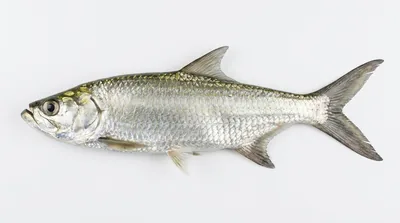
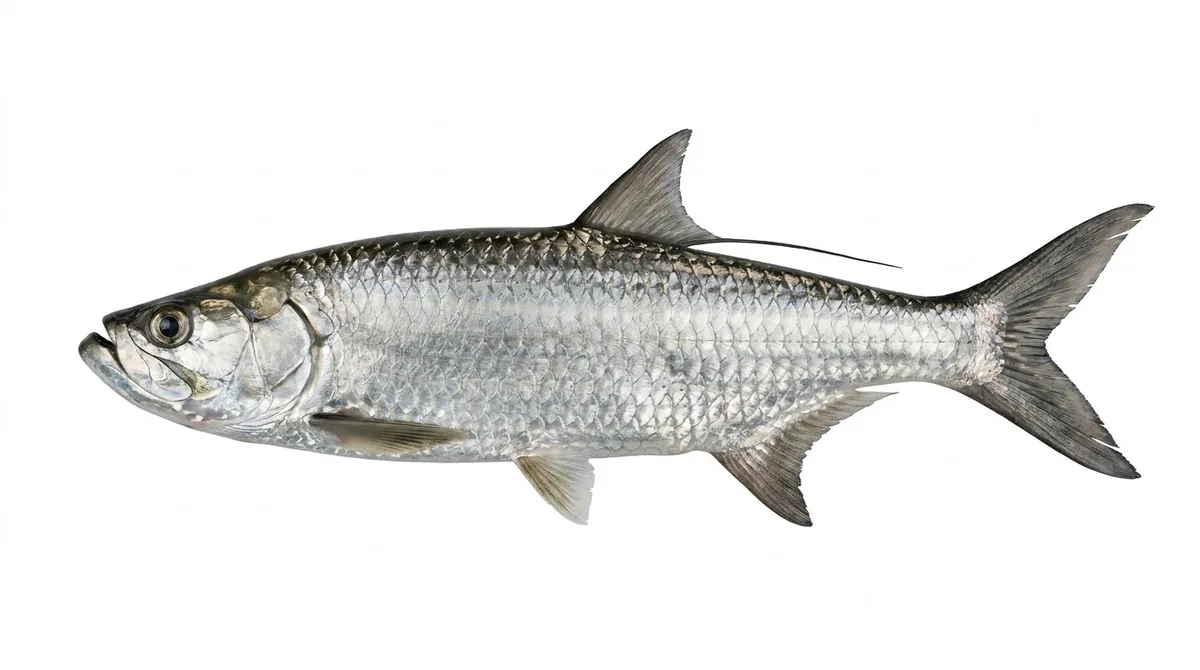
Atlantic tarpon
Megalops atlanticus
- Freshwater & Saltwater
- Vulnerable
- Max length
- 250 cm
- Class
- Teleostei
- Order
- Elopiformes
- Family
- Megalopidae
- Genus
- Megalops
- Atlantic, Western Central
- Europe - Inland waters
- North America - Inland waters
- South America - Inland waters
About the atlantic tarpon
The Atlantic tarpon (Megalops atlanticus) is a ray-finned fish that inhabits coastal waters, estuaries, lagoons, and rivers. It is also known as the silver king. It is found in the Atlantic Ocean, typically in tropical and subtropical regions, though it has been reported as far north as Nova Scotia and the Atlantic coast of southern France, and as far south as Argentina. As with all elopiformes, it spawns at sea. Its diet includes small fish and crustaceans.
The tarpon has a reputation for great aerobatics, attaining astonishing size, and having impressive armored scales. It is generally considered to be of poor food quality, but it is highly valued as a game fish by recreational fishermen.
Distribution
Since tarpons are not commercially valuable as a food fish, very little has been documented concerning their geographical distribution and migrations. They inhabit both sides of the Atlantic Ocean. Their range in the eastern Atlantic has been reliably established from Senegal to the Congo. Tarpons inhabiting the western Atlantic are principally found to populate warmer coastal waters primarily in the Gulf of Mexico, Florida, and the West Indies. Nonetheless, they are regularly caught by anglers at Cape Hatteras and as far as Nova Scotia, Bermuda, and south to Argentina. In the Gulf of Mexico there are two distinct populations divided by the Mississippi River Delta.
Atlantic tarpon are highly migratory and often cross international boundaries. This introduces challenges in management and conservation.
Scientific studies indicate schools have routinely migrated through the Panama Canal from the Atlantic to the Pacific and back for over 80 years. Since tarpons tolerate a wide range of salinity and are opportunistic feeders, their migrations are limited only by water temperatures. They prefer water temperatures of 22 to 28 °C (72 to 82 °F); below 16 °C (61 °F) they become inactive, and temperatures under 4 °C (39 °F) can be lethal. A large tarpon community is found in the Rio San Juan and Lake Nicaragua. In the Pacific a population has become established in Costa Rica. In 2024, it was recorded in northern Peru.
Atlantic tarpon breed in spawning aggregations in the open ocean. Atlantic tarpon share a unique larval stage known as a leptocephalus with bonefish, ladyfish, and eels. Unlike the larvae of other fish these larvae do not eat as their long slender bodies have very low energy requirements. While larvae the Atlantic tarpon's teeth grow pointed forward to keep debris out of their mouth. The leptocephali develop into juveniles which make their way inshore, often into stagnant water with a very low oxygen content which can't be tolerated by most of their predators. When they are about three years old Atlantic tarpon migrate from these backwater habitats to a variety of nearshore ones, growing rapidly but primarily in length as opposed to girth. At around eight years of age an Atlantic tarpon reaches its sexual maturity and begins to gain length as well as girth. Growth rates also diverge at this point with males growing much slower than females. Sexually mature Atlantic tarpon will begin migrating to join spawning aggregations.
Behaviour
The Atlantic tarpon's most significant predators are sharks and humans.
The diet of the Atlantic tarpon changes as the fish grows with those in the leptocephalus stage absorbing nutrients directly from the water, those in the juvenile stage eating zooplankton and other small prey, and adults primarily consuming fish, crabs, and shrimp.
Description from Wikipedia, available under CC BY-SA.
Where the atlantic tarpon lives
Distribution data from GBIF (DOI: 10.15468/dl.8rzs8d).
Also known as
- Tarpon
- Sábalo
- Atlantischer Tarpun
- Tarpon atlantycki
- Tarponi
- Atlanti tarpon
- Silfurkóngur
- Tarpoen
- Атлантический тарпон
- ターポン
- خنجولة الأطلسي
- خنجولة الاطلسى
- Атлантически тарпон
- גדול-עין אטלנטי
- Атлантски тарпон
- ปลาแอตแลนติกทาร์ปอน
- Тарпон атлантичний
- Cá cháo lớn Đại Tây Dương
Where to catch atlantic tarpon
- Achensee Austria Lake · Tyrol
- Attersee Austria Lake · live river data
- Danube River at Vienna Austria River · Vienna
- Inn River at Innsbruck Austria River · live river data
- Neusiedler See Austria Lake · live river data
- Traunsee Austria Lake · live river data