Fishing Calendar App
Atlantic silverside
Menidia menidia
- Saltwater
- Least Concern
- Max length
- 15 cm
- Class
- Teleostei
- Order
- Atheriniformes
- Family
- Atherinopsidae
- Genus
- Menidia
- Atlantic, Northwest
- Atlantic, Western Central
About the atlantic silverside
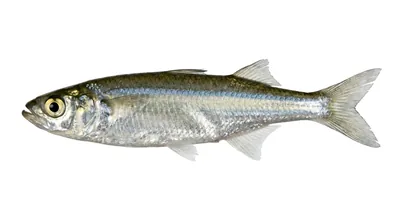
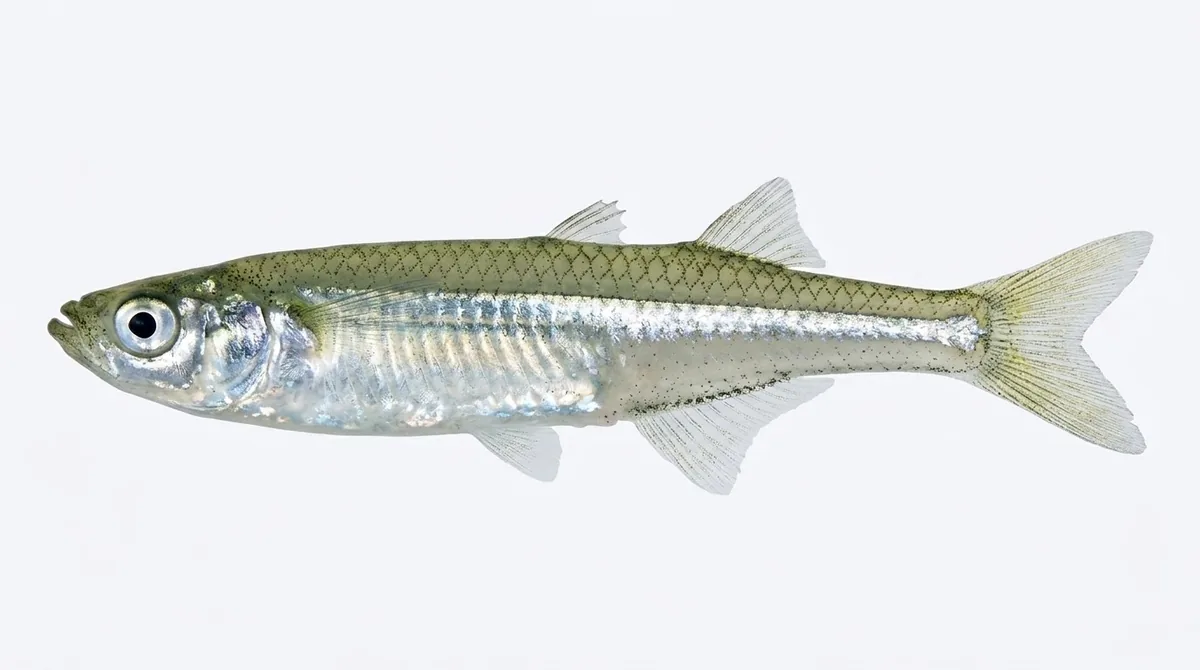
The Atlantic silverside (Menidia menidia), also known as spearing in the northeastern United States, is a small species of fish that is one of the most abundant fish species present in estuarine habitats along the Atlantic coast of North America. It is a common subject of scientific research because of its sensitivity to environmental changes. According to the IUCN Red List, this species is stable and has no major threats to its populations, so it is marked Least Concern. Despite being an extremely common species, most individuals die after one year once they migrate offshore, but a few will make it to two years. The fish is mostly translucent, with white coloring on the anterior end of the body and brown speckling on the top of the head, the posterior scales on the back, and near the jaw. A distinctive silver band runs the length of the fish, next to the lateral line. Their mouths are large compared to other Menidia species, and their first dorsal fins are placed more posteriorly than other silversides.
Habitat
Silversides will eat a wide variety of prey items. Because of their smaller size (about 5–9 centimetres (2.0–3.5 in)), they are restricted to smaller prey such as copepods, mysids, cumaceans, barnacle larvae, and amphipods. Inshore and offshore silversides overall have a very similar diet, however offshore silversides tend to have a more diverse diet, likely due to availability of different types of prey. During the summer months when silversides are more present inshore, copepods are the dominant prey choice, and they tend to feed higher in the water column. However, in winter when silversides are farther out into the ocean, they tend to feed lower in the water column near the ocean floor. So offshore silversides predominately feed on epibenthic mysids.
The abiotic factors the Atlantic silverside needs to survive varies for populations of fish based on their geographical location. They can tolerate an average temperature of 70 °F (21 °C), a salt content of the water ranging from 0 to 37 parts per thousand (ppt), and a well-mixed body of water to prevent hypoxic conditions. Individuals have been found in salinities as low as two ppt, but they prefer salinities of at least twelve ppt. They are also eurythermal, meaning that they can tolerate a large range of temperatures.
The Atlantic silverside's habitat is generally near the water's edge. They are mostly found swimming in brackish waters, such as in the mouths of rivers and streams that connect to the ocean. These small schooling fish have been seen to gather in seagrass beds, which can harbor the nearly defenseless fish some form of shelter from predation as well as provide safe haven for spawning. During winter, most Atlantic silversides swim in deeper water to avoid low temperatures. During the summer, most are found in the shallows along the shoreline.
The major defense of this fish is to hide in seagrass beds. They are quick swimmers and their coloration of silver and a little white makes it confusing to predators to determine the direction the fish are heading. The silverside's strongest form of defense is the strength-in-numbers strategy, where fish will school in large numbers to reduce the likelihood of individual predation. The Atlantic silverside's predators are larger predatory fish – striped bass, blue fish, Atlantic mackerel – and many water birds, including egrets, terns, cormorants, and gulls. Some predators feed specifically on silverside larvae when they first emerge, including semipalmated sandpipers, ruddy turnstones, and blue crabs.
Distribution
The Atlantic silverside is found in the West Atlantic, ranging from the Gulf of St. Lawrence in Canada to northeastern Florida in the USA. It is one of the most common fish in the Chesapeake Bay and in the Barnegat Bay. Recent studies have found that their range may reach farther north than previously thought, as juvenile members of this species were found north of the Laurentian Channel in beach seines.
Description from Wikipedia, available under CC BY-SA.
Where the atlantic silverside lives
Distribution data from GBIF (DOI: 10.15468/dl.8rzs8d).
Also known as
- Green smeldt
- Silverside
- Sperling
- Capucette
- Gezeiten Ährenfisch
- Sydlig silversida
- Atlantinhopeakylki
- Atlantische koornaarvis
- پهلونقرهای اطلسی
- 大西洋美洲原銀漢魚
Where to catch atlantic silverside
- Cape Cod Bay United States Bay · Massachusetts
- Cape Fear River United States River · North Carolina
- Chesapeake Bay United States Estuary · Maryland and Virginia
- Delaware Bay United States Bay · Delaware-New Jersey
- Florida Bay (Everglades) United States Bay · Florida
- Florida Keys United States Coast · Florida