Fishing Calendar App
Southern stingray
Hypanus americanus
- Saltwater
- Near Threatened
- Max length
- 190 cm
- Class
- Elasmobranchii
- Order
- Myliobatiformes
- Family
- Dasyatidae
- Genus
- Hypanus
- Atlantic, Northwest
- Atlantic, Southwest
- Atlantic, Western Central
About the southern stingray
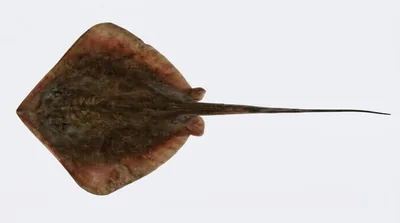
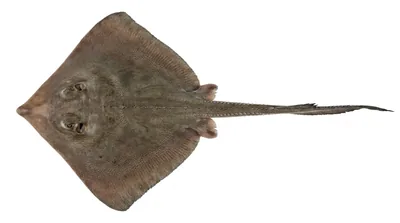
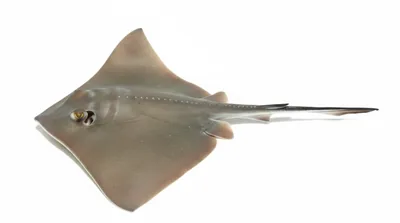
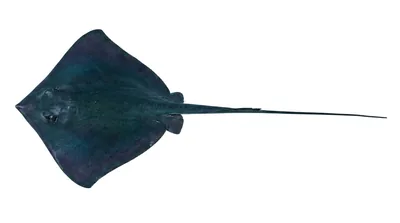
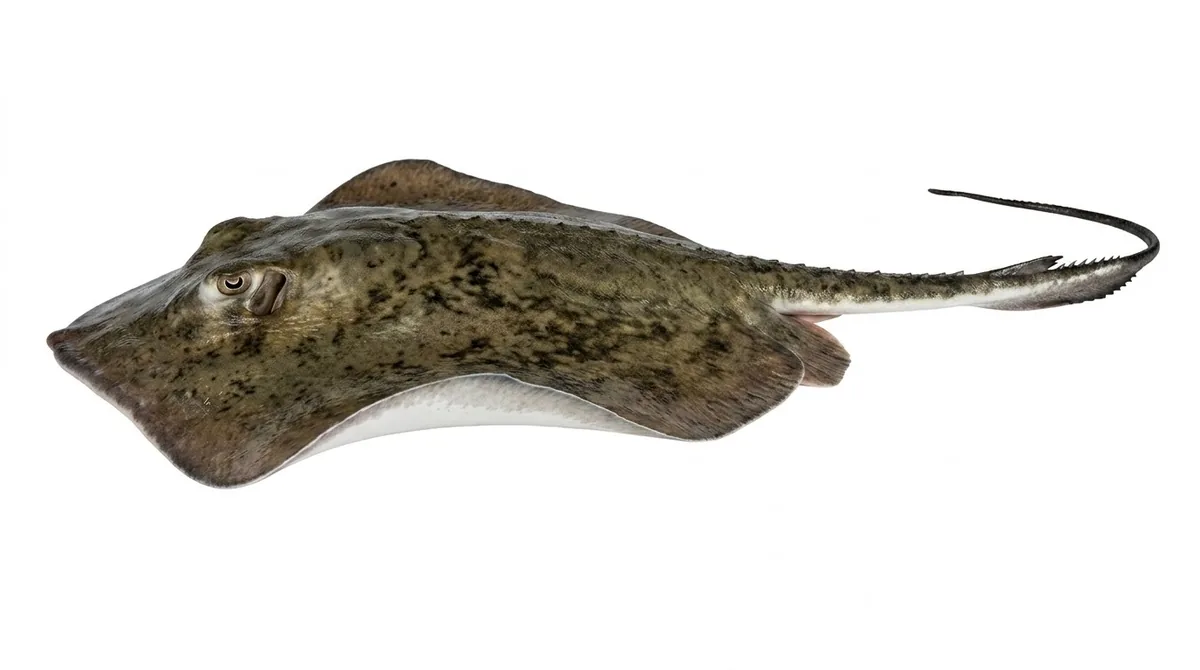
The southern stingray (Hypanus americanus) is a whiptail stingray found in tropical and subtropical waters of the Western Atlantic Ocean from New Jersey to southern Brazil. It has a flat, diamond-shaped disc, with a mud brown, olive, and grey dorsal surface and white underbelly (ventral surface). The barb on its tail is serrated and covered in a venomous mucus, used for self-defense.
Behaviour
Southern stingrays are nocturnal predators, who spray water from their mouths or flap their fins vigorously to disturb the substrate and expose hidden prey. This bottom-dwelling species is often found singly or in pairs, and can reach population densities estimated up to 245 per square kilometre (630/mi2) in certain shallow systems thought to be nursery grounds. Hypanus americanus exhibit wave-like locomotion using their pectoral fins. This wave-like motion is important for H. americanus because it allows them to escape predators, forage efficiently, and generally maneuver quickly. Typically, they travel large distances and their foraging area is very expansive. One study provided observations that H. americanus swim along the tide, because of the greater food availability along tides. H. americanus are able to do this because of their high maneuverability and efficient wave-like locomotion. H. americanus either remain solitary or form groups. Groups of H. americanus are usually observed when they mate, for predator protection or even when they are just resting.
Description from Wikipedia, available under CC BY-SA.
Where the southern stingray lives
Distribution data from GBIF (DOI: 10.15468/dl.8rzs8d).
Also known as
- Dasyatis americana
- Pastenague américaine
- Raie pastenague américaine
- Trigone atlantico
- Trigone meridionale
- Amerikanischer Stechrochen
- Südlicher Stechrochen
- Escurçana americana
- Trnucha americká
- Ruskokeihäsrausku
- Suðræna stingskatan
- Amerikaanse pijlstaartrog
- Американский хвостокол
- アメリカアカエイ
- اللادغ الجنوبيه
- لقمهماهی جنوبی
- טריגון אמריקאי
- Cá đuối ó phương nam
Where to catch southern stingray
- Cape Cod Bay United States Bay · Massachusetts
- Cape Fear River United States River · North Carolina
- Chesapeake Bay United States Estuary · Maryland and Virginia
- Delaware Bay United States Bay · Delaware-New Jersey
- Florida Bay (Everglades) United States Bay · Florida
- Florida Keys United States Coast · Florida