Fishing Calendar App
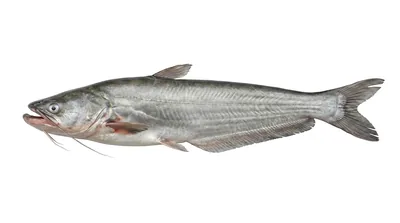
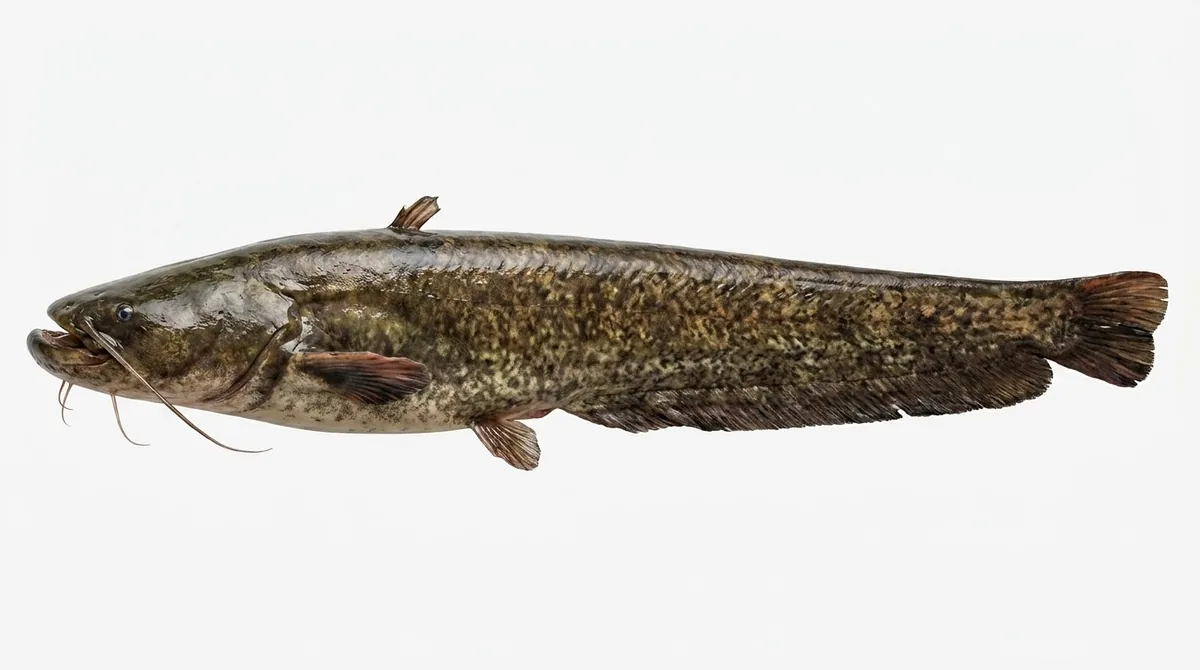
Wels catfish
Silurus glanis
- Freshwater
- Least Concern
- Max length
- 300 cm
- Class
- Teleostei
- Order
- Siluriformes
- Family
- Siluridae
- Genus
- Silurus
- Asia - Inland waters
- Europe - Inland waters
About the wels catfish
The wels catfish ( or ; Silurus glanis), also called sheatfish or just wels, is a large species of catfish native to wide areas of central, southern, and eastern Europe, in the basins of the Baltic, Black and Caspian Seas. It has been introduced to several countries in Western Europe, Mediterranean and Asia as a prized sport fish. Its modern day range spans from the United Kingdom in the west to western China in the east.
Distribution
The wels catfish lives in large, warm lakes and deep, slow-flowing rivers. It prefers to remain in sheltered locations such as holes in the riverbed, sunken trees, etc. It consumes its food in the open water or in the deep, where it can be recognized by its large mouth. Wels catfish are kept in fish ponds as food fish. An unusual habitat for the species exists inside the Chernobyl exclusion zone, where a small population lives in abandoned cooling ponds and channels at a close distance to the decommissioned power plant. These catfish appear healthy, and are maintaining a position as top predators in the aquatic ecosystem of the immediate area.
Behaviour
Like most freshwater bottom feeders, the wels catfish lives on annelid worms, gastropods, insects, crustaceans and fish. Larger specimens have also been observed to eat crayfish, eels, frogs, snakes, rats, voles, coypu and aquatic birds such as ducks, even cannibalising on other catfish. Researchers at the University of Toulouse, France, in 2012 documented individuals of this species in an introduced environment lunging out of the water to feed on pigeons at water edge. 28% of the beaching behaviour observed and filmed in this study were successful in bird capture. Stable isotope analyses of catfish stomach contents using carbon-13 and nitrogen-15 revealed a highly variable dietary composition of terrestrial birds. This is likely the result of adapting their behaviour to forage on novel prey in response to new environments upon its introduction to the river Tarn in 1983 since this type of behaviour has not been reported within the native range of this species. They can also eat red worms in the fall, but only the river species.
The wels catfish has also been observed taking advantage of large die-offs of Asian clams to feed on the dead clams at the surface of the water during the daytime. This opportunistic feeding highlights the adaptability of the wels catfish to new food sources, since the species is mainly a nocturnal bottom-feeder.
Description from Wikipedia, available under CC BY-SA.
Where the wels catfish lives
Distribution data from GBIF (DOI: 10.15468/dl.8rzs8d).
Also known as
- Catfish
- Wels
- Sheatfish
- Som
- Siluro
- Silure glane
- Europäischer Wels
- Flusswels
- Schaidfisch
- Waller
- Sum pospolity
- Sum europejski
- Mal
- Europeisk malle
- Adi naqqa
- Šams
- Silur
- Sumec velký
- Zwëczajny wąsôcz
- Pencath
- Europæisk malle
- Säga
- Siluru
- Európai harcsa
- Fengrani
- Europäesche Wels
- Paprastasis šamas
- Sams
- Tapah wels
- Europese meerval
- Malle
- Somn
- Sumec západný
- Adaty lakga
- Bayağı yayın balığı
- Laqqa baliq
- Järgeline maimkala
- Cá nheo châu Âu
- Monni
- Обыкновенный сом
- Сом европейский
- Сом обыкновенный
- 유럽메기
- ヨーロッパオオナマズ
- سلور الدانوب
- قرموط ويلس
- Йәйен
- Сом звычайны
- Çуйăн
- Γουλιανός
- اسبله
- Cɛnkɛn
- ايسبله
- שפמנון אירופי
- Սովորական լոքո
- ლოქო
- Жайын
- Жаян
- Ngɔlɔ
- Сигал
- Шигол
- Локо
- Гарч
- Лаққамоҳӣ
- ปลาเวลส์
- Җәен
- Сом звичайний
- 欧鲶
- 歐鯰
- 歐洲巨鯰
- Сом
Where to catch wels catfish
- Attersee Austria Lake · live river data
- Inn River at Innsbruck Austria River · live river data
- Neusiedler See Austria Lake · live river data
- Traunsee Austria Lake · live river data
- Wolfgangsee Austria Lake · live river data
- Zeller See Austria Lake · live river data