Fishing Calendar App
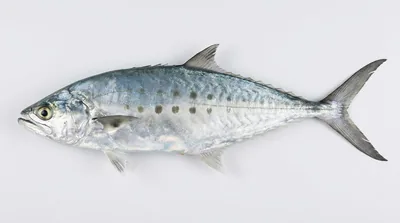
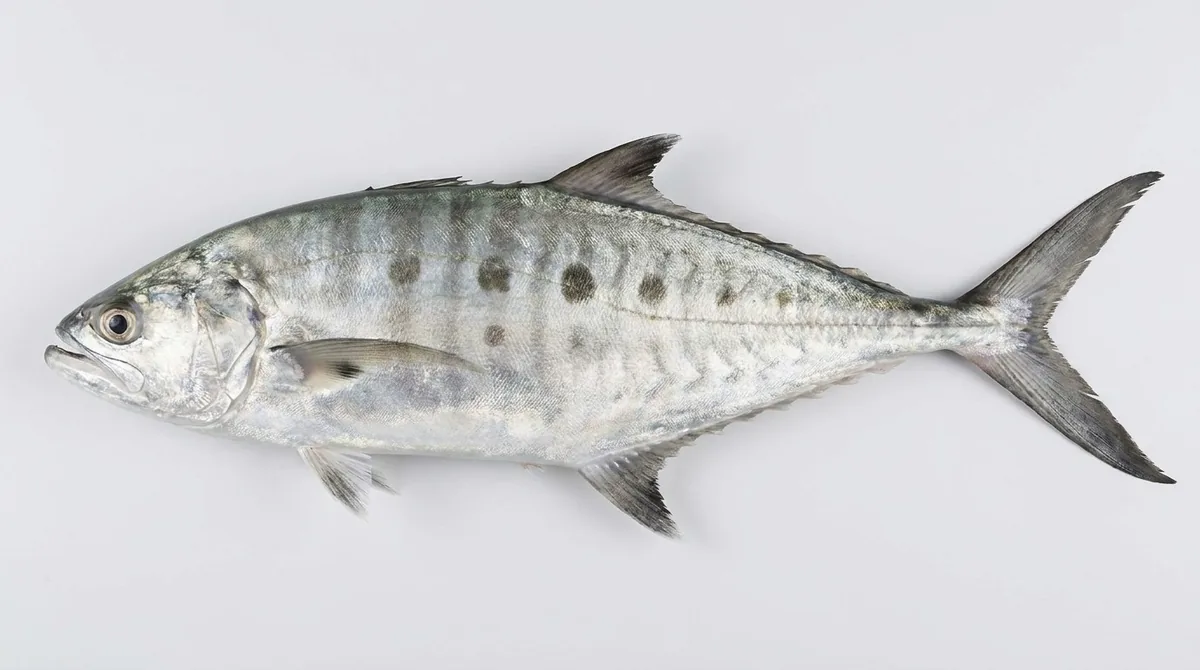
Talang queenfish
Scomberoides commersonnianus
- Saltwater
- Least Concern
- Max length
- 120 cm
- Class
- Teleostei
- Order
- Carangiformes
- Family
- Carangidae
- Genus
- Scomberoides
- Indian Ocean, Eastern
- Indian Ocean, Western
- Pacific, Northwest
- Pacific, Western Central
About the talang queenfish
Scomberoides commersonnianus, the Talang queenfish, also known as giant dart, giant leatherskin, giant queenfish, largemouth queenfish, leatherjacket, leatherskin, and Talang leatherskin, is a species of ray-finned fish in the family Carangidae from the western Indo-Pacific. It is a large species which is important in commercial and recreational fisheries.
Habitat
The adults of Scomberoides commersonianus are found in coastal waters, and frequently occur in the vicinity of reefs and offshore islands. They occasionally enter into estuarine waters. It is normally found in small schools. The adults are predatory, feeding on fishes, cephalopods, small invertebrates and other pelagic prey. The juveniles use their rasping teeth to feed on the scales and epidermis of other fishes.
They grow rapidly during earlier life, but slow down. They reach 25 cm in their first year, and 50 by their third year. The females attain sexual maturity when they reach a fork length of 63 centimetres (25 in) at around 4–5 years old. In Australia spawning occurs from August to March. In the Persian Gulf spawning occurs between March and June. The fecundity of females when mature was estimated at 259,488–2,859,935 eggs in each spawning.
Distribution
Scomberoides commersonnianus has a wide distribution in the Indian Ocean and western Pacific Ocean occurring from South Africa and the Red Sea and Persian Gulf in the west, east through Indonesia and Papua New Guinea as far as New Caledonia, north to southern Japan and south to Western Australia and New South Wales.
Description from Wikipedia, available under CC BY-SA.
Where the talang queenfish lives
Distribution data from GBIF (DOI: 10.15468/dl.8rzs8d).
Also known as
- Largemouth queenfish
- Talang-koninginvis
- Ddainn
- Cangilang
- Таланг
- オオクチイケカツオ
- கட்டா
- ปลาสละ
- Cá bè xước
- 康氏似鰺
- بسار تالانغ