Fishing Calendar App
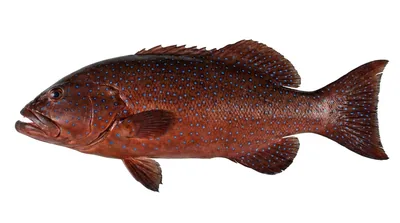
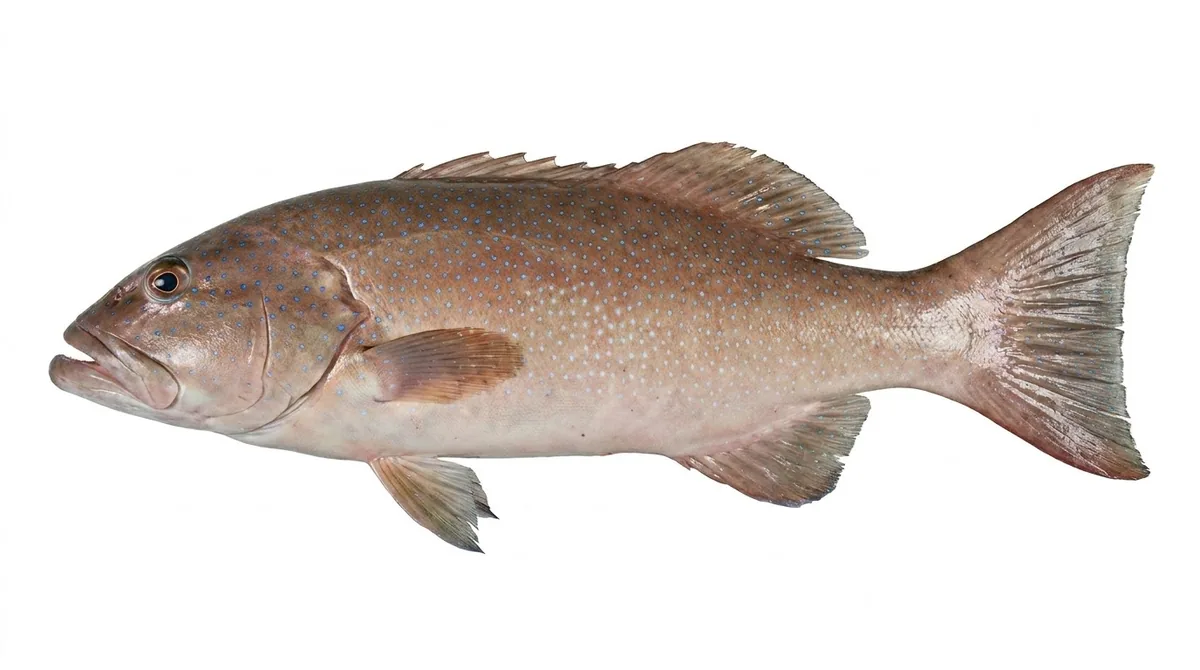
Leopard coral grouper
Plectropomus leopardus
- Saltwater
- Least Concern
- Max length
- 42 cm
- Class
- Teleostei
- Order
- Perciformes
- Family
- Epinephelidae
- Genus
- Plectropomus
- Indian Ocean, Eastern
- Pacific, Eastern Central
- Pacific, Northwest
- Pacific, Western Central
About the leopard coral grouper
The leopard coral grouper (Plectropomus leopardus), also known as the common coral trout, leopard coral trout, blue-dotted coral grouper or spotted coral grouper, is a species of marine ray-finned fish, a grouper from the family Epinephelidae. It is found in the Western Pacific Ocean.
Coral trout are the favourite target fish for all sectors of the fishery because they are a good food fish and command high market prices locally and overseas. The total commercial catch of coral trout was reported at over 1500 tonnes in 1998.
Habitat
The leopard coral grouper is found on coral reefs at depths of 3 to 100 metres (9.8 to 328.1 ft).
Distribution
The leopard coral grouper is found in the western Pacific where it is distributed from southern Japan to Australia and from the east coast of Thailand and Malaysia east to the Solomon Islands, Caroline Islands and Fiji. In Australia it is found at Beacon Island in Western Australia, the Ashmore and Cartier Islands in the Timor Sea, around the tropical northcoast as far south as Sydney. This range includes reefs in the Coral Sea, Christmas Island, Cocos (Keeling) Islands and around Lord Howe Island in the Tasman Sea.
Behaviour
Leopeard coral groupers are largely piscivores (fish-eating predators). Younger juvenile trout mostly eat crustaceans, especially prawns, which live on or near the reef bottom. However, adults feed upon a variety of reef fish. The most common type of fish eaten is damselfish (family Pomacentridae), particularly the spiny chromis damselfish (Acanthochromis polyacanthus). Adult coral trout also eat juveniles of their own species. Individual coral trout usually feed once every 1–3 days, although they may go for many days without feeding. About 90% of a prey item will be digested within 24 hours. This species only feeds during daylight hours, most often at dusk and dawn. Coral trout hunt by ambush and by prowling. They use the ambush method to hunt fish that live among the coral on the reef bottom. The trout hide and remain very still and alert, ready to attack passing prey. The prowling method is used to hunt schooling fish higher up in the water. Here, the trout will move (prowl) slowly towards the prey and attack at great speed. Individual coral trout have different feeding behaviors, possibly explaining the variability in growth and maturity.
Coral trout in the southern Great Barrier Reef feed mainly on parrot fish (family Scaridae) and hardyhead bait fish (family Atherinidae). The most common prey items further north are the damselfish (Pomacentridae) and fusiliers or banana fish (Caesionidae). One study showed coral trout eating schools of fusilers in summer, and scarids during the winter. This seasonal variation is quite common in the diet of coral trout due to varying abundances of prey at different times of the year. Trout also tend to eat more food in winter, possibly to increase fat stores in preparation for reproduction in spring. They sometimes engage in cooperative hunting with the giant moray (Gymnothorax javanicus), the humphead wrasse (Cheilinus undulatus), or the big blue octopus (Octopus cyanea).
Description from Wikipedia, available under CC BY-SA.
Where the leopard coral grouper lives
Distribution data from GBIF (DOI: 10.15468/dl.8rzs8d).
Also known as
- Common coral trout
- Coral trout
- Leopard coral trout
- Leopardgrouper
- Janang mirah
- Anfós lleopard
- Sono
- Kerapu sunuk
- Kerapu sunuh bara
- Cá song da báo
- スジアラ
- דוקרן נמרי
- ปลากะรังจุดฟ้าจุดเล็ก
- 鳃棘鲈
- 東星斑
- ناجل