Fishing Calendar App
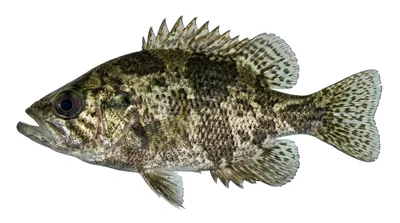
Rock bass
Ambloplites rupestris
- Freshwater
- Least Concern
- Max length
- 43 cm
- Class
- Teleostei
- Order
- Centrarchiformes
- Family
- Centrarchidae
- Genus
- Ambloplites
- North America - Inland waters
- Europe - Inland waters
About the rock bass
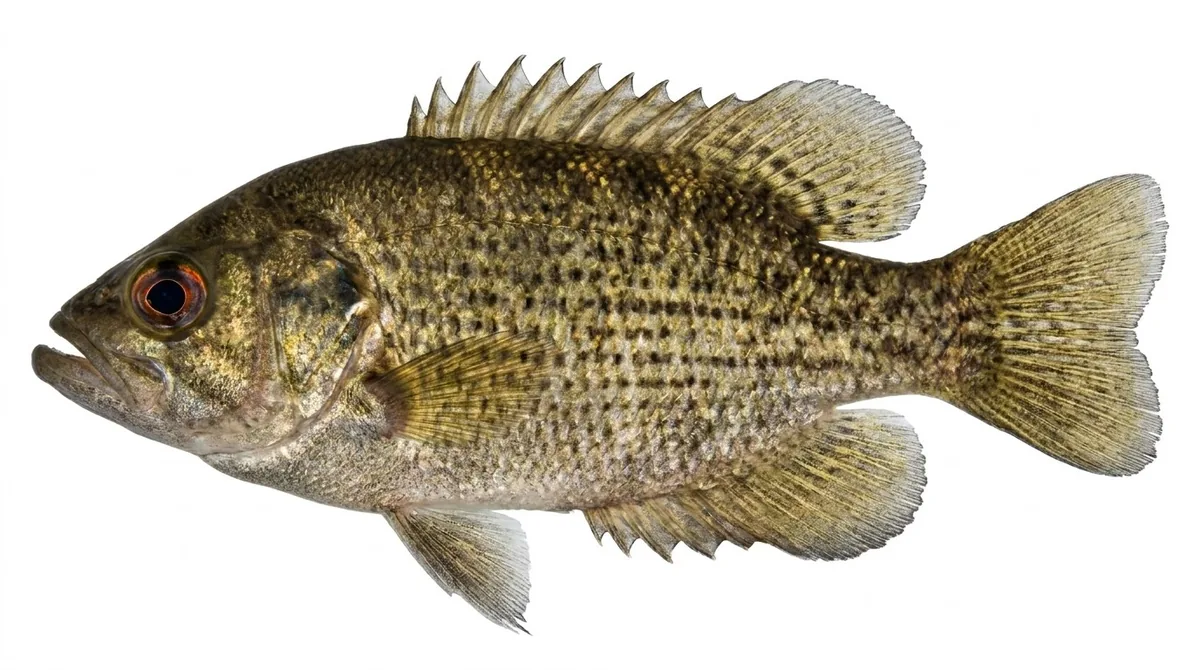
The rock bass (Ambloplites rupestris), also known as the rock perch, goggle-eye, red eye, and black perch, is a freshwater fish native to east-central North America. This red-eyed fish is a species of freshwater fish in the sunfish family (Centrarchidae) of order Centrarchiformes and can be distinguished from other similar species by the six spines in the anal fin (other sunfish have only three anal fin spines).
Habitat
Rock bass prefer clear, rocky, and vegetated stream pools and lake margins. Rocky banks of northeastern lakes and reservoirs are a common habitat for rock bass. Their favorite habitat contains some vegetation with rocky bottoms and cool to warm waters. Rock bass species are usually found near rocky shorelines. They can be surprisingly unflustered by the presence of human activity, living under lakeside docks and near swimming areas. Rock bass are frequently seen in groups, particularly near other sunfish.
Distribution
Rock bass are native to the St Lawrence River and Great Lakes system, the upper and middle Mississippi River basin in North America from Québec to Saskatchewan in the north down to Missouri and Arkansas, south to the Savannah River, and throughout the eastern U.S. from New York through Kentucky and Tennessee to the northern portions of Alabama and Georgia and Florida in the south. The rock bass has also been found in the Nueces River system in Texas. A population introduced to the Loire River in France between 1904 and 1910 is successfully self-sustaining, but not invasively expanding, more than 100 years later.
Behaviour
Large bass, northern pike, muskie, and walleye prey on young rock bass. Rock bass compete with smallmouth bass for food. It is carnivorous, and its diet consists of smaller fish, including their own young at times, yellow perch, and minnows, as well as insects, and crustaceans. Rock bass are occasionally known to take food from the surface. Adult Rock bass may eat heavily, particularly in the evening and early in the morning.
Description from Wikipedia, available under CC BY-SA.
Where the rock bass lives
Distribution data from GBIF (DOI: 10.15468/dl.8rzs8d).
Also known as
- Black perch
- Crapet de roche
- Steinbarsch
- Bass czerwonooki
- Klippabborre
- Kiviahven
- Raudonakis akmenyninis ešerys
- Steenbaars
- 岩鈍鱸
Where to catch rock bass
- Achensee Austria Lake · Tyrol
- Attersee Austria Lake · live river data
- Danube River at Vienna Austria River · Vienna
- Inn River at Innsbruck Austria River · live river data
- Neusiedler See Austria Lake · live river data
- Traunsee Austria Lake · live river data