Fishing Calendar App
Port Jackson shark
Heterodontus portusjacksoni
- Saltwater
- Least Concern
- Max length
- 165 cm
- Class
- Elasmobranchii
- Order
- Heterodontiformes
- Family
- Heterodontidae
- Genus
- Heterodontus
- Indian Ocean, Eastern
- Pacific, Southwest
About the port jackson shark
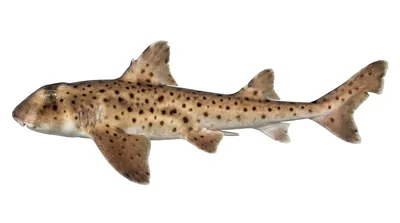
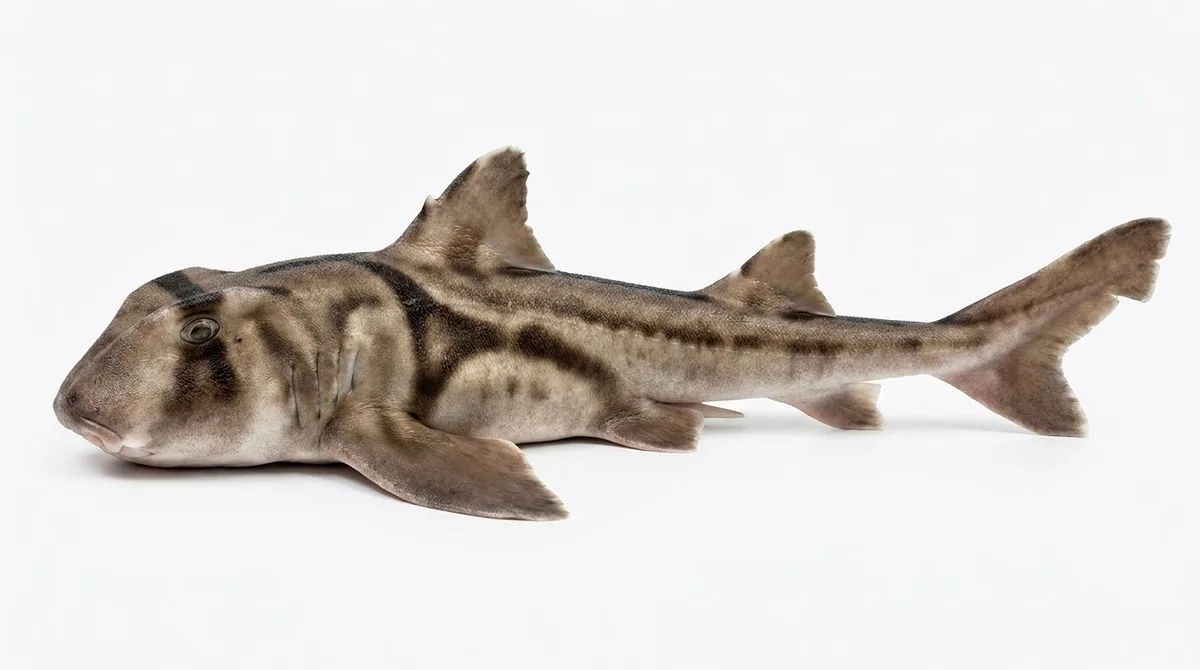
The Port Jackson shark (Heterodontus portusjacksoni) is a nocturnal, oviparous (egg laying) type of bullhead shark of the family Heterodontidae, found in the coastal region of southern Australia, including the waters off Port Jackson. It has a large, blunt head with prominent forehead ridges and dark brown harness-like markings on a lighter grey-brown body, and can grow up to 1.65 metres (5.5 ft) long. They are the largest in the genus Heterodontus.
The Port Jackson shark is a migratory species, traveling south in the summer and returning north to breed in the winter. It feeds on hard-shelled mollusks, crustaceans, sea urchins, and fish. Identification of this species is very easy due to the pattern of harness-like markings that cross the eyes, run along the back to the first dorsal fin, then cross the side of the body, in addition to the spine in front of both dorsal fins.
Distribution
The Port Jackson shark is endemic to the temperate waters around southern Australia and can be found in an area stretching from southern Queensland, south to Tasmania, and west to the central coast of Western Australia. Dubious reports exist of catchings as far north as Western Australia's York Sound. A single specimen of this species was collected in a set net at Mākara, Wellington in 1954. Two more specimens reported as being from New Zealand were presented to the British Museum however although these two specimens have been located they have no information on their collection location to confirm this assertion. and on one occasion, it has occurred off the coast of New Zealand. Genetic studies suggest two Australian groups, one found from Northeastern Victoria to Western Australia and the second found from Southern Queensland to New South Wales. The species is believed to have originated somewhere off the coast of South Africa. It usually lives at depths of less than 100 metres (330 ft), but has been known to go as deep as 275 metres (902 ft).
The shark's territory is habitually on or near the sea bottom, which is also its feeding area. Rocky environments are the most common habitat, though sandy and muddy ones, as well as seagrass beds, are sometimes used. During the day, when it is usually not active, it can be found in flat areas which offer some shelter from currents (including caves) or near other sheltering positions such as rocky outcrops.
Behaviour
Port Jackson shark adults are often seen resting in caves in groups, and prefer to associate with specific sharks based on sex and size. Juvenile Port Jackson sharks, on the other hand, do not appear to be social. A captive study showed that these juveniles did not prefer to spend time next to other sharks, even when they were familiar with each other (i.e., tank mates). Juvenile Port Jackson sharks have unique personality traits, just like humans. Some were bolder than others when exploring a novel environment and they also reacted differently to a stressful situation (in choosing a freeze or flight response).
Juvenile Port Jackson sharks are also capable of learning to associate bubbles, LED lights, or sounds with receiving a food reward, can distinguish different quantities (i.e., count), and can learn by watching what other sharks are doing.
At least in some of these lab experiments males are shyer than females and boldness increases with consecutive trials of the same experiment. In experiments with different music genres, none of the sharks tested learned to discriminate between a jazz and a classical music stimulus.
Description from Wikipedia, available under CC BY-SA.
Where the port jackson shark lives
Distribution data from GBIF (DOI: 10.15468/dl.8rzs8d).
Also known as
- Bullhead
- Bullhead shark
- Oyster crusher
- Pigfish
- Tabbigaw
- Dormilón toro
- Requin dormeur taureau
- Port-Jackson-Stierkopfhai
- Rogatek australijski
- Port jacksonhaj
- Portjacksonski bikoglavec
- Australiansarvihai
- Ausztrál bikacápa
- Hiu port jackson
- Australische varkenskophaai
- Rechin de Port Jackson
- Австралийская бычья акула
- 포트잭슨상어
- ポートジャクソンネコザメ
- Австралийска рогата акула
- Καρχαρίας του Πορτ Τζάκσον
- کوسه پورت جکسون
- כריש מפרץ ג'קסון
- Джексон акуласы
- Порт Џексон
- Рогата ајкула
- போர்ட் ஜேக்சன் சுறா
- ปลาฉลามพอร์ตแจ็กสัน
- Рогата акула австралійська
- 澳大利亞虎鯊
- قرش ميناء جاكسون