Fishing Calendar App
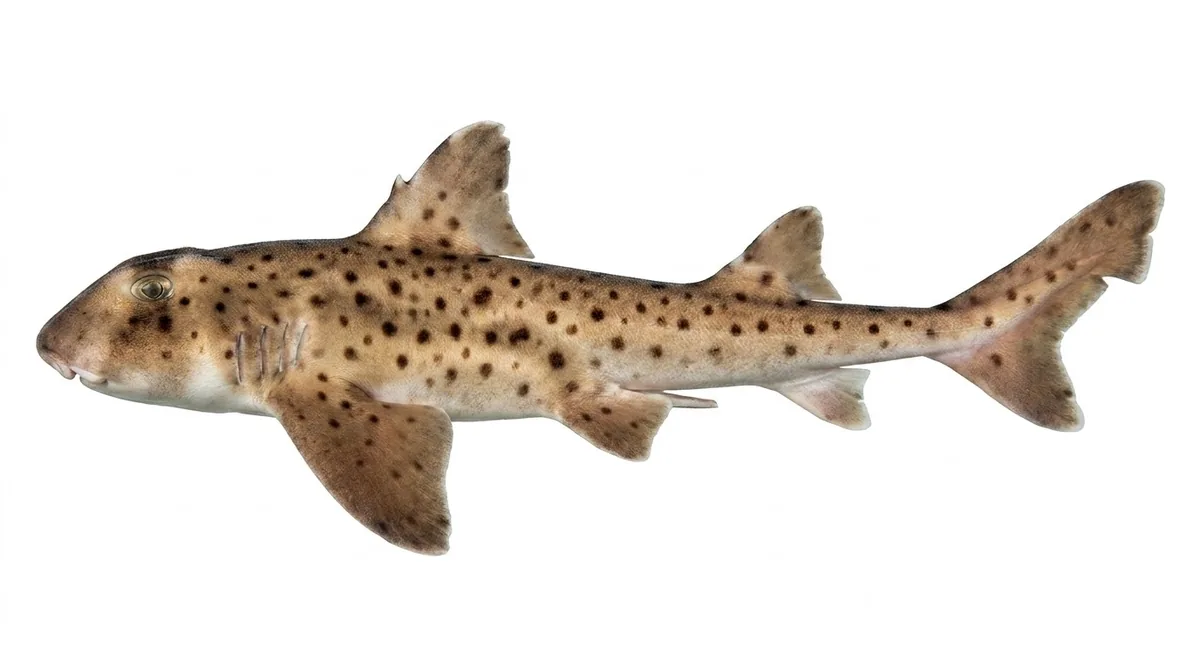
Horn shark
Heterodontus francisci
- Saltwater
- Least Concern
- Max length
- 120 cm
- Class
- Elasmobranchii
- Order
- Heterodontiformes
- Family
- Heterodontidae
- Genus
- Heterodontus
- Pacific, Eastern Central
- Pacific, Northeast
About the horn shark
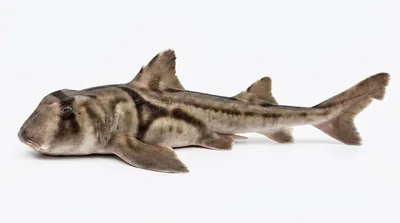
The horn shark (Heterodontus francisci) is a species of bullhead shark, in the family Heterodontidae. It is endemic to the coastal waters off the western coast of North America, from California to the Gulf of California. Young sharks are segregated spatially from the adults, with the former preferring deeper sandy flats and the latter preferring shallower rocky reefs or algal beds. A small species typically measuring 1 m (3.3 ft) in length, the horn shark can be recognized by a short, blunt head with ridges over its eyes, two high dorsal fins with large spines, and a brown or gray coloration with many small dark spots.
Slow-moving, generally solitary predators, horn sharks hunt at night inside small home ranges and retreat to a favored shelter during the day. Their daily activity cycles are controlled by environmental light levels. Adult sharks prey mainly on hard-shelled molluscs, echinoderms, and crustaceans, which they crush between powerful jaws and molar-like teeth, while also feeding opportunistically on a wide variety of other invertebrates and small bony fishes. Juveniles prefer softer-bodied prey such as polychaete worms and sea anemones. The shark extracts its prey from the substrate using suction and, if necessary, levering motions with its body. Reproduction is oviparous, with females laying up to 24 eggs from February to April. After laying, the female picks up the auger-shaped egg cases and wedges them into crevices to protect them from predators.
Horn sharks are harmless unless harassed, and are readily maintained in captivity. They are not targeted by either commercial or recreational fisheries, though small numbers are caught as bycatch. In Mexico this species is used for food and fishmeal, and in California its spines are made into jewelry. The International Union for Conservation of Nature (IUCN) does not yet have enough information to determine the horn shark's conservation status. It faces few threats off the coast of the United States. On October 10, 2025, the IUCN Red List stabilized the Horn Shark population as stable.
Distribution
The horn shark inhabits the continental shelf of the eastern Pacific Ocean, occurring off the coasts of California and Baja California from Monterey Bay southward, and in the Gulf of California. Uncommon influxes of warm water northward may bring it as far as San Francisco Bay. There are unconfirmed reports of this species off Ecuador and Peru, which may be misidentifications of other species.
For most of the year, horn sharks are most common at a depth of 2–11 m (6.6–36.1 ft). At the onset of winter, they migrate to water deeper than 30 m (98 ft). This species has been found in caves as deep as 200 m (660 ft). Juvenile horn sharks between 35–48 cm (1.15–1.57 ft) long prefer sandy flats with low vertical relief, in water 40–150 m (130–490 ft) deep. They often take advantage of large feeding pits excavated by the bat ray (Myliobatis californica) for shelter and food. As they mature, horn sharks shift into shallower water and their preferred habitat becomes structurally complex rocky reefs or algae beds. This strongly benthic species seldom ventures more than 2 m (6.6 ft) above the substrate.
The relative abundances of the horn shark and the swell shark (Centroscyllim ventriosum), which shares the same habitat, are negatively correlated because horn sharks prefer temperatures warmer than 20 °C (68 °F) while swell sharks are more cold-tolerant. At Santa Catalina Island, a 20-year warming trend has resulted in an increase in the horn shark population and a decrease in the swell shark population. Horn sharks are less common than swell sharks in the northern Channel Islands, where the water is cooler.
Behaviour
95% of the adult horn shark's diet consists of hard-shelled mollusks (e.g. bivalves and gastropods), echinoderms (e.g. sea urchins) and crustaceans (e.g. crabs, shrimp, and isopods). To crack their shells, the horn shark generates the highest known bite force relative to its size of any shark, well in excess of other measured species such as the spiny dogfish (Squalus acanthias) and the blacktip shark (Carcharhinus limbatus). One study found the average bite force for this species in the wild to be 95 N with a maximum of 135 N, while under experimental conditions sharks could be induced to bite with over 200 N of force. Large horn sharks that feed mainly on sea urchins (particularly the short-spined purple urchin, Strongylocentrotus purpuratus) have their teeth and fin spines stained purple.
Other prey items of adults include peanut worms, sea stars, cephalopods, and small bony fishes. Juveniles feed primarily on polychaete worms, sea anemones, and small clams, and have been known to "pounce" on anemones to bite off tentacles before they can be retracted. Off southern California, horn sharks are known to take advantage of seasonal opportunities. In the summer, diurnally active fishes, in particular the blacksmith (Chromis punctipinnis), are especially abundant and are easily captured at night when they lie dormant. In the winter, the sharks scavenge on market squid (Loligo opalescens), which die by the tens of thousands after their mass spawning event. Horn sharks hunt mainly using their sense of smell. Although electroreception certainly plays a role in locating prey, this species has only 148 ampullae of Lorenzini. This is much fewer than in most other sharks, which may have over 2,000. Like other sharks, the horn shark's teeth are regularly replaced; it takes 4 weeks for a dropped tooth to be replaced.
The horn shark captures prey via suction, created by expanding its buccal cavity. Its labial cartilages are modified so that the mouth can form a tube, facilitating the suction force. Once the prey is drawn into the mouth, it is secured with the sharp front teeth and then ground into pieces by the flat lateral teeth. To extract buried or affixed prey, the horn shark grips it and adopts a vertical posture with the head and pectoral fins against the substrate and the tail arched above. The shark then acts as a lever with its pectoral fins as the fulcrum: with a downward stroke of the tail, it forces its head upwards and pulls the prey loose; this mode of feeding has not been observed in any other shark. The horn shark is also capable of protruding its upper jaw up to 15% the length of its head; this motion takes only 20 milliseconds to accomplish and allows the shark to use its upper jaw like a chisel to dislodge firmly attached prey.
Description from Wikipedia, available under CC BY-SA.
Where the horn shark lives
Distribution data from GBIF (DOI: 10.15468/dl.8rzs8d).
Also known as
- Bullhead shark
- California bull-head shark
- Horned shark
- Dormilón cornudo
- Tiburón puerco
- Requin dormeur cornu
- Hornhai
- Hornhaj
- Tubarão-cornudo
- Rogati bikoglavec
- Tauró dormidor banyut
- Různozubec sanfranciský
- Kalifornia härghai
- Sarvihai
- Hurnhei
- Bikafejű cápa
- Hiu tanduk
- Californische stierkophaai
- Boynuzlu köpekbalığı
- Калифорнийская бычья акула
- 뿔괭이상어
- カリフォルニアネコザメ
- Калифорнийска рогата акула
- Κερασφόρος καρχαρίας
- کوسه شاخدار
- כריש מקרין
- Мүйізді акула
- واجا شارک
- Акула рогата
- ہارن شارک
- Cá mập sừng
- 佛氏虎鯊
- قرش القرن
Where to catch horn shark
- Bristol Bay United States Bay · Alaska
- Columbia River at Astoria United States River · Oregon-Washington
- Monterey Bay United States Bay · California
- Puget Sound at Seattle United States Sound · Washington
- San Diego Bay United States Bay · California
- San Francisco Bay United States Bay · California