Fishing Calendar App
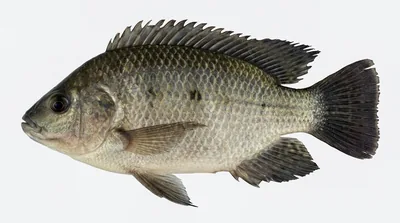
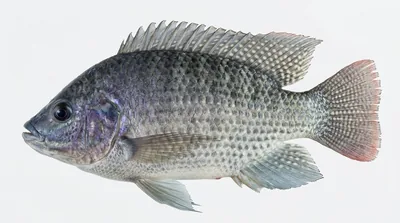
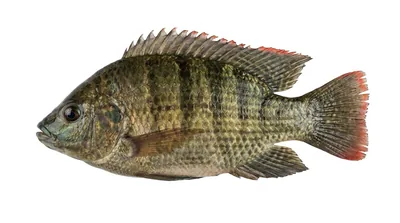
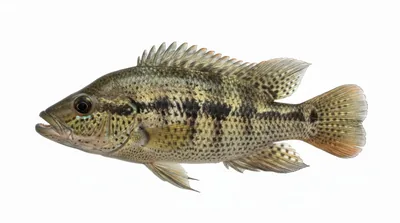
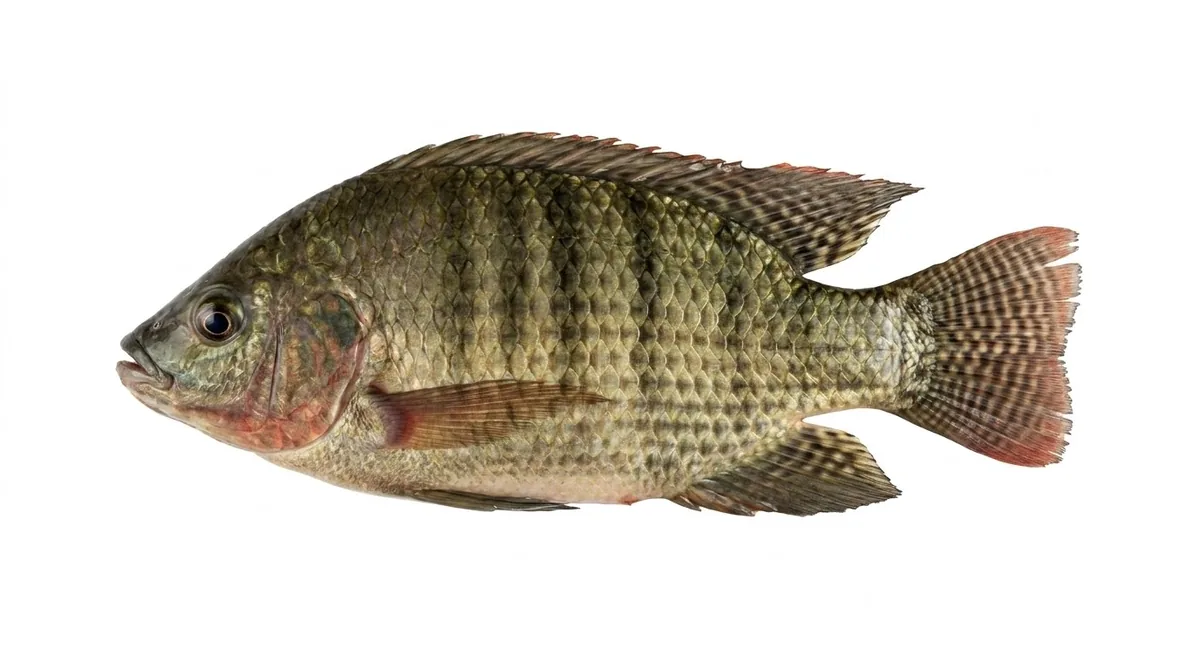
Nile tilapia
Oreochromis niloticus
- Freshwater
- Least Concern
- Max length
- 60 cm
- Class
- Teleostei
- Order
- Cichliformes
- Family
- Cichlidae
- Genus
- Oreochromis
- Africa - Inland waters
- North America - Inland waters
- South America - Inland waters
- Asia - Inland waters
- Europe - Inland waters
About the nile tilapia
The Nile tilapia (Oreochromis niloticus) is a species of tilapia, a cichlid occurring naturally in parts of Africa (such as its namesake Nile River) and the Levant, though numerous introduced populations exist outside its natural range. This current wide range is caused by its high commercial value as a food fish, where it is marketed as mango fish (not to be confused with the mango tilapia, or Sarotherodon galilaeus), nilotica, or boulti, along with many other names, both local and foreign. Due to its value, the Nile tilapia is widely aquacultured across the world due to its hardiness and a mode of reproduction conducive to mass rearing, namely mouthbrooding, and various attempts have been made to increase production yields, including hybridization with other tilapias.
Distribution
The Nile tilapia is native to larger parts of Africa, except Maghreb and almost all of Southern Africa. It is native to tropical West Africa, the Lake Chad basin, and much of the Nile system, including lakes Tana, Albert and Edward–George, as well as lakes Kivu, Tanganyika, and Turkana, and the Awash and Omo Rivers. In Israel, it is native to coastal river basins. It has been widely introduced elsewhere, both in Africa and other continents, including tens of countries in Asia, Europe, North America, and South America. In these places, it often becomes highly invasive, threatening the native ecosystems and species. However, some introduced populations historically labelled as Nile tilapia either are hybrids or another species; the Nile tilapia and blue tilapia especially often have been confused. In India, especially in the southern state of Tamil Nadu, the Nile Tilapia was introduced by K. Kamaraj, the then Chief Minister and has become a threat to the native fish species hence.
The Nile tilapia can be found in most types of freshwater habitats, such as rivers, streams, canals, lakes, and ponds, and ranging from sea level to an altitude of 1,830 m (6,000 ft). It also occurs in brackish water, but is unable to survive long-term in full salt water. The species has been recorded at water temperatures between 8 and 42 °C (46 and 108 °F), although typically above 13.5 °C (56.5 °F), and the upper lethal limit usually is at 39–40 °C (102–104 °F). Also, some variations occur depending on the population. For example, those in the northern part of its range survive down to the coldest temperatures, while isolated populations in hot springs in the Awash Basin and at Suguta River generally live in waters that are at least 32–33 °C (90–91 °F). Although Nile tilapia can survive down to relatively cold temperatures, breeding generally only occurs when the water reaches 24 °C (75 °F).
Behaviour
The Nile tilapia is mostly a herbivore, but with omnivorous tendencies especially when young. They mostly feed on phytoplankton and algae, and in some populations macrophytes (aquatic plants) also are important. Other recorded food items are detritus and aquatic insect larvae, including those of mosquitoes, making it a possible tool in the fight against malaria in Africa, which has precipitated its status as an invasive.
The Nile tilapia typically feeds during daytime, which suggests that, similar to trout and salmon, it exhibits a behavioral response to light as a main factor contributing to feeding activity. Due to its fast reproductive rate, however, overpopulation often results within groups of Nile tilapia. To obtain the necessary nutrients, night feeding may also occur due to competition for food during daylight. A recent study found evidence that, contrary to popular belief, size dimorphism between the sexes results from differential food conversion efficiency rather than different amounts of food consumed. Hence, although males and females eat equal amounts of food, males tend to grow larger due to a higher efficiency of converting food to body weight.
Description from Wikipedia, available under CC BY-SA.
Where the nile tilapia lives
Distribution data from GBIF (DOI: 10.15468/dl.8rzs8d).
Also known as
- Tilapia del Nilo
- Tilapia du Nil
- Nilbuntbarsch
- Tilapia nilowa
- Tilápia-do-nilo
- Nilmunnruger
- Nylkurper
- Tilapia Nil
- Tilàpia del Nil
- Tlamoun nilský
- Akpafiatsi
- Niilintilapia
- Nílusi tilápia
- Ikan nila
- Beitarfiskur
- Nilinė tilapija
- Tilapia Neily
- Nilmunnrugar
- Ingege
- Rô phi sông Nin
- Nila
- Нильская тиляпия
- 나일틸라피아
- بلطي نيلي
- بلطى نيلى
- Нилска тилапия
- নাইলোটিকা
- تیلاپیای نیل
- ကဏေန်
- ปลานิล
- Тиляпія нільська
- 尼羅口孵非鯽
Where to catch nile tilapia
- Achensee Austria Lake · Tyrol
- Attersee Austria Lake · live river data
- Danube River at Vienna Austria River · Vienna
- Inn River at Innsbruck Austria River · live river data
- Neusiedler See Austria Lake · live river data
- Traunsee Austria Lake · live river data