Fishing Calendar App
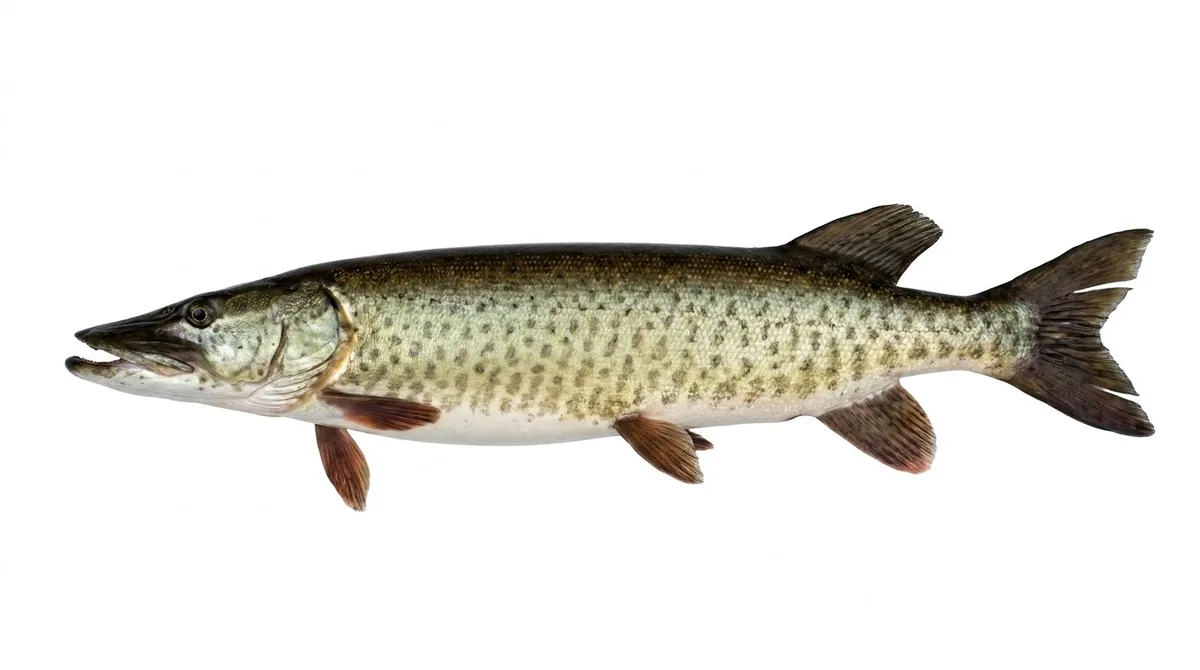
Muskellunge
Esox masquinongy
- Freshwater
- Least Concern
- Max length
- 180 cm
- Class
- Teleostei
- Order
- Esociformes
- Family
- Esocidae
- Genus
- Esox
- North America - Inland waters
About the muskellunge
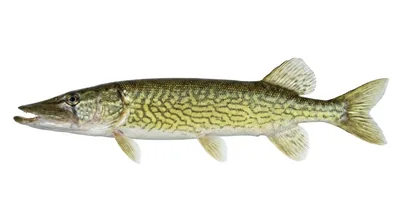
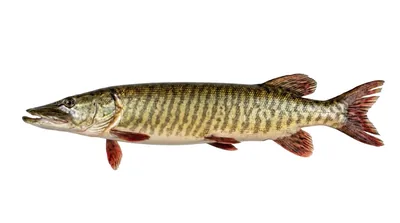
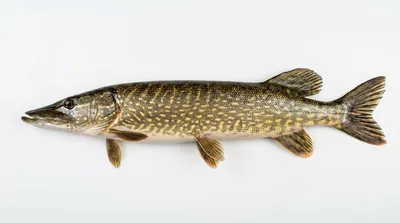
The muskellunge (Esox masquinongy), often shortened to muskie, musky, ski, or lunge, is a species of large freshwater predatory fish native to North America. It is the largest member of the pike family, Esocidae.
Habitat
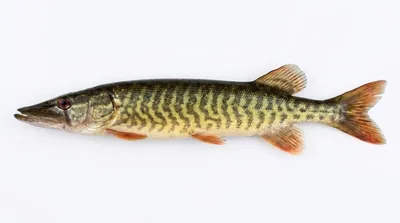
Muskellunge are found in oligotrophic and mesotrophic lakes and large rivers from Michigan, Wisconsin, and Minnesota through the Great Lakes region, Chautauqua Lake in western New York, north into Canada, throughout most of the St Lawrence River drainage, and northward throughout the upper Mississippi valley, although the species also extends as far south as Chattanooga in the Tennessee River valley. Also, a small population is found in the Broad River in South Carolina. Several North Georgia reservoirs also have healthy stocked populations of muskie. They are also found in the Red River drainage of the Hudson Bay basin. Muskie were introduced to western Saint John River in the late 1960s and have now spread to many connecting waterways in northern Maine. The Pineview Reservoir in Utah is one of three Utah locations where the hybrid Tiger muskellunge is found.
They prefer clear waters where they lurk along weed edges, rock outcrops, or other structures to rest. A fish forms two distinct home ranges in summer: a shallow range and a deeper one. The shallow range is generally much smaller than the deeper range due to shallow water heating up. A muskie continually patrols the ranges in search of available food in the appropriate conditions of water temperature.
Behaviour
Muskellunge are sometimes gregarious, forming small schools in distinct territories. Muskellunge feeding behavior is directly synchronized with the lunar cycle. During both full and new moons, an increase in feeding activity can be attributed to the increase of moonlight, as it most similarly simulates daytime feeding. They spawn in mid- to late spring, somewhat later than northern pike, over shallow, vegetated areas. A rock or sand bottom is preferred for spawning so the eggs do not sink into the mud and suffocate. The males arrive first and attempt to establish dominance over a territory. Spawning may last from five to 10 days and occurs mainly at night. The eggs are negatively buoyant and slightly adhesive; they adhere to plants and the bottom of the lake. Soon afterward, they are abandoned by the adults. Those embryos which are not eaten by fish, insects, or crayfish hatch within two weeks. The larvae live on yolk until the mouth is fully developed, when they begin to feed on copepods and other zooplankton. They soon begin to prey upon fish. Juveniles generally attain a length of 30 cm (12 inches) by November of their first year.
Description from Wikipedia, available under CC BY-SA.
Where the muskellunge lives
Distribution data from GBIF (DOI: 10.15468/dl.8rzs8d).
Also known as
- Maskinongé
- Szczupak amerykański
- Maskalung
- Orjaška ščuka
- Maskinoce
- Štika muskalunga
- Jättihauki
- Щука-маскинонг
- ايسوكس ماسكينونجى
- Маскинонг
- اردکماهی زشت
- זאב נהרות מוסקי
- Маскиноңдор
- Щука-маскінонг
- 北美狗鱼
Where to catch muskellunge
- Arkansas River at Salida United States River · live river data
- Cape Fear River United States River · North Carolina
- Green River (Flaming Gorge) United States River · live river data
- Kenai River United States River · Alaska
- Kentucky Lake United States Reservoir · Kentucky-Tennessee
- Lake Champlain United States Lake · live river data