Fishing Calendar App
Little tunny
Euthynnus alletteratus
- Saltwater
- Least Concern
- Max length
- 122 cm
- Class
- Teleostei
- Order
- Scombriformes
- Family
- Scombridae
- Genus
- Euthynnus
- Atlantic, Eastern Central
- Atlantic, Northwest
- Atlantic, Southwest
- Atlantic, Western Central
- Indian Ocean, Western
- Mediterranean and Black Sea
About the little tunny
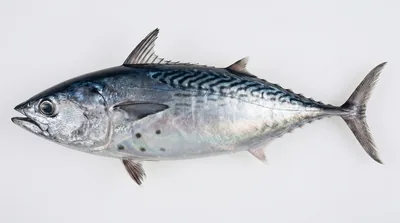
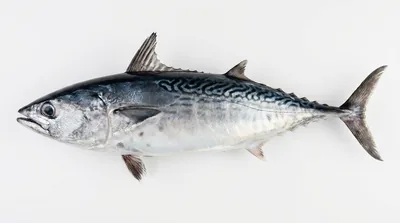
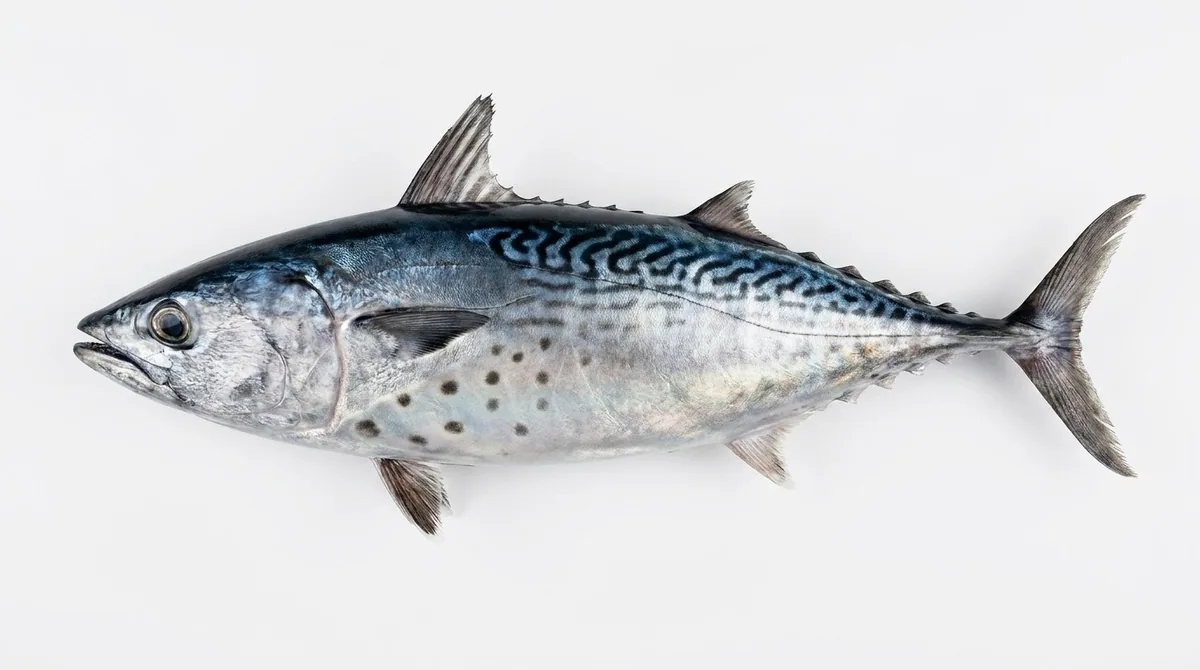
The little tunny (Euthynnus alletteratus), also known as the little tuna, false albacore, or erroneously as the blue bonito, is a species of tuna in the family Scombridae. It can be found in the Atlantic Ocean and the Mediterranean and Black seas; in the western Atlantic, it ranges from Brazil to the New England states. The little tunny is a pelagic fish that can be found regularly in both offshore and inshore waters, and it is classified as a highly migratory species. The little tunny is best identified by the "worm-like" markings on its back and the dark spots appearing between its pectoral and ventral fins.
Commercially, the fish is used as bait for sharks and marlin due to its high oil content and hook retention. Because of its strong "fishy" taste and the considerable effort required to prepare it, the little tunny is considered by many to be a rough fish and is not commonly eaten. However, it is sought after as a sport fish due to its line-stripping 64 km/h (40 mph) runs and hard fighting ability when hooked. By trolling with lures near reefs, it can be caught on hook and line.
Distribution
The little tunny is found in the neritic waters of the temperate and tropical zones in the Atlantic Ocean. It can also be found in the waters of the Mediterranean Sea and the Black Sea. In the eastern Atlantic, the little tunny has been found from Skagerrak to South Africa. Although found it this broad range of latitudes, it is rare north of the Iberian Peninsula or farther south than Brazil. On the Atlantic coast of the United States, they can be caught as far north as Cape Cod, Massachusetts, and as far south as the tip of Florida, as well as throughout the waters of the Gulf of Mexico.
The little tunny's habitat tends to be near-shore waters, much closer to shore than most other tunas. They live in and around inlets, points, jetties, and sandbars. All of these places are where bait fish like sardine and menhaden, both favorites of the little tunny, form large schools, which are very helpful to the little tunny's feeding style. While the little tunny is abundant in offshore ocean waters, it is unusual to find it in brackish water of estuaries. The very young will enter estuaries in South Africa. The little tunny prefers relatively warm water, from 24–30 °C (75–86 °F). The little tunny migrates south in the winter and fall, and northward in the spring, through coastal waters. It is not as migratory as other tuna species.
The little tunny is typically a schooling species. It lives in schools based primarily on fish size rather than species, so other members of the family Scombridae, like the Atlantic bonito, may be present. These schools may cover areas up to 3.2 kilometres long and have more than 5000 induviduals. Little tunny that have not yet reached adulthood form tight schools offshore. Larger schools are more common offshore whereas smaller groups may wander far inshore.
Behaviour
In coastal waters along the North American eastern seaboard, little tunny are carnivorous, and primarily feed on small fish and invertebrates that occur in schools. Its diet consists mostly of fish; it particularly likes the Atlantic bigeye and largehead hairtail. Second to fish, the little tunny consumes crustaceans, and lastly cephalopods and gastropods make up a small part of its diet. Sardines, scad, and anchovies are common in the diet along with squid, stomatopods, and organisms from the family Diogenidae. The diet of the fish is also relative to its size. A smaller fish's diet typically consists of clupeiforms, and larvae, while the larger fish mostly eat Maurolicus muelleri. The typical diet is very similar to that of the king mackerel because the fish are of a similar size and live in the same area of the water column. The little tunny is an opportunistic predator, feeding on crustaceans, clupeid fishes, squids, and tunicates. Its diet also responds to seasonal changes in food availability. There is conflicting evidence on if the little tunny is a nocturnal or diurnal feeder. It is a specialist feeder, often feeding on herring and sardines in inshore waters near the surface of the water. The little tunny commonly feeds in large schools because their primary food sources (small fish and the larval forms of crustaceans) are also typically in schools.
Description from Wikipedia, available under CC BY-SA.
Where the little tunny lives
Distribution data from GBIF (DOI: 10.15468/dl.8rzs8d).
Also known as
- Mackerel
- Bonito
- False albacore
- Little tuna
- Alletterato
- Tonnetto
- Bacoreta
- Thonine commune
- Thonine
- Tunnina
- Merma
- Tunnin
- Pegasti tun
- Atlantiese kleintuna
- Tuňák malý
- Tiwna Bach
- Lanpo bularpikart
- Sembak
- Dwergtonijn
- Пятнистый тунец
- Петнист тунец
- Тунець малий
- 小鮪
- كبريت
Where to catch little tunny
- Dubrovnik Coast Croatia Coast · Dubrovnik-Neretva
- Istria Coast Croatia Coast · Istria
- Kornati Archipelago Croatia Archipelago · Šibenik-Knin
- Kvarner Gulf Croatia Gulf · Kvarner
- Neretva Delta Croatia Delta · live river data
- Pag Channel Croatia Channel · Zadar