Fishing Calendar App
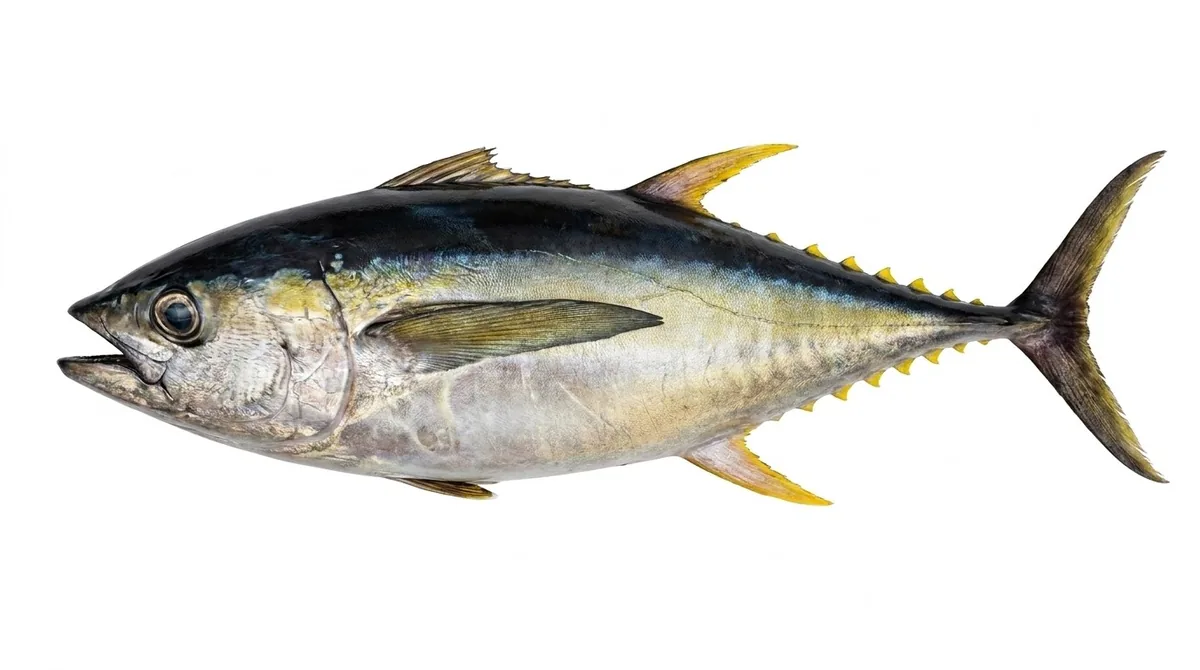
Yellowfin tuna
Thunnus albacares
- Saltwater
- Least Concern
- Max length
- 239 cm
- Class
- Teleostei
- Order
- Scombriformes
- Family
- Scombridae
- Genus
- Thunnus
- Atlantic, Eastern Central
- Atlantic, Northeast
- Atlantic, Northwest
- Atlantic, Southwest
- Atlantic, Western Central
- Indian Ocean, Eastern
- Indian Ocean, Western
- Pacific, Eastern Central
- Pacific, Northwest
- Pacific, Southeast
- Pacific, Southwest
- Pacific, Western Central
About the yellowfin tuna
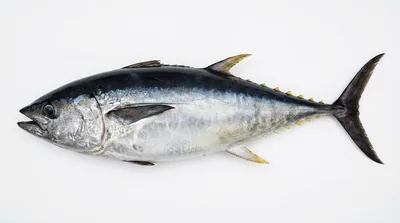
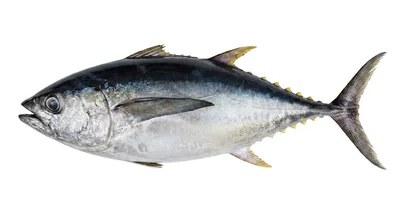
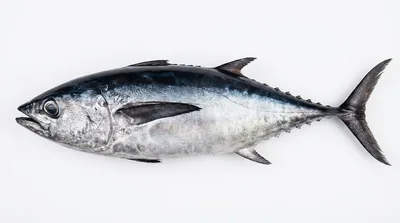
The yellowfin tuna (Thunnus albacares) is a species of tuna found in pelagic waters of tropical and subtropical oceans worldwide.
Yellowfin is often marketed as ahi, from the Hawaiian ʻahi, a name also used there for the closely related bigeye tuna (Thunnus obesus). The species name, albacares ("white meat") can also lead to confusion: in English, the albacore (Thunnus alalunga) is a different species, while yellowfin is officially designated albacore in French and referred to as albacora by Portuguese fishermen.
Habitat
Yellowfin tuna are epipelagic fish that inhabit the mixed surface layer of the ocean above the thermocline. Sonic tracking has found that although yellowfin tuna, unlike the related bigeye tuna, mostly range in the top 100 m (330 ft) of the water column, another study reported that depth tends to vary with time of day: 90% of their recorded depth values were shallower than 88 m (289 ft) during the night, and shallower than 190 m (620 ft) during the day.
Although yellowfin tuna penetrate the thermocline relatively infrequently, they are capable of diving to considerable depths. An individual tagged in the Indian Ocean with an archival tag spent 85% of its time in depths shallower than 75 m (246 ft), but was recorded as having made three dives to 578 m (1,896 ft), 982 m (3,222 ft) and 1,160 m (3,810 ft). The maximum dive depth measured in a second study was 1,592 m (5,223 ft).
Behaviour
Although mainly found in deep offshore waters, yellowfin tuna may approach shore when suitable conditions exist. Mid-ocean islands such as the Hawaiian archipelago, other island groups in the Western Pacific, Caribbean and Red sea Bab-el-Mandeb in the Indian Ocean, Indonesia, Maldives, as well as the volcanic islands of the Atlantic such as Ascension Island and Saint Helena, often harbor yellowfin feeding on the baitfish these spots concentrate close to the shoreline. Yellowfin may venture well inshore of the continental shelf when water temperature and clarity are suitable and food is abundant.
Yellowfin tuna often travel in schools with similarly sized companions. They sometimes school with other tuna species and mixed schools of small yellowfin, and skipjack tuna, in particular, are commonplace. They are often associated with various species of dolphins or porpoises, as well as with larger marine creatures such as whales and whale sharks. They also associate with drifting flotsam such as logs and pallets, and sonic tagging indicates some follow moving vessels. Hawaiian yellowfins associate with anchored fish aggregation devices and with certain sections of the 50-fathom curve.
Description from Wikipedia, available under CC BY-SA.
Where the yellowfin tuna lives
Distribution data from GBIF (DOI: 10.15468/dl.8rzs8d).
Also known as
- Allison tuna
- Yellow-fin tunny
- Thon jaune
- Albacore
- Albacore à nageoires jaunes
- Thon à nageoires jaunes
- Gelbflossen-Thun
- Gelbflossenthunfisch
- Gulfenad tonfisk
- Tonno albacora
- Rumenoplavuti tun
- Atún aleta amarilla
- Atún claro
- Atún de aleta amarilla
- Rabil
- Tuńczyk żółtopłetwy
- Galha-à-ré
- Gulfinnetun
- Albakor
- Pa'ak
- Geelvintuna
- Tuna sirip kuning
- Tonyina d'aleta groga
- Carao
- Tuňák žlutoploutvý
- Tiwna Melyn
- Atun hegats-hori
- Keltaevätonnikala
- Tuna
- Tuinnín buí
- Atún de aleta amarela
- Žutoperajna tuna
- Sárgaúszójú tonhal
- Guli túnfiskur
- Geltonpelekis tunas
- Tonelina mavo
- Aya sirip kuning
- Geelvintonijn
- Albacora
- Tambakol
- Sarıkanat orkinos
- Baragsikol
- Madidihang
- 황다랑어
- Желтопёрый тунец
- Тунец желтопёрый
- キハダ
- Sarıüzgəc tunes
- Жълтопера риба тон
- ރީނދޫ އުރަހަ ކަންނެލި
- گیدر
- טונה זהובה
- කෙලවල්ලා
- Жуторепа туна
- மஞ்சள்தூவி சூரை
- ปลาทูน่าครีบเหลือง
- Тунець жовтоперий
- Cá ngừ vây vàng
- 黄鳍金枪鱼
- تونة الزعنفة الصفراء
Where to catch yellowfin tuna
- Limfjord Denmark Fjord · North Jutland
- Skagen Coast Denmark Coast · North Jutland
- Helsinki Archipelago Finland Archipelago · Uusimaa
- Rügen (Baltic Coast) Germany Coast · Mecklenburg-Vorpommern
- Sylt (Wadden Sea) Germany Coast · Schleswig-Holstein
- Dingle Bay Ireland Bay · Munster