Fishing Calendar App
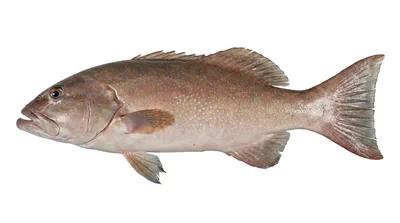
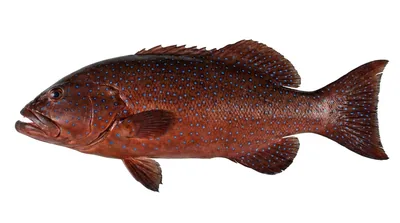
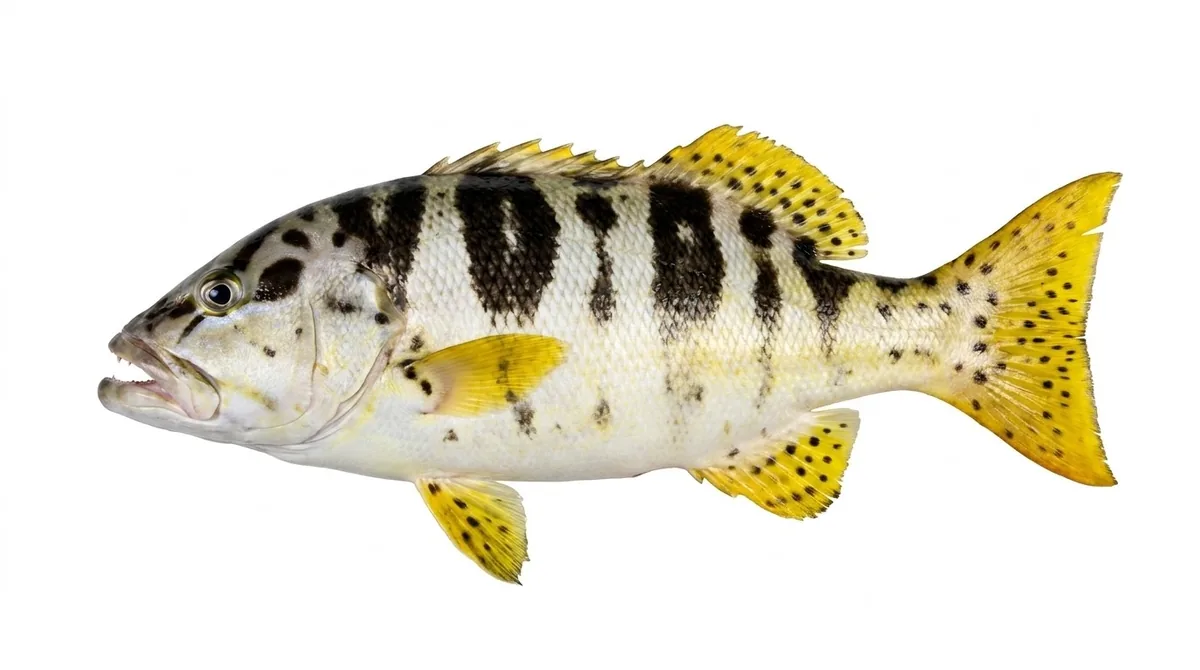
Blacksaddled coralgrouper
Plectropomus laevis
- Saltwater
- Least Concern
- Max length
- 125 cm
- Class
- Teleostei
- Order
- Perciformes
- Family
- Epinephelidae
- Genus
- Plectropomus
- Indian Ocean, Eastern
- Indian Ocean, Western
- Pacific, Eastern Central
- Pacific, Western Central
About the blacksaddled coralgrouper
Plectropomus laevis, known commonly as the black-saddled coral grouper, cluespotted coral trout, blacksaddled coral trout, blue-spot trout, Chinese footballer, footballer cod, footballer coral trout, oceanic coral trout or tiger trout, is a species of marine ray-finned fish, a grouper from the subfamily Epinephelinae which is part of the family Serranidae, which also includes the anthias and sea basses. It is found in the Indo-Pacific region.
Habitat
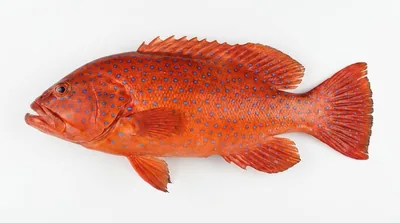
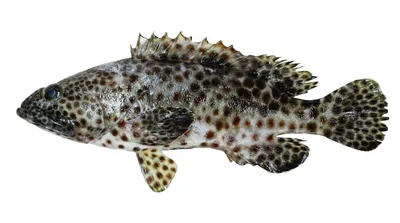
Plectropomus laevis is found in lagoon areas which have good coral cover and the seaward side of reefs where it appears to prefer reef channels and the outer shelf of the reef. It is found at depths between 4 and 100 metres (13 and 328 ft). The juveniles of both colour phases with total length's of less than 20 centimetres (7.9 in) mimic Valentin's sharpnose puffer and usually scull with their pectoral fins for swimming while theyhold the caudal fin folded and the first few spines of the spiny part of the dorsal fin held erect. This species forages over larger areas and a wider depth range than the sympatric Plectropomus leopardus. They are monandric protogynous hermaphrodites, in which the males only develop from mature females, the youngest males found have been 9 years of age and females mature at 2.2 years and at around 40 centimetres (16 in) in fork length. This species is comparatively fast growing and may attain a length of 50 centimetres (20 in) in less than four years and females may be sexually mature in less than three years. They form small spawning aggregations although large aggregations have been recorded from the northern Great Barrier Reef. It is likely that this species spawns in deeper waters on reef fronts compared to P. leopardus and this may be the reason for the lack of spawning observations for P. laevis. The adults feed on a variety of larger reef fishes, including other groupers, while the juveniles feed on smaller fish and invertebrates such as crustaceans and squid.
Distribution
Plectropomus laevis has a wide Indo-Pacific distribution. In eastern Africa it occurs from Kenya to Mozambique through islands of the tropical Indian Ocean, but not the Asian coast, and east into the Pacific Ocean as far east as French Polynesia and Pitcairn Island, north as far as southern Japan and south as far as Australia. In Australia it is found at Rowley Shoals and Scott Reef in Western Australia, Ashmore Reef in the Timor Sea and on the Great Barrier Reef as far south as One Tree Island and other reefs in the Coral Sea of Queensland, as well as in the region of Lord Howe Island in the Tasman Sea/
Description from Wikipedia, available under CC BY-SA.
Where the blacksaddled coralgrouper lives
Distribution data from GBIF (DOI: 10.15468/dl.8rzs8d).
Also known as
- Garoupa-mímica
- Swartsaal-luiperdkabeljou
- Kiilameriahven
- Kerapu sunuh pelana
- Чернопятнистый сендеронг
- コクハンアラ
- بلكتروبوموس ليفيس
- Cá mú vân yên ngựa
- 横斑鳃棘鲈