Fishing Calendar App
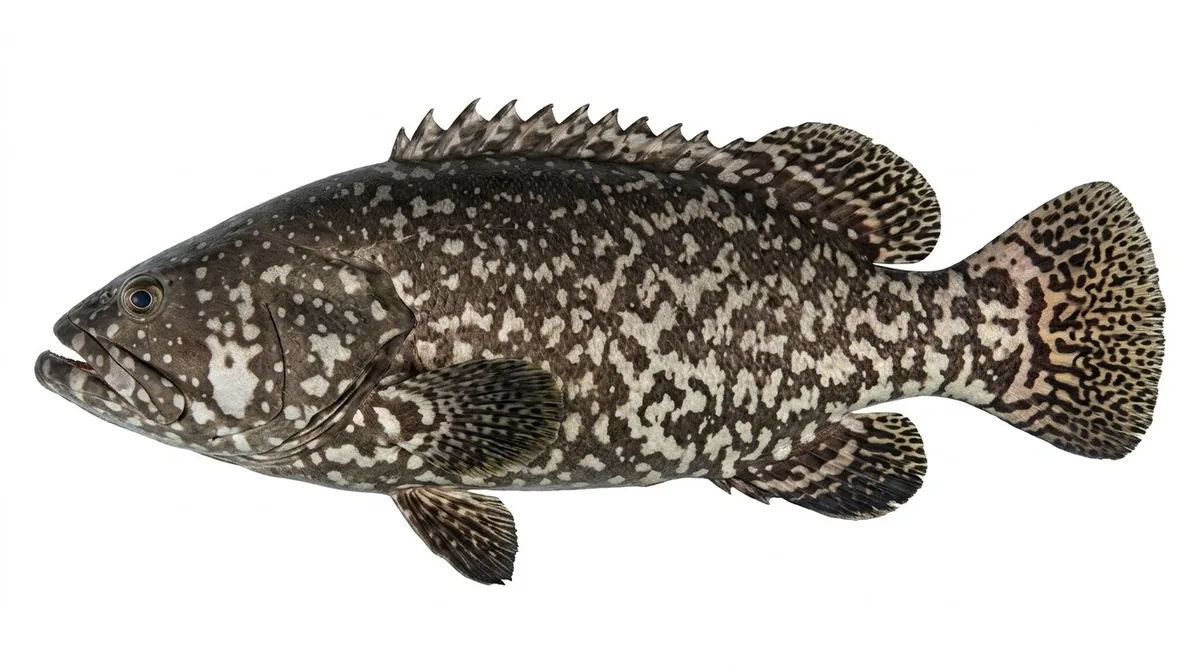
Giant grouper
Epinephelus lanceolatus
- Saltwater
- Data Deficient
- Max length
- 270 cm
- Class
- Teleostei
- Order
- Perciformes
- Family
- Epinephelidae
- Genus
- Epinephelus
- Indian Ocean, Western
- Pacific, Eastern Central
- Pacific, Western Central
About the giant grouper
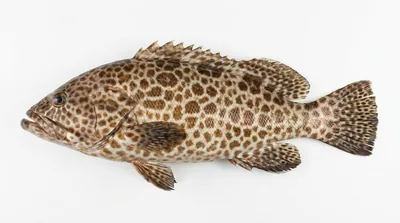
The giant grouper (Epinephelus lanceolatus), also known as the Queensland groper (grouper), brindle grouper or mottled-brown sea bass, is a species of marine ray-finned fish, a grouper from the subfamily Epinephelinae which is part of the family Serranidae, which also includes the anthias and sea basses. It has a wide Indo-Pacific distribution and is one of the largest extant species of bony fish.
Habitat
The giant grouper is a species of shallow water fish and can be found at depths of 1 to 100 metres (3.3 to 328.1 ft). It is associated with reefs and is the largest known bony fish found on reefs. Large specimens have been caught from shore and in harbours. They are found in caves and in wrecks while the secretive juveniles occur in reefs and are infrequently observed. The adults are mainly solitary and hold territories on the outer reef and in lagoons. They have also been caught in turbid water over silt or mud sea beds by prawn fishermen. The giant grouper is an opportunistic ambush predator which feeds on a variety of fishes, as well as small sharks, juvenile sea turtles, crustaceans and molluscs which are all swallowed whole. Fish which inhabit coral reefs and rocky areas favour spiny lobsters as prey; a 177-centimetre (70 in) specimen taken off Maui in Hawaii had a stomach content of two spiny lobsters and a number of crabs. Fish living in estuarine environments in South Africa were found to be feeding almost exclusively on the crab Scylla serrata. This species is normally solitary and long-lived. They are, however, curious and frequently approach divers closely. They are not generally considered dangerous to humans but divers are advised to treat large specimens with caution and not to hand feed them as there have been reports of large specimen attacking humans.
Distribution
The giant grouper has a wide Indo-Pacific distribution, it is the most widely distributed species of grouper in the world. It occurs from the Red Sea and the eastern coasts of Africa as far south as Algoa Bay in South Africa and across the Indian Ocean into the Western Pacific Ocean as far east as the Pitcairn Islands and Hawaii. They occur as far north as southern Japan and as far south as Australia. In Australia it is found from Rottnest Island in Western Australia north and east along the tropical coasts of Australia, including offshore reefs, and then south along the eastern coast to Woy Woy, New South Wales. It also occurs around Christmas Island and Cocos (Keeling) Islands and the Elizabeth and Middleton Reefs Marine National Park Reserve in the Tasman Sea. There have also been reports from the Younghusband Peninsula in South Australia and north eastern New Zealand. It is absent from the Persian Gulf but it is present off the coast of Pakistan and southern Oman. It has been listed as a potential invasive species in the Bahamas but its presence in that region requires verification.
Description from Wikipedia, available under CC BY-SA.
Where the giant grouper lives
Distribution data from GBIF (DOI: 10.15468/dl.8rzs8d).
Also known as
- Brindle grouper
- Groper
- Mottled-brown sea bass
- Queensland groper
- Dunkler Riesenzackenbarsch
- Itajara goliat
- Garoupa-gigante
- Geuruntông
- Briekwabaars
- Kerapu raksasa
- Anfós lanceolat
- Kugtong
- Kanic obrovský
- Jättimeriahven
- Avu
- Kerapu kertang
- Kerapu pertang
- Donkere reuzentandbaars
- Dáádílítsoh
- Индоокеанский малоглазый групер
- 대왕바리
- タマカイ
- Гигантски групер
- דקר ענקי
- ปลาหมอทะเล
- Cá mú nghệ
- 鞍帶石斑魚
- 龍躉
- هامور عملاق