Fishing Calendar App
Japanese sea bass
Lateolabrax japonicus
- Freshwater & Saltwater
- Max length
- 102 cm
- Class
- Teleostei
- Order
- Acropomatiformes
- Family
- Lateolabracidae
- Genus
- Lateolabrax
- Asia - Inland waters
- Pacific, Northwest
About the japanese sea bass
The Japanese sea bass (Lateolabrax japonicus) is a species of catadromous marine ray-finned fish from the Asian sea bass family Lateolabracidae. It is found in the Western Pacific.
Vernacular names
In the Kantō region and Shizuoka Prefecture, it is called seigo (セイゴ, 鮬) when under 25 cm (9.8 in) in length. At 3 years of age, when it has attained a length of nearly 60 cm (24 in), the name changes to fukko (フッコ) or suzuki (スズキ, 鱸). In the Kansai region, it is called seigo, hane (ハネ) or suzuki, and other regions may have names for this fish different from the ones just listed.
In China, this fish is commonly called 花鲈 (traditional Chinese: 花鱸).
Description
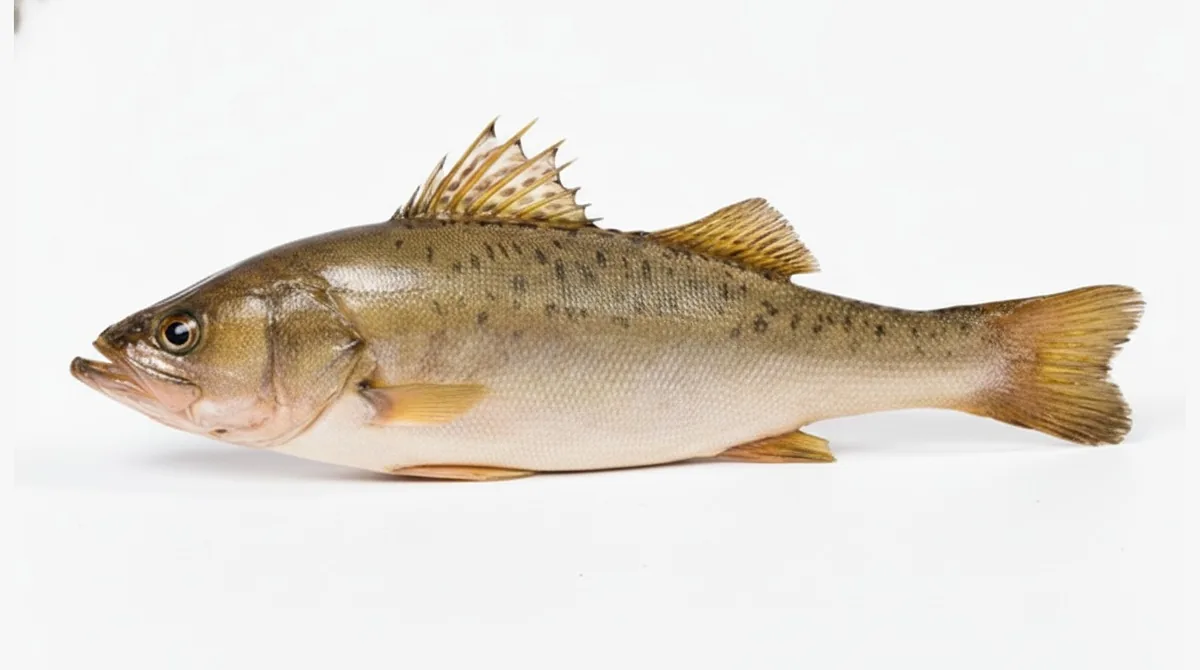
The Japanese sea bass has a slightly forked tail and a large mouth, with the lower jaw protruding beyond the upper jaw. Younger fish have small black spots on the back and dorsal fin; these tend to be lost in larger fish. The first dorsal fin has 12-15 spines; this is followed by 12-14 soft rays in the second dorsal fin. The anal fin has 3 spines and 7 to 9 soft rays. The maximum recorded total length is 102 cm (3.35 ft), although a more common standard length is 16.1 cm (6.3 in). The maximum published weight is 8.7 kg (19 lb
Description from Wikipedia, available under CC BY-SA.
Where the japanese sea bass lives
Distribution data from GBIF (DOI: 10.15468/dl.8rzs8d).
Also known as
- Asian sea perch
- Asian seabass
- Japanese sea perch
- Szuzuki
- Siakap Jepun
- Japanse zeebaars
- 농어
- Судак дальневосточный морской
- スズキ
- سوزوکی
- בס יפני
- Судзукі
- 日本花鱸