Fishing Calendar App
Grunt
Haemulon plumierii
- Saltwater
- Least Concern
- Max length
- 35 cm
- Class
- Teleostei
- Order
- Eupercaria incertae sedis
- Family
- Haemulidae
- Genus
- Haemulon
- Atlantic, Southwest
- Atlantic, Western Central
About the grunt
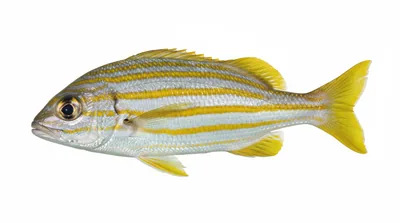
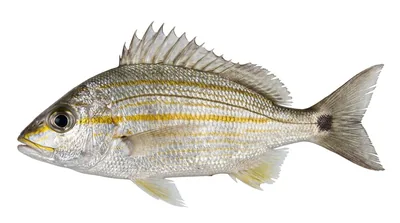
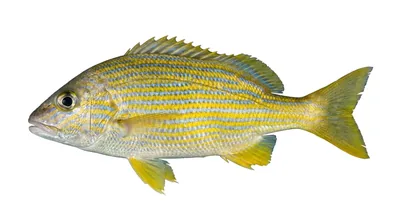
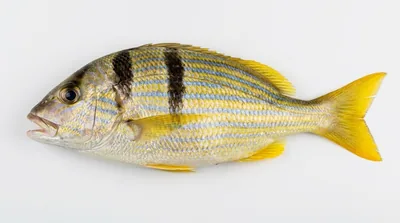
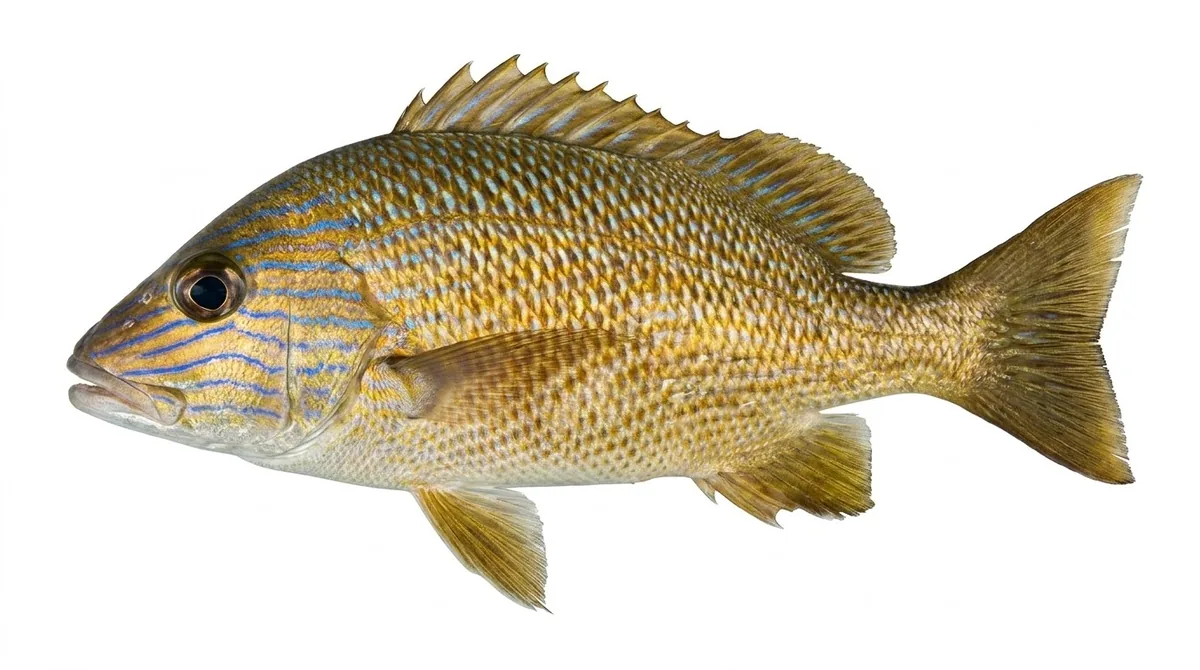
Haemulon plumierii, the white grunt or common grunt, is a species of ray-finned fish in the family Haemulidae native to the western Atlantic Ocean. It grows to a length of about 30 cm (12 in) and is a silvery-cream color, with narrow yellow and blue longitudinal stripes, but can modify its color somewhat to match its surroundings. It is closely related to the bluestriped grunt and the French grunt, and often schools with these species. It feeds on shrimp, other crustaceans, annelids, and mollusks, and is preyed on by larger piscivores such as barracuda and shark. It is sometimes caught by anglers as a game fish, and its flaky white flesh can be eaten. It is also a popular aquarium fish.
Distribution
The white grunt is found near mangroves, reefs, docks, and nearly any sort of structure in its range, which extends in the Western Atlantic from Chesapeake Bay through the Caribbean and Gulf of Mexico south to Brazil. It normally lives in depths similar to that of its relative, the bluestriped grunt, from 0 to 30 m in depth.
This fish is closely related to the bluestriped grunt (H. sciurus) and the French grunt (H. flavolineatum). The white grunt is often seen schooling with those species. The familiar "grunt" that this fish makes is caused by its pharyngeal teeth grinding in the back of its throat. This sound is normally made when the fish is distressed or in danger, such as when being caught by an angler.
Behaviour
Although the natural diet of this fish largely consists of shrimp, they also feed upon annelids, crustaceans, and bivalves. Largely opportunistic, anglers have caught them on the whole spectrum of natural and artificial baits.
Description from Wikipedia, available under CC BY-SA.
Where the grunt lives
Distribution data from GBIF (DOI: 10.15468/dl.8rzs8d).
Also known as
- White grunt
- Gorette blanche
- Chac-chí
- Knorvis
- سنگسر سفید
Where to catch grunt
- Cape Fear River United States River · North Carolina
- Florida Bay (Everglades) United States Bay · Florida
- Florida Keys United States Coast · Florida
- Galveston Bay United States Bay · Texas
- Lake Pontchartrain United States Lake · Louisiana
- Port Aransas United States Coast · Texas