Fishing Calendar App
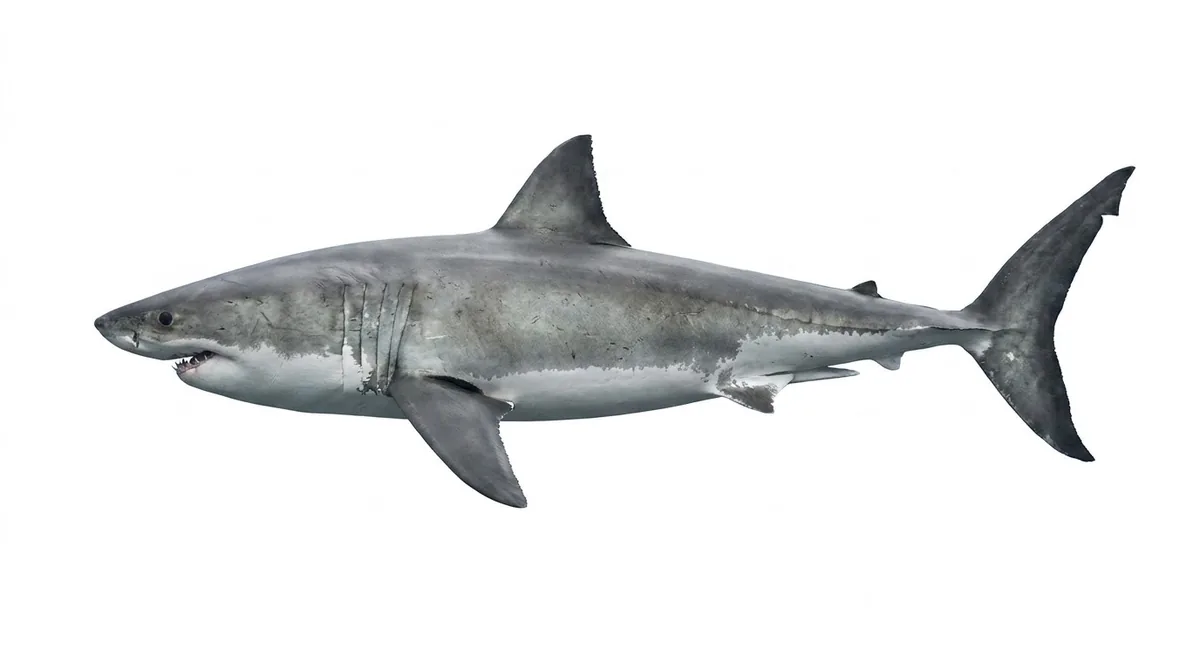
Great white shark
Carcharodon carcharias
- Saltwater
- Vulnerable
- Max length
- 714 cm
- Class
- Elasmobranchii
- Order
- Lamniformes
- Family
- Lamnidae
- Genus
- Carcharodon
- Atlantic, Northwest
- Atlantic, Southeast
- Atlantic, Western Central
- Indian Ocean, Eastern
- Pacific, Eastern Central
- Pacific, Northeast
- Pacific, Southwest
- Pacific, Western Central
About the great white shark
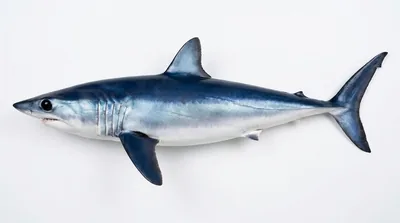
The great white shark (Carcharodon carcharias), also known as the white shark, white pointer, or great white, is a large shark. It is closely related to the mako sharks, the porbeagle, and the salmon shark. It is a robustly built species with a grayish upperside and a white underside. The white shark is one of the largest living shark and fish species, but are smaller than the whale shark and basking shark. It has about 300 triangular, serrated teeth that are continuously replaced. Its massive, fatty liver can reach over a quarter of its body weight, providing buoyancy and storing energy. The species is partially warm-blooded, an adaptation that allows it to remain active in colder waters.
White sharks inhabit tropical and temperate ocean waters around the world and can be found both near coasts and in the open ocean. Populations are most concentrated at the Pacific and Atlantic sides of North America and in the waters of southern Africa and Oceania. They are a highly migratory species, traveling between the coast and the open ocean and even between continents. The white shark preys on marine mammals such as seals and dolphins, as well as fish, including other sharks, and squid. It also scavenges whale carcasses. Though normally an apex predator, the species is sometimes preyed on by orcas. White sharks are generally solitary, but may gather in aggregations, particularly at feeding sites. They may communicate and establish dominance hierarchies with body language. The species reproduces with pups hatching from eggs inside the female before being born live. Juvenile white sharks typically inhabit shallower water and are limited to feeding on smaller prey.
The white shark has a fearsome reputation among the public. It is featured in the 1974 novel Jaws and its 1975 film adaptation, both of which portray it as a ferocious man-eater. In reality, white sharks normally do not prey on humans, and the majority of bites are due to curiosity or possibly mistaken identity. Many attempts have been made to keep the species in captivity, but specimens either ended up dying or being released. White shark aggregations have attracted tourists who may view them from boats or from inside shark cages.
The International Union for Conservation of Nature lists the white shark as a vulnerable species globally and critically endangered regionally in European and Mediterranean waters. Major threats have included accidental catching by commercial fisheries, recreational fishing, and entanglement in protective nets near beaches. Several governments have enacted protections for the species, including bans on catching and killing it.
Distribution
White sharks range from tropical to temperate and even colder waters around the world, with major populations in the northwestern and northeastern Pacific, western North Atlantic, the Mediterranean, southern African waters and Oceania. It is also present near the coasts of South America but appears to be uncommon. Shark expert Greg Skomal lists the Farallon Islands, California; Guadalupe Island, Mexico; Cape Cod, Massachusetts; Western Cape, South Africa; Neptune Islands, Australia; and both Stewart Island and the Chatham Islands, New Zealand, as major coastal feeding aggregations. Researchers have also identified an offshore feeding aggregation between western North America and Hawaii dubbed the White Shark Café.
White sharks can be found both along the coast and in the open ocean. They are typically close to the surface but may dive to depths of up to 1,300 m (4,300 ft). Deeper dives are more common in the open ocean. Coastal habitats used include nearshore archipelagos, offshore reefs, banks and shoals, and headlands. A 2018 study indicated that white sharks will congregate in patches of warm water in the open ocean. Juvenile white sharks are more limited to shallow coastal waters with temperatures between 14 and 24 °C (57 and 75 °F). Increased sightings of young sharks in areas where they were not previously common, such as Monterey Bay on the central California coast, suggest climate change may be forcing juveniles closer to the poles.
Behaviour
White sharks are estimated to swim 2.88–4.86 km/h (1.79–3.02 mph) but can sprint up to 24.12 km/h (14.99 mph). One individual was recorded cruising at a sustained speed of 4.7 km/h (2.9 mph) while migrating, which is fast for a shark and more similar to fast-swimming tuna. White sharks display various surface behaviors. These include spyhopping (poking head out of the surface) to observe an object above the water, as well as 'repetitive aerial gaping' where a spyhopping shark repeatedly gapes its mouth while belly-up, possibly as a sign of frustration after missing a bait. How they sleep is not well understood. At night, one individual was recorded swimming slowly in one direction along a current with its mouth open.
The white shark is generally considered to be a solitary species, though aggregations do occur. A 2016 study of sharks around Mossel Bay, South Africa, concluded that white shark associations are generally random with few social interactions. By contrast, a 2019 study found that sharks around Neptune Islands gathered in non-random aggregations. Similarly, a 2022 study of white sharks at Guadalupe Island suggested that individuals may associate so that they can learn from others where to find prey or carcasses to scavenge. White shark aggregations can consist of individuals of a specific age and sex. At Neptune Islands, sightings of subadult females peak during April and May, subadult males in February and again in September, adult females in June, and adult males in September.
Description from Wikipedia, available under CC BY-SA.
Where the great white shark lives
Distribution data from GBIF (DOI: 10.15468/dl.8rzs8d).
Also known as
- Anchovy-eater
- Blue pointer
- Cowshark
- Death shark
- Demon shark
- Great white death
- Jumping shark
- White pointer
- Grand requin blanc
- Requin blanc
- Weißer Hai
- Menschenhai
- Merviel Fras
- Weisshai
- Vithaj
- Cagnesca grande
- Cagnia
- Can grossu
- Caniscu
- Carcarodonte
- Carcarodonte di rondelet
- Carcarodonte lamia
- Damiano
- Beli morski volk
- Veliki beli morski pes
- Ca mari
- Jaquetón blanco
- Jaquetón de ley
- Marraco
- Salproig
- Salproix
- Salroig
- Sarda
- Żarłacz biały
- Tubarão-branco
- Tabarao
- Hvithai
- Haa skieding
- Withaai
- Kakia putih ageng
- Dakulang puting pating
- Rinkin gwenn
- Velika bijela ajkula
- Tauró blanc
- Žralok bílý
- Morgi mawr gwyn
- Hvidhaj
- Blanka ŝarko
- Mõrtsukhai
- Marrazo zuri
- Valkohai
- Witj Hei
- Wite haai
- Siorc bán mór
- Tiburón branco
- Piraroto morotĩ
- Běły žrawc
- Fehér cápa
- Hiu putih besar
- Hvíthákarl
- Hiu putih
- Gran Tiburon Blanko
- Didysis baltasis ryklys
- Lielā baltā haizivs
- Antsantsa fotsy
- Mango mako nui
- Hiu putiah
- Yu putih
- Witte haai
- Kvithai
- Granda làmia blanca
- Rechin alb
- Great white shairk
- Žralok modrý
- Peshkaqeni i madh i bardhë
- Hiu bodas raksasa
- Malaking puting pating
- Carcharodon charcharias
- Yirik oq akulalar
- Jak gretavietik
- Velika bijela psina
- 백상아리
- Белая акула
- Кархародон мегалодон
- Мегалодон
- ホホジロザメ
- قرش أبيض كبير
- قرش ابيض كبير
- Böyük ağ köpəkbalığı
- بؤیوک آغ کؤپک بالیغی
- Голяма бяла акула
- बिसाल सफेद शार्क
- সাদা হাঙ্গর
- قڕشی سپی مەزن
- ފެމުނު މިޔަރު
- Λευκός καρχαρίας
- کوسه سفید بزرگ
- עמלץ לבן
- विशाल श्वेत शार्क
- Սպիտակ շնաձուկ
- თეთრი ზვიგენი
- Үлкен ақ акула
- Кархародон
- Голема бела ајкула
- വെള്ളസ്രാവ്
- Аварга цагаан загас
- မဟာငါးမန်းဖြူကြီး
- Łóóʼ hashkéhétsoh
- Урс акулæ
- ਮਹਾਨ ਚਿੱਟੀ ਸ਼ਾਰਕ
- چٹی وڈی شارک
- لوي سپين شارک
- Велика бијела ајкула
- பெருச்சுறா
- ปลาฉลามขาว
- Ак акула
- Акула біла
- بڑی سفید شارک
- Cá mập trắng lớn
- Toā-pe̍h-soa
- 大白鯊
- 大白鲨
Where to catch great white shark
- Bristol Bay United States Bay · Alaska
- Cape Cod Bay United States Bay · Massachusetts
- Cape Fear River United States River · North Carolina
- Chesapeake Bay United States Estuary · Maryland and Virginia
- Columbia River at Astoria United States River · Oregon-Washington
- Delaware Bay United States Bay · Delaware-New Jersey