Fishing Calendar App
Rohu
Labeo rohita
- Freshwater
- Least Concern
- Max length
- 200 cm
- Class
- Teleostei
- Order
- Cypriniformes
- Family
- Cyprinidae
- Genus
- Labeo
- Asia - Inland waters
About the rohu
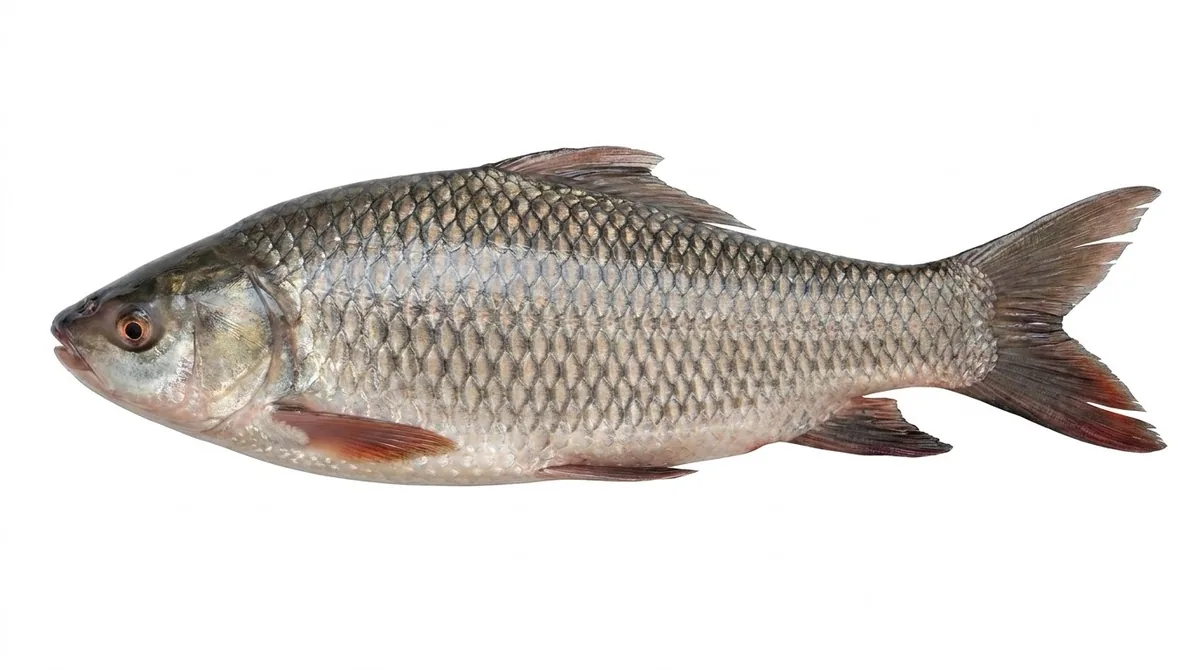
The rohu, rui, ruhi or roho labeo (Labeo rohita) is a species of fish of the carp family, found in rivers in South Asia. It is a large omnivore and extensively used in aquaculture.
Description
The rohu is a large, silver-colored fish of typical cyprinid shape, with a conspicuously arched head. Adults can reach a maximum weight of 45 kg (99 lb) and maximum length of 2 m (6.6 ft), but average around 1⁄2 m (1.6 ft).
Distribution and habitat
The rohu occurs in rivers throughout much of northern and central and eastern India, Pakistan, Vietnam, Bangladesh, Nepal and Myanmar, and has been introduced into some of the rivers of Peninsular India and Sri Lanka.
Ecology
The species is an omnivore with specific food preferences at different life stages. During the early stages of its lifecycle, it eats mainly zooplankton, moving onto phytoplankton in later stages of life. Rohu are herbivorous column feeders, eating mainly phytoplankton and submerged vegetation. It has modified, thin hair-like gill rakers, which it uses to feeds by sieving the water.
Rohu reach sexual maturity between two and five years of age. They generally spawn during the monsoon season, keeping to the middle of flood
Description from Wikipedia, available under CC BY-SA.
Where the rohu lives
Distribution data from GBIF (DOI: 10.15468/dl.8rzs8d).
Also known as
- Jättilabeo
- ロフー
- رهيطة
- رهيطه
- ৰৌ মাছ
- রুই
- روهو
- રોહુ માછલી
- रोहू मछली
- ರೋಹು
- രോഹു
- रोहू
- ငါးမြစ်ချင်း
- ରୋହି
- ਰੋਹੂ
- رہو
- ᱨᱩᱦᱤ ᱦᱟᱹᱠᱚ
- ڪرڙو
- ரோகு மீன்
- ปลายี่สกเทศ
- Роху
- Cá trôi Ấn Độ