Fishing Calendar App
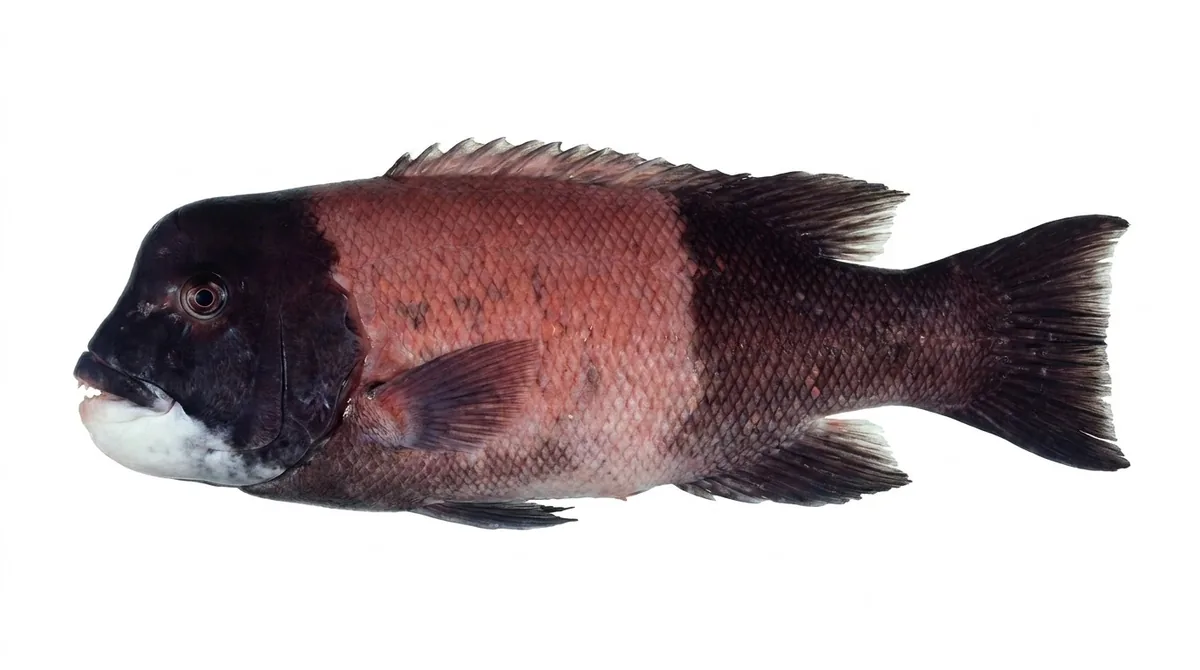
California sheephead
Semicossyphus pulcher
- Saltwater
- Vulnerable
- Max length
- 91 cm
- Class
- Teleostei
- Order
- Eupercaria incertae sedis
- Family
- Labridae
- Genus
- Semicossyphus
- Pacific, Eastern Central
- Pacific, Northeast
About the california sheephead
The California sheephead (Bodianus pulcher, (formerly Semicossyphus pulcher) is a species of wrasse native to the eastern Pacific Ocean. Its range is from Monterey Bay, California, to the Gulf of California, Mexico. It can live for over 50 years and can reach a size of up to 91 cm (3 ft) and a weight of 16 kg (35 lb). It is carnivorous, living in rocky reef and kelp bed habitats, feeding primarily on sea urchins, molluscs, and crustaceans.
All California sheephead are hatched female and morph into their male form at various stages in their lifecycle, determined by environmental conditions and pressures. Because of this, they are considered to be protogynous hermaphrodites which have planktonic larvae. Their coral and kelp-heavy habitat provides protection from predators, which is important as this species is diurnal, foraging during the day and seeking shelter at night.
The California sheephead is considered vulnerable due to high fishing rates off the coast of southern California. Since fisheries tend to remove the largest fish, they end up removing the males. This skews the male-to-female ratio and affects the fishes' lifecycle, which can negatively affect populations.
Distribution
Home ranges in California sheephead vary greatly, and this variability can be attributed to differences in habitat shape (embayment versus contiguous coastline) and to natural habitat boundaries (deep, sandy expanses). It is found in rocky-reef areas 54% of the time, and within those areas, a greater percentage of daytime is found in high relief areas. Although their home ranges are thought of as particularly well defined, the size and fidelity may vary ontogenetically and seasonally and with habitat availability. Sheephead home ranges are relatively small, and the fish have a very high site attachment. They may select rocky areas with kelp most often due to the increased habitat complexity, which likely offers additional feeding opportunities and potential refuge from large predators. Sheephead generally are considered mainly a rocky-reef and kelp-bed associated species, but they occasionally frequent sand habitats in foraging forays.
Behaviour
The California sheephead is a carnivorous, epibenthic reef fish, foraging mostly in the daytime in sand-rock reef habitats. Its feeding territories are very productive and allow individuals to occupy small, permanent, economically defendable home ranges. As a large temperate wrasse, it is a predator of sea urchins and other benthic invertebrates and play a critical role in also regulating prey populations in kelp forests. Since it feeds heavily on urchins, it is consequently an important species for indirectly regulating kelp growth in southern California's coastal waters. However, it exhibits flexibility in prey selection if its main food source is not readily available at a particular time. Populations with diets dominated by crabs and sea urchins, however, reach larger sizes and mature and change sex at larger sizes than populations that consume higher proportions of bivalves, barnacles, and bryozoans. Since they forage in the daytime and are considered a diurnal species, they may rely on anatomical characteristics which allow them to feed in exposed locations in broad daylight while overcoming the defenses evolved by their prey. They forage both in groups and alone, and larger fish tend to shift towards more heavily armored prey.
Description from Wikipedia, available under CC BY-SA.
Where the california sheephead lives
Distribution data from GBIF (DOI: 10.15468/dl.8rzs8d).
Also known as
- Labre californien
- Vieja californiana
- Kaliforniai birkafejű hal
- Kaliforniya davarbaşı
- بولكر نصف زيفوس
- ماهی کلهگوسفندی کالیفرنیایی
- שפתן ראשתני קליפורני
- ปลาหัวแกะแคลิฟอร์เนีย
- 美麗突額隆頭魚
Where to catch california sheephead
- Bristol Bay United States Bay · Alaska
- Columbia River at Astoria United States River · Oregon-Washington
- Monterey Bay United States Bay · California
- Puget Sound at Seattle United States Sound · Washington
- San Diego Bay United States Bay · California
- San Francisco Bay United States Bay · California