Fishing Calendar App
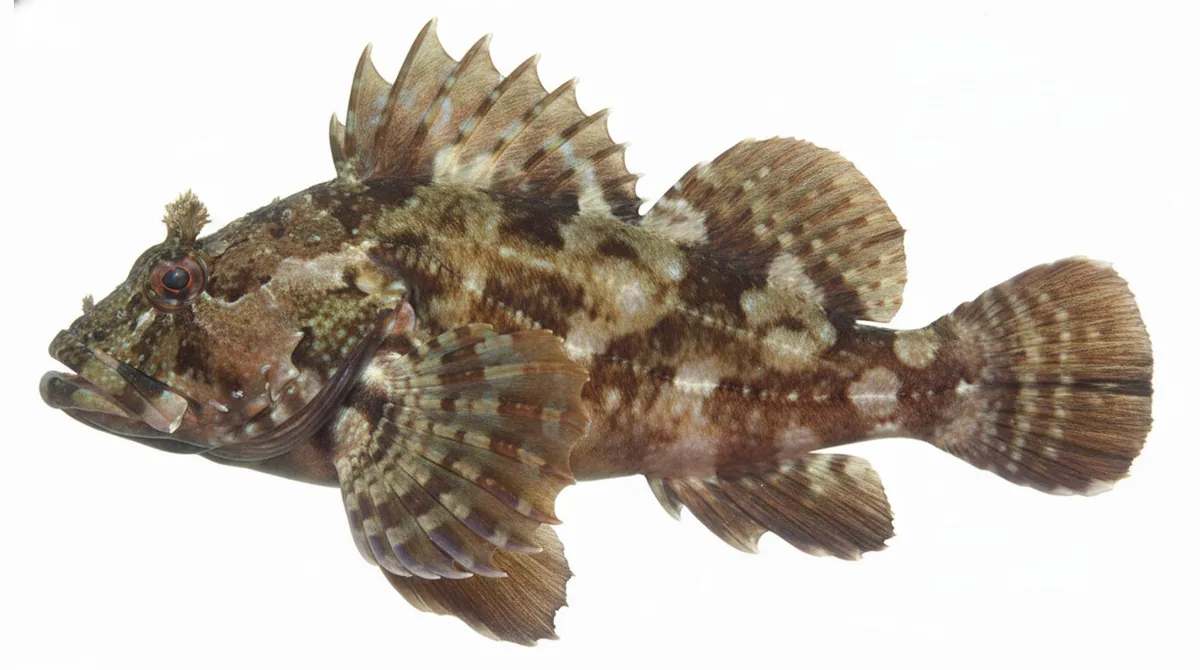
Cabezon
Scorpaenichthys marmoratus
- Saltwater
- Max length
- 99 cm
- Class
- Teleostei
- Order
- Perciformes
- Family
- Jordaniidae
- Genus
- Scorpaenichthys
- Pacific, Eastern Central
- Pacific, Northeast
About the cabezon
The cabezon (Scorpaenichthys marmoratus) is a large species of sculpin native to the Pacific coast of North America. Although the generic name translates literally as "scorpion fish", true scorpionfish (such as lionfish) belong to the related family Scorpaenidae. The cabezon is the only known member of its genus.
Distribution
Cabezon are found in the northeast Pacific Ocean from Sitka, Alaska, to Punta Abreojos, Baja California. Cabezon inhabit the tops of rocky ledges as opposed to rockfish and lingcod, which usually inhabit the sheer faces of these features.
They are found in a wide range of habitats at depths of 0–200 m (0–656 ft), including rocky, muddy, and sandy bottoms, and kelp beds. In their habitats, the occupied niche varies with developmental stage. Newly hatched larvae reside in the plankton, typically in the upper water layers. While they are more frequently found in inshore waters, they can also be located up to 320 kilometres (200 mi) from the coast. Once they reach 40 mm (1.6 in) in length, the fish adopt a demersal lifestyle ranging from depths of 6–12 m (20–39 ft). Cabezons have a relatively small home range, not straying far from their nest sites. The cabezon homing ability is attributed to its olfaction. In addition, a large majority of cabezon's display-site fidelity is returning to a location where it had previously been. This was observed within a 100 m (330 ft) range on the coast of California.
Behaviour
Cabezon feed on crustaceans, mollusks, fish, and fish eggs. Some evidence indicates that juveniles and adults feed on specific species within that age range. Only the adults show a clear seasonal change in diet. In this group, the percentage of mollusks and fish is higher in winter and spring compared to summer and fall. While mollusks play a significant role in the adult diet, they were absent from the stomachs of juveniles, which mainly contained smaller shrimp and fish. The younger fish likely lack the strength to dislodge even the smallest, resilient gastropods. Adult cabezon have even been observed eating whole crabs, including the red rock crab or Dungeness crab, or else crush and eat the crab using their large mouths.
Description from Wikipedia, available under CC BY-SA.
Where the cabezon lives
Distribution data from GBIF (DOI: 10.15468/dl.8rzs8d).
Also known as
- Chabot marbré
- Simpa
- Cabezón
- 얼룩삼세기
- كابيزون
- Кабезон
- 若鮋杜父魚
Where to catch cabezon
- Bristol Bay United States Bay · Alaska
- Columbia River at Astoria United States River · Oregon-Washington
- Monterey Bay United States Bay · California
- Puget Sound at Seattle United States Sound · Washington
- San Diego Bay United States Bay · California
- San Francisco Bay United States Bay · California