Fishing Calendar App
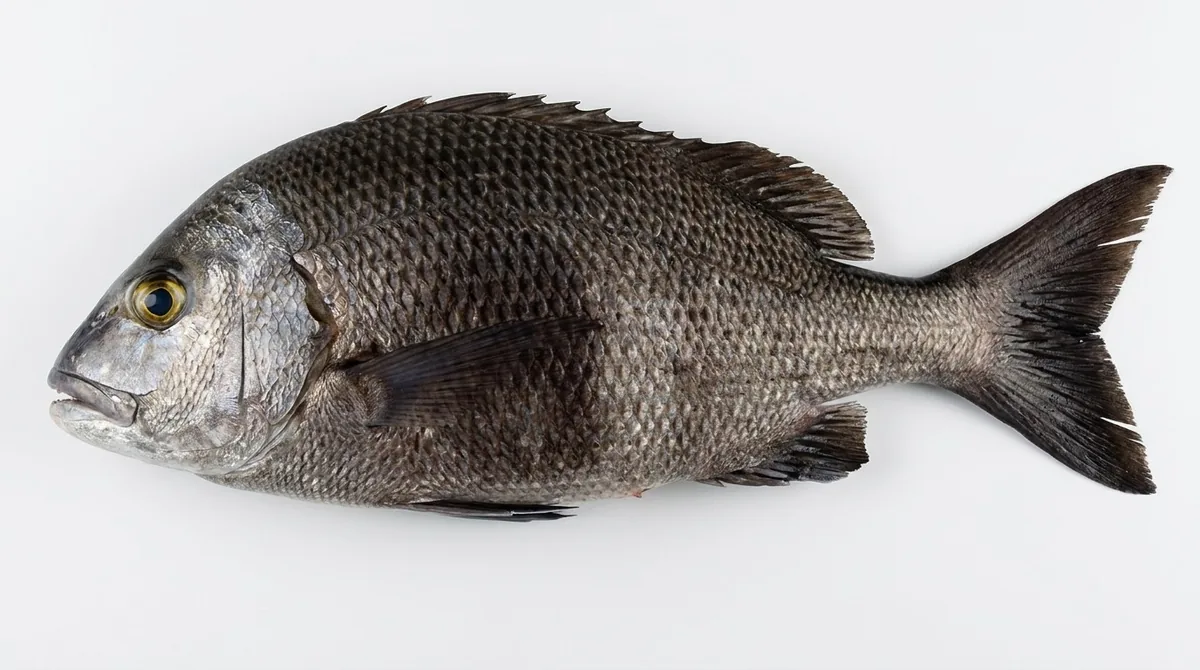
Black margate
Anisotremus surinamensis
- Saltwater
- Data Deficient
- Max length
- 80 cm
- Class
- Teleostei
- Order
- Eupercaria incertae sedis
- Family
- Haemulidae
- Genus
- Anisotremus
- Atlantic, Southwest
- Atlantic, Western Central
- Pacific, Eastern Central
About the black margate
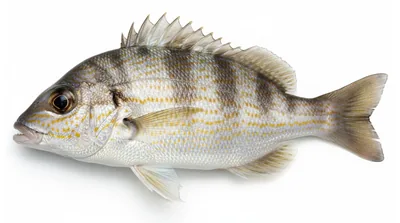
The black margate (Anisotremus surinamensis), also known as black bream, black thicklip, dogfish, lippe, Mexican bull, pompon, Spanish grunt, surf bream, sweetlips, or thicklip grunt, is a species of marine ray-finned fish, a grunt belonging to the family Haemulidae. It is native to the western Atlantic Ocean.
Habitat
The black margate shows a preference for steep, sloping rock substrates or rock reefs in inshore waters down to depths of 20 m (66 ft). It frequently takes shelter in caves, ledges, and within wrecks. It is normally encountered either as small groups or individuals. It is a nocturnal feeder; its diet including crustaceans, molluscs, smaller fish, and urchins. A frequent item in its diet are sea urchins in the genus Diadema. They may gather in spawning aggregations, and off Jamaica, breeding adults have been reported between April and August. Larvae and young juveniles have been observed settling on rocky seabeds off Florida.
Distribution
The black margate is found in the warmer parts of the Western Atlantic Ocean, in Florida from Cape Canaveral south through the Florida Keys to the Gulf of Mexico, including the Flower Garden Banks, from Rockport, Texas, along the coast of Mexico to the northern Yucatan Peninsula and northwestern Cuba. It occurs throughout the Caribbean Sea and along the northern and eastern coasts of South America to Rio de Janeiro in Brazil. It also occurs at the Fernando de Noronha and Trindade Island.
Description from Wikipedia, available under CC BY-SA.
Where the black margate lives
Distribution data from GBIF (DOI: 10.15468/dl.8rzs8d).
Also known as
- Sargo-de-beiço
- Burriquete
- Lippu croupia
- Pirambu
Where to catch black margate
- Cape Fear River United States River · North Carolina
- Florida Bay (Everglades) United States Bay · Florida
- Florida Keys United States Coast · Florida
- Galveston Bay United States Bay · Texas
- Lake Pontchartrain United States Lake · Louisiana
- Port Aransas United States Coast · Texas