Fishing Calendar App
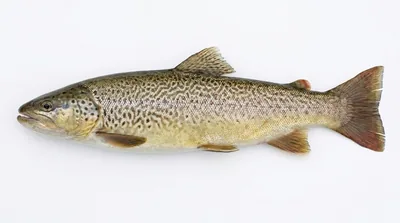
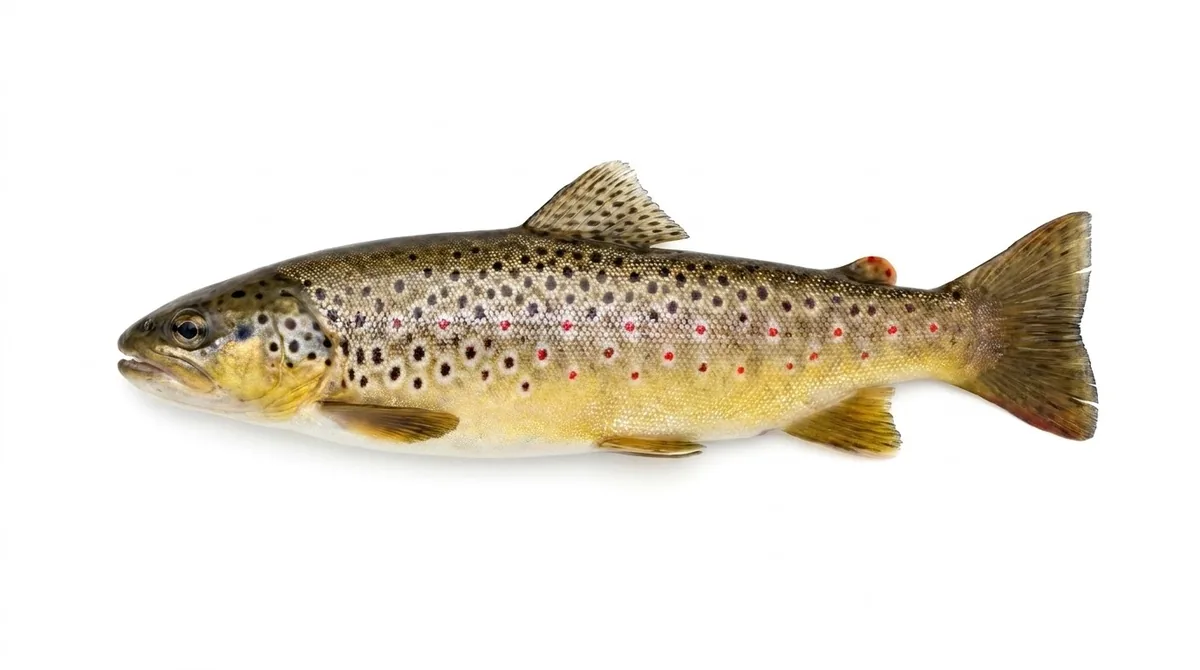
Brown trout
Salmo trutta
- Freshwater & Saltwater
- Least Concern
- Max length
- 117 cm
- Class
- Teleostei
- Order
- Salmoniformes
- Family
- Salmonidae
- Genus
- Salmo
- Africa - Inland waters
- Asia - Inland waters
- Atlantic, Northeast
- Europe - Inland waters
- Mediterranean and Black Sea
- North America - Inland waters
- Oceania - Inland waters
About the brown trout
The brown trout (Salmo trutta) is a species of salmonid ray-finned fish and the most widely distributed species of the genus Salmo, endemic to most of Europe, West Asia and parts of North Africa, and has been widely introduced globally as a game fish, even becoming one of the world's worst invasive species outside of its native range.
Brown trout are highly adaptable and have evolved numerous ecotypes/subspecies. These include three main ecotypes: a riverine ecotype called river trout or Salmo trutta morpha fario; a lacustrine ecotype or S. trutta morpha lacustris, also called the lake trout (not to be confused with the lake trout in North America); and anadromous populations known as the sea trout or S. trutta morpha trutta, which upon adulthood migrate downstream to the oceans for much of its life and only returns to fresh water to spawn in the gravel beds of headstreams. Sea trout in Ireland and Great Britain have many regional names: sewin in Wales, finnock in Scotland, peal in the West Country, mort in North West England, and white trout in Ireland.
The lacustrine and riverine morphs of brown trout are both potamodromous, meaning they are also migratory, though only between freshwater bodies. Lacustrine trout mainly inhabit large lakes with calm and stratified deep water, while riverine trout forms fluvial populations typically in large rivers but sometimes in shallower creeks and alpine streams, both still migrating upstream during reproductive seasons. Anadromous and potamodromous morphs coexisting in the same river appear genetically identical. What determines whether they migrate to sea or not remains unknown.
Distribution
The native range of brown trout extends from northern Norway and White Sea tributaries in Russia in the Arctic Ocean to the Atlas Mountains in North Africa. The western limit of their native range is Iceland in the north Atlantic, while the eastern limit is in Aral Sea tributaries in Afghanistan and Pakistan.
Behaviour
Field studies have demonstrated that brown trout fed on several animal prey species, aquatic invertebrates being the most abundant prey items. However, brown trout also feed on other taxa such as terrestrial invertebrates (e.g. Hymenoptera) or other fish. Moreover, in brown trout, as in many other fish species, a change in the diet composition normally occurs during the life of the fish, and piscivorous behaviour is most frequent in large brown trout. These shifts in the diet during fish lifecycle transitions may be accompanied by a marked reduction in intraspecific competition in the fish population, facilitating the partitioning of resources.
First feeding of newly emerged fry is very important for brown trout survival in this phase of the lifecycle, and first feeding can occur even prior to emergence. Fry start to feed before complete yolk absorption and the diet composition of newly emerged brown trout is composed of small prey such as chironomid larvae or baetid nymphs.
Description from Wikipedia, available under CC BY-SA.
Where the brown trout lives
Distribution data from GBIF (DOI: 10.15468/dl.8rzs8d).
Also known as
- Brown/sea trout
- Salmon trout
- Sea trout
- Trout
- Truite brune
- Truite de mer
- Truite commune
- Truite commune européenne
- Forelle
- Bachforelle
- Meerforelle
- Seeforelle
- Öring
- Laxöring
- Salmo trota
- Potočna postrv
- Trucha común
- Trucha marina
- Pstrąg potokowy
- Troć
- Truta marisca
- Ørret
- Sjøaure
- Sjøørret
- Bruinforel
- Sceota
- Kumja
- Dluzh-mor
- Jezerska pastrmka
- Truita comuna
- Pstruh obecný
- Lasfór
- Brithyll
- Ørred
- Bruna truto
- Meriforell
- Amuarrain arrunt
- Taimen
- Síl
- Breac donn
- Breac
- Sebes pisztráng
- Trout cokelat
- Urriði
- Frell
- Dörsj
- Upėtakis
- Taimiņš
- Forel
- Aure
- Trucha
- Păstrăv
- Trota
- Dápmot
- Kuávžur
- Kahverengi alabalık
- Trûte ordinaire
- Potočna pastrva
- 브라운송어
- Кумжа
- ブラウントラウト
- سلمون البحيرات
- سلمون مرقط بنى
- Бағыр
- Пъстърва
- Ăркай
- Πέστροφα
- قزلآلای خالسرخ
- טרוטה חומה
- კუმჟა
- ویٛٹھٕر
- Кафеава пастрмка
- തവിട്ടു ട്രൗട്ട്
- بھوری ٹراؤٹ
- Пеструшка
- Поточна пастрмка
- ปลาเทราต์สีน้ำตาล
- Инеш керкәсе
- Форель струмкова
- Cá hồi nâu
- 鳟
- 褐鱒
- 鱒
Where to catch brown trout
- Achensee Austria Lake · Tyrol
- Attersee Austria Lake · live river data
- Danube River at Vienna Austria River · Vienna
- Inn River at Innsbruck Austria River · live river data
- Neusiedler See Austria Lake · live river data
- Traunsee Austria Lake · live river data