Fishing Calendar App
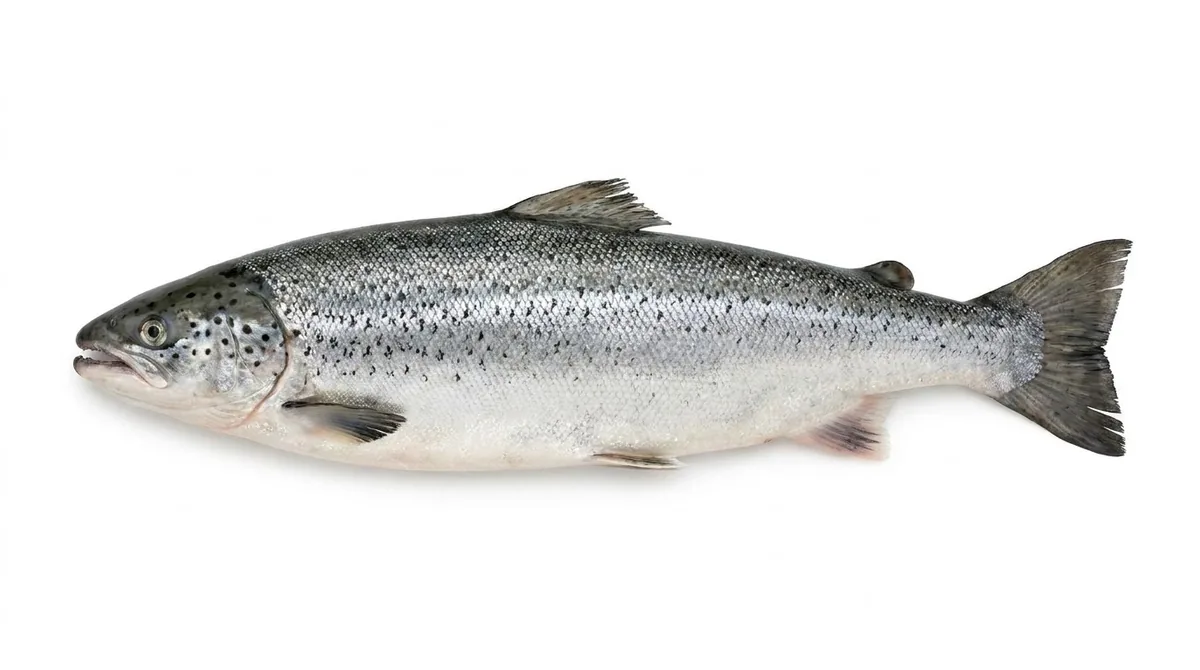
Atlantic salmon
Salmo salar
- Freshwater & Saltwater
- Near Threatened
- Max length
- 150 cm
- Class
- Teleostei
- Order
- Salmoniformes
- Family
- Salmonidae
- Genus
- Salmo
- Antarctica - Inland waters
- Asia - Inland waters
- Atlantic, Northeast
- Atlantic, Northwest
- Europe - Inland waters
- North America - Inland waters
About the atlantic salmon
The Atlantic salmon (Salmo salar) is a species of ray-finned fish in the family Salmonidae. It is the third largest of the Salmonidae, behind Siberian taimen and Pacific Chinook salmon, growing up to 1 m (3.3 ft) in length. Atlantic salmon are found in the northern Atlantic Ocean and in rivers that flow into it. Most populations are anadromous, hatching in streams and rivers but moving out to sea as they grow where they mature, after which the adults seasonally move upstream again to spawn.
When the mature fish re-enter rivers to spawn, they change in colour and appearance. Some populations of this fish only migrate to large lakes, and are "landlocked", spending their entire lives in freshwater. Such populations are found throughout the range of the species. Unlike Pacific species of salmon, S. salar is iteroparous, which means it can survive spawning and return to sea to repeat the process again in another year with 5–10% returning to the sea to spawn again. Such individuals can grow to extremely large sizes, although they are rare. The different life stages of the fish are known by several different names in English; alevin, fry, parr and smolt.
Atlantic salmon meat is a particularly nutritious food and is considered one of the more refined types of fish meat in many cultures. As such it features in numerous popular traditional cuisines and can fetch a higher price than some other fish. It has thus long been the target of recreational and commercial fishing, and this, as well as habitat destruction, has impacted the population in some areas. As a result, the species is the subject of conservation efforts in several countries, which appear to have been somewhat successful since the 2000s. Techniques to farm this species using aquacultural methods have also been developed, and at present it is farmed in great numbers in many countries, with Norway producing over 50% of the farmed world supply. Although this is now a viable alternative to wild-caught fish, farming methods have attracted criticism from environmentalists.
Distribution
The natural breeding grounds of Atlantic salmon are rivers in Europe and the northeastern coast of North America. In Europe, Atlantic salmon are still found as far south as Spain, and as far northeast as the Pechora River in Russia. Atlantic salmon have spread north to colonise Svalbard (78°N) from 2002–2006 onward, due to the warming of the climate there. Because of sport-fishing, some of the species' southern populations in northern Spain are growing smaller. The species distribution is easily influenced by changes in freshwater habitat and climate. Atlantic salmon are a cold-water fish species and are particularly sensitive to changes in water temperature.
The Housatonic River, and its Naugatuck River tributary, hosted the southernmost Atlantic salmon spawning runs in the United States. However, there is a 1609 account by Henry Hudson that Atlantic salmon once ran up the Hudson River. In addition, fish scale evidence dating to 10,000 years BP places Atlantic salmon in a coastal New Jersey pond.
Two publications from 1988 and 1996 questioned the notion that Atlantic salmon were prehistorically plentiful in New England, when the climate was warmer as it is now. This argument was primarily based on a paucity of bone data in archaeological sites relative to other fish species, and the assertion that historical claims of abundance may have been exaggerated. This argument was later challenged in another paper which claimed that lack of archaeological bone fragments could be explained by salmon bones being rare at sites that still have large salmon runs and that salmonid bones in general are poorly recovered relative to other fish species.
Atlantic salmon populations were significantly reduced in the United States following European settlement. The fur trade, timber harvesting, dams and mills and agriculture degraded freshwater habitats and lowered the carrying capacity of most North American streams. Beaver populations were trapped to near-extinction by 1800, and log drives and clear-cutting further exacerbated stream erosion and habitat loss. As timber and fur gave way to agriculture, freshwater Atlantic salmon habitat was further compromised. According to historian D.W. Dunfield (1985) "over half of the historical Atlantic salmon runs had been lost in North America by 1850". As early as 1798, a bill for the preservation of Atlantic Salmon was introduced in Canadian Parliament, to protect populations in Lake Ontario. In the Gulf Region of Nova Scotia it was reported that 31 of the 33 Atlantic salmon streams were blocked off by lumber dams, leading to the extirpation of early-run fish in many watersheds. The inshore Atlantic salmon fishery became a major export of the New World, with major fishing operations establishing along the shores of major river systems. The southernmost populations were the first to disappear.
Young salmon spend one to four years in their natal river. When they are large enough (c. 15 centimetres (5.9 in)), they smoltify, changing camouflage from stream-adapted with large, gray spots to sea-adapted with shiny sides. They also undergo some endocrinological changes to adapt to osmotic differences between fresh water and seawater habitat. When smoltification is complete, the parr (young fish) now begin to swim with the current instead of against it. With this behavioural change, the fish are now referred to as smolt. When the smolt reach the sea, they follow sea surface currents and feed on plankton or fry from other fish species such as herring. During their time at sea, they can sense the change in the Earth magnetic field through iron in their lateral line.
When they have had a year of good growth, they will move to the sea surface currents that transport them back to their natal river. It is a major misconception that salmon swim thousands of kilometres at sea; instead they surf through sea surface currents. It is possible they find their natal river by smell, although this is not confirmed; only 5% of Atlantic salmon go up the wrong river. The range of an individual Atlantic salmon can thus be the river where they are born and the sea surface currents that are connected to that river in a circular path.
Wild salmon continued to disappear from many rivers during the twentieth century due to overfishing and habitat change.
Behaviour
Fry and parr have been said to be territorial, but evidence showing them to guard territories is inconclusive. While they may occasionally be aggressive towards each other, the social hierarchy is still unclear. Many have been found to school, especially when leaving the estuary.
Adult Atlantic salmon are considered much more aggressive than other salmon, and are more likely to attack other fish than others.
Description from Wikipedia, available under CC BY-SA.
Where the atlantic salmon lives
Distribution data from GBIF (DOI: 10.15468/dl.8rzs8d).
Also known as
- Black salmon
- Common Atlantic salmon
- Grilse
- Kelt
- N. Atlantic salmon
- Parr
- Salmon
- Saumon atlantique
- Saumon
- Saumon d'Atlantique
- Saumon de l'Atlantique
- Tacon atlantique
- Atlantischer Lachs
- Atlantischer Salmón
- Echter Lachs
- Lachs
- Las
- Salm
- Salmling
- Atlantlax
- Lax
- Salmo
- Salmone
- Salmone atlantico
- Salmone del Reno
- Salmone kipper
- Sëmga
- Atlantski losos
- Salmón
- Salmón común
- Salmón del Atlántico
- Łosoś szlachetny
- Łosoś
- Łosoś atlantycki
- Salmão
- Laks
- Atlantiese salm
- Atlantik qızılbalığı
- Salmó europeu
- Losos obecný
- Łosos
- Atlantika salmo
- Lõhe
- Izokin arrunt
- Bradán Atlantach
- Salmón atlántico
- Lazac
- Atlantshafslax
- Atlantinė lašiša
- Lasis
- Salmôna Atlantika
- Salmon Atlantik
- Atlantische zalm
- Merilohi
- Somon
- Luossa
- Luosâ
- Atlantik sombalığı
- Atlantika lososi
- Eog
- Lohi
- 대서양연어
- Атлантический лосось
- Семга
- タイセイヨウサケ
- アトランティックサーモン
- سلمون أطلسي
- سلمون اطلنطى
- Сёмга
- Атлантическа сьомга
- Σολομός του Ατλαντικού
- آزادماهی اطلس
- אלתית אטלנטית
- Ատլանտյան սաղմոն
- ჩრდილოეთის ორაგული
- Чими
- Ши
- اٹلانٹی سالمن
- ปลาแซลมอนแอตแลนติก
- Сөмбаш
- Лосось атлантичний
- Cá hồi Đại Tây Dương
- 大西洋鲑
- 大西洋鮭
- 大西洋三文魚
- Атлантски лосос
Where to catch atlantic salmon
- Achensee Austria Lake · Tyrol
- Attersee Austria Lake · live river data
- Danube River at Vienna Austria River · Vienna
- Inn River at Innsbruck Austria River · live river data
- Neusiedler See Austria Lake · live river data
- Traunsee Austria Lake · live river data