Fishing Calendar App
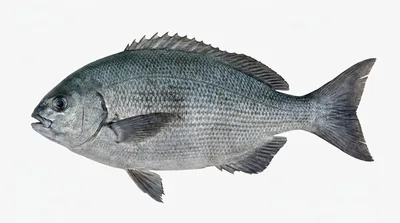
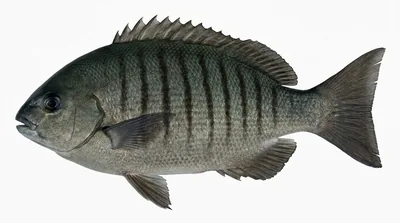
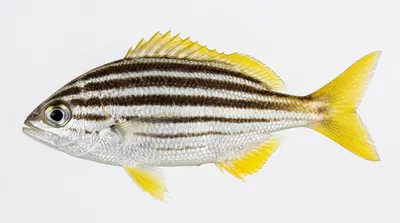
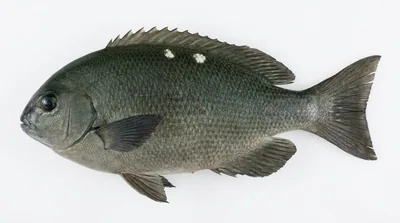
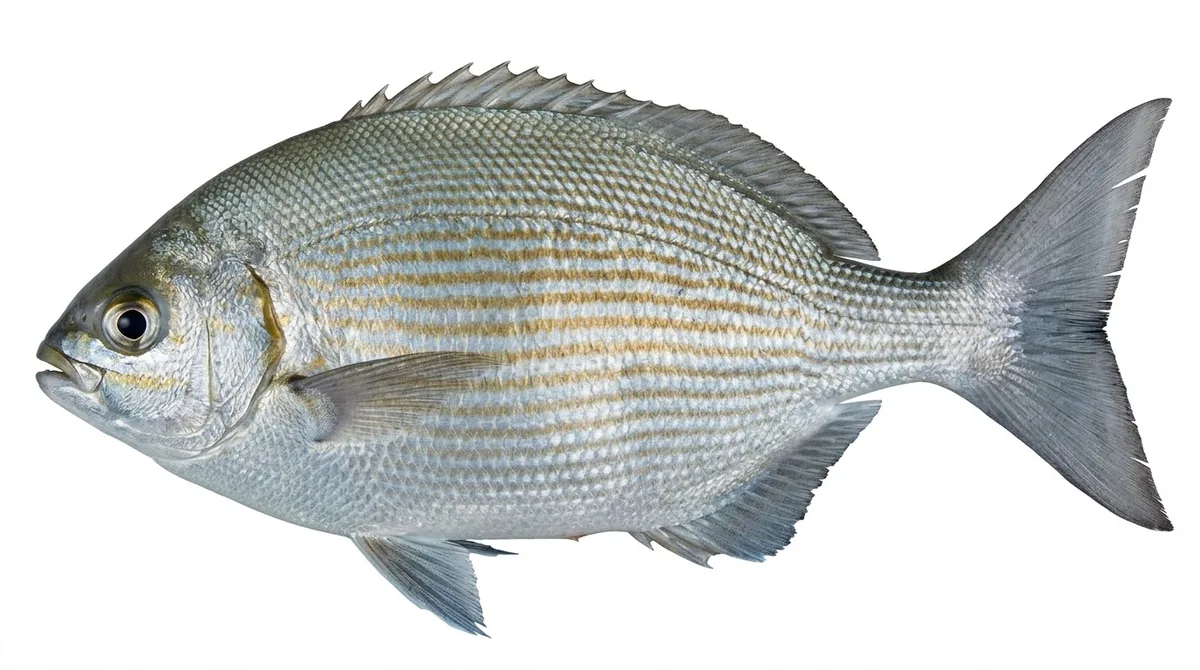
Brassy chub
Kyphosus vaigiensis
- Saltwater
- Least Concern
- Max length
- 75 cm
- Class
- Teleostei
- Order
- Centrarchiformes
- Family
- Kyphosidae
- Genus
- Kyphosus
- Atlantic, Southwest
- Atlantic, Western Central
- Indian Ocean, Eastern
- Indian Ocean, Western
- Pacific, Eastern Central
- Pacific, Northwest
- Pacific, Southwest
- Pacific, Western Central
About the brassy chub
Kyphosus vaigiensis, the brassy chub, brassy drummer, long-finned drummer, low-finned drummer, Northern silver drummer, Queensland drummer, Southern drummer, blue-bronze sea chub, brassy rudderfish, yellow seachub, large-tailed drummer, low-finned chub or long-finned rudderfish, is a species of marine ray-finned fish, a sea chub from the family Kyphosidae. It is a largely herbivorous species which has a circumglobal distribution. Studies in the 21st Century appear to have shown that some other species in the genus Kyphosus are junior synonyms of this taxon.
Habitat
Kyphosus vaigiensis adults congregate over the hard, algal coated substrates of exposed surf-swept outer reef flats, lagoons, and seaward reefs. It occurs to a maximum depth of 24 metres (79 ft). It is found in exposed areas around rocky reefs, and adults usually stay close to the shoreline, while juveniles are recorded among flotsam and may be found in the open ocean near the surface. The juveniles feed on small crustaceans while the adults are carnivorous during the summer and autumn but feed on Petalonia binghamiae in the winter. They tend to be solitary at higher latitudes and more social in the tropics where they will form mixed schools with K. bigibbus, K. cinerascens and K. sectatrix.
Distribution
Kyphosus vaigiensis has a distribution that encompasses most of the warmer seas and oceans of the world. In the Pacific Ocean it is found from the western coast of the Americas west coast from Mexico to Panama and across the Pacific to Hawaii, Easter Island, Polynesia, Tahiti, Micronesia as far as Japan and Australia, with records from Hauraki Gulf in New Zealand. In the Indian Ocean it occurs through to the Red Sea, eastern coast of Africa and off Madagascar. In the eastern Atlantic Ocean its range includes the Ascension Island, St Helena and São Tomé Island while in the western Atlantic it is found off the Yucatan, the Caribbean, Bermuda and Trindade and Martin Vaz. It has been recorded in the Mediterranean Sea, the first record in Spain in 1998 and it has been recorded off Sicily, Cyprus, Israel and Turkey. It is thought that these originated in the Atlantic and entered the Mediterranean through the Straits of Gibraltar but as it occurs in the Red Sea some may have arrived in the Mediterranean by Lessepsian migration through the Suez Canal. It may be establishing a permanent breeding population in the Mediterranean.
Description from Wikipedia, available under CC BY-SA.
Where the brassy chub lives
Distribution data from GBIF (DOI: 10.15468/dl.8rzs8d).
Also known as
- Calicagère grise à lignes jaunes
- Saupe cuivrée
- Bronsvetsak
- Kakap lodi
- Cá tà ma
- 황줄깜정이
- イスズミ
- 低鰭鿳
Where to catch brassy chub
- Cape Fear River United States River · North Carolina
- Florida Bay (Everglades) United States Bay · Florida
- Florida Keys United States Coast · Florida
- Galveston Bay United States Bay · Texas
- Lake Pontchartrain United States Lake · Louisiana
- Port Aransas United States Coast · Texas