Fishing Calendar App
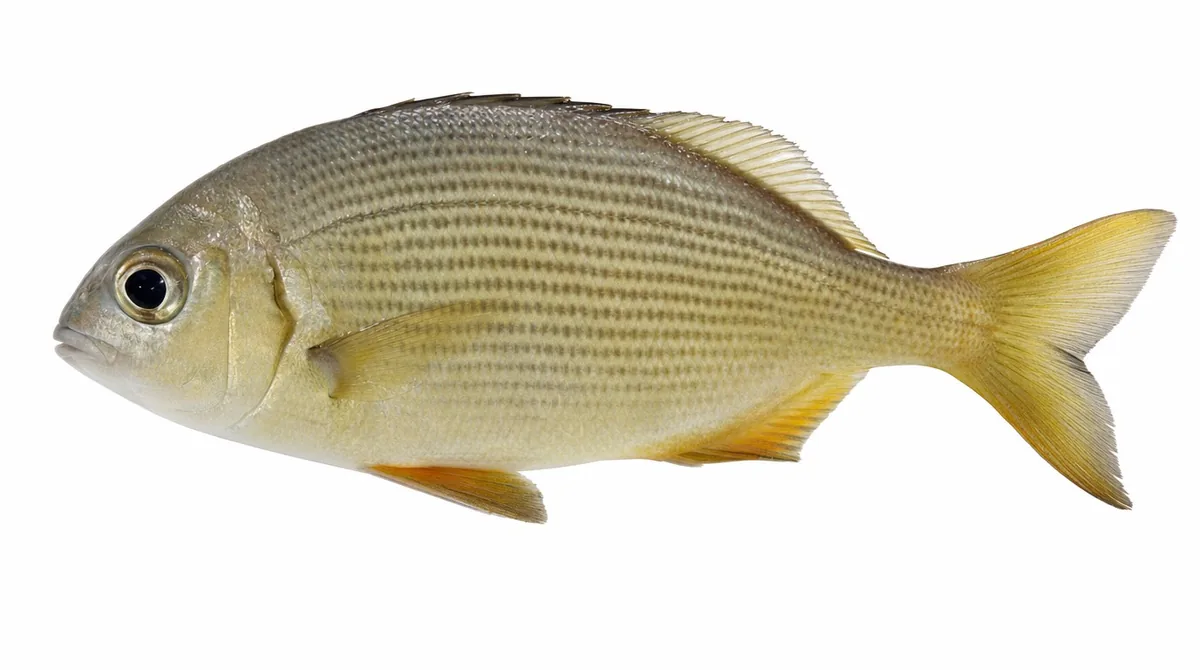
Musselcracker seabream
Sparodon durbanensis
- Saltwater
- Near Threatened
- Max length
- 119 cm
- Class
- Teleostei
- Order
- Eupercaria incertae sedis
- Family
- Sparidae
- Genus
- Sparodon
- Atlantic, Southeast
- Indian Ocean, Western
About the musselcracker seabream
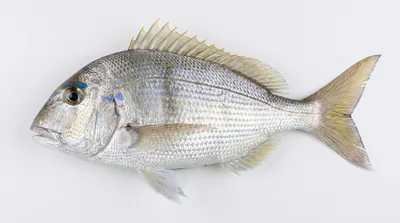
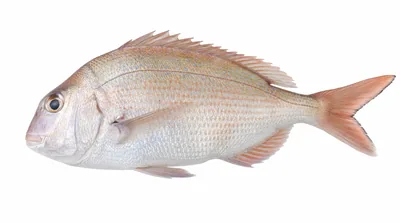
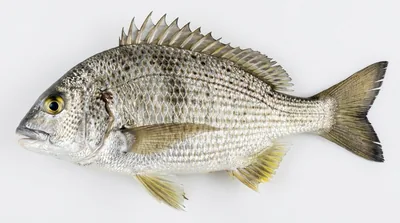
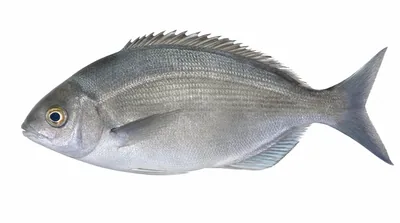
Sparodon, commonly known as the white musselcracker, musselcracker seabream, mussel cracker seabream, brusher, or cracker. is a monotypic genus of fish in the family Sparidae. The type and only known species, Sparodon durbanensis, was first described and named by François Louis Nompar de Caumont de Laporte, comte de Castelnau, in 1861.
The fish is edible and is an important food source in southern Africa.
Distribution
S. durbanensis is found in the South-east Atlantic Ocean. It mostly inhabits Southern Africa, and has not been recorded further north than the KwaZulu-Natal province. It lives in shallow coastal tropical waters, in depths of up to 80 metres (260 ft). The population of S. durbanensis is currently declining. It is listed as "Near Threatened" by IUCN. There are currently several conservation actions taking place, most notability one which limits people to two fish per day.
Behaviour
S. durbanensis mostly stays in shallow reefs as a juvenile, in depths no greater than 12 metres (40 ft). Some adult specimens are thought to migrate northeasterly seasonally. The average length of time between two generations, called the generation time, is 13 years for the species. Young typically spawn from August to January. They can live to be around 31 years old. The species reaches 50% maturity when it is around 5+1⁄2 years old.
S. durbanensis eats a variety of invertebrates commonly known as shellfish, including sea urchins, crustaceans, gastropods, and bristle worms. In addition to this, it has also been known to eat Eukaryotes in the Chlorophyta division, a group of green algae.
Description from Wikipedia, available under CC BY-SA.
Where the musselcracker seabream lives
Distribution data from GBIF (DOI: 10.15468/dl.8rzs8d).
Also known as
- Musselcracker
- White musselcracker