Fishing Calendar App
Tub gurnard
Chelidonichthys lucerna
- Saltwater
- Least Concern
- Max length
- 75 cm
- Class
- Teleostei
- Order
- Perciformes
- Family
- Triglidae
- Genus
- Chelidonichthys
- Atlantic, Eastern Central
- Atlantic, Northeast
- Mediterranean and Black Sea
About the tub gurnard
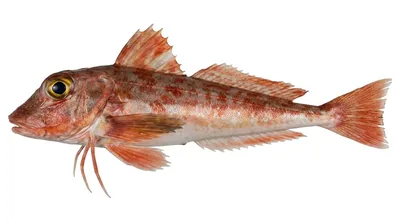
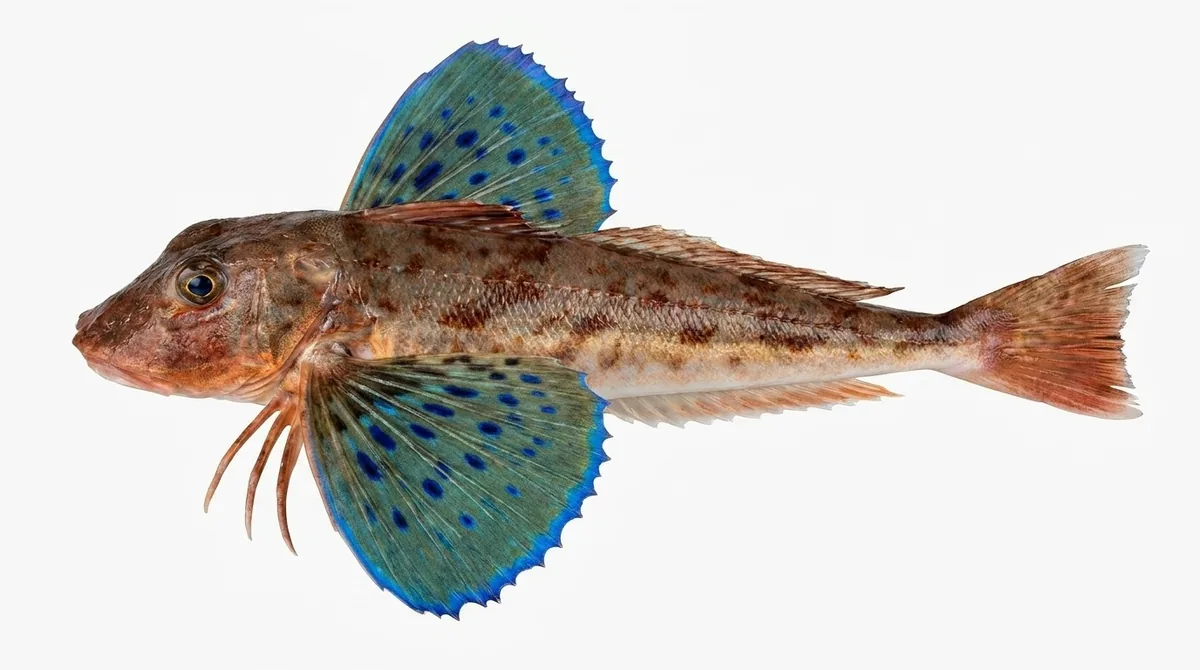
The tub gurnard (Chelidonichthys lucerna), also known as the sapphirine gurnard, tube-fish, tubfish or yellow gurnard, is a species of marine ray-finned fish belonging to the family Triglidae, the gurnards and sea robins. It is found in the eastern Atlantic Ocean. It is exploited by commercial fisheries as a food fish.
Distribution
The Tub Gurnard is found in the Eastern Atlantic Ocean where it occurs from Norway south along the European and African coasts as far south as Ghana. It occurs throughout the Mediterranean Sea and in the Black Sea too. It is also found in the sea of Marmara and in the coastal waters of the British Isles.It is absent from Madeira and the Azores but is found around the Canary Islands.
Although, its distribution is starting to shift northwards as its increasing abundance in the Central North Sea.
This species is found on sand, mud-sand or gravel substrates at depths between 20 and 300 m (66 and 984 ft). It can also be found in the lower layers of sediment at the bottom of lakes, oceans and streams.The Tub Gurnard tends to go through migratory movements within their depth range during the year in shallow depths in spring-summer and move to deeper waters in the winter. After completing an experiment based on the gurnards dependency, subjects found that it does migrate between different Salinity habitats throughout its life cycle. Which shows high potential for being able to adapt to different environments. Also shows why the distribution of Tub Gurnard is very large, where many people have found different waters, its located within. After completing an experiment based on the gurnard's dependency, subjects found that it does migrate between different Salinity habitats throughout its life cycle. During the summer the tub gurnard may spend more time closer to the surface in water as shallow as 10 m (33 ft) and the juveniles can be found in brackish water in lagoons, estuaries and even the lower reaches of rivers. The juveniles also are more concentrated in shallow waters, where food is abundant. Spatial separation between adults and juveniles were observed in Tub Gurnards with this species being the most pronounced in distance, as adults were more dispersed towards offshore sites.
Parasitic roundworm Hysterothylacium aduncum, found in the tub gurnard stomach, is typical for fish from south eastern Baltic. Benthic fish are known to serve as second intermediate hosts.
Behaviour
The tub gurnard is an opportunistic predatory species which feeds on benthic prey, particularly crustaceans and smaller fishes. According to a study in the northwestern Mediterranean, the largest part of their diet were crustaceans, mostly Decapoda and especially crabs, with species such as Goneplax rhomboides and Liocarcinus spp. and caridean shrimps in the genus Philocheras, while the fish taken in the study were dominated by European anchovy (Engraulis encrasicolus) and black goby (Gobius niger). Crustaceans were a more important part of the diet in the summer and fishes gained importance during the winter. They are also known to take molluscs and polychaetes. Also small teleosts which are ray finned fish may be preyed upon by the tub gurnard. According to Colloca (1999), tub gurnards change their diet with size. Juveniles target mysids, mainly Lophogaster typicus which tend to burrow around the adolescent during daylight. In addition as this fish continues to grow it tends to depend less on mysids as prey and more on fish and cephalopods. Although according to study done on trophic relationships on the C.lucerna, states that Burrowing species such as Alpheus glabe , Goneplax rhomboi and Lesueurigobius fries have also been found as the main prey of this fish.
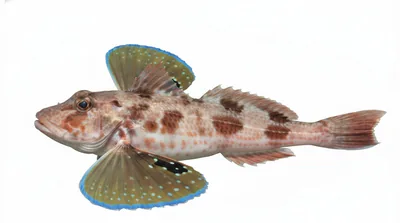
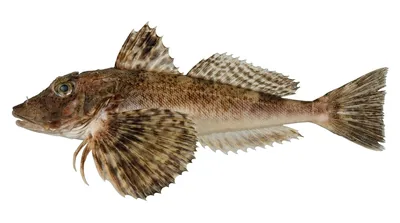
At an intraspecific level, data suggests resource partitioning between juveniles and adults that change from preying on crustaceans to a piscivorous diet. Such behavior probably depends on the predator changing its energy requirements in relation to fish size and dietary protein levels influencing the size of the fish at first maturity. It is believed that this fish will flare out its brightly colored pectoral fins to put on view or to startle potential predators. Prey hiding in the substrate may be detected using the sensory organs on the long separate rays of the pectoral fins.
Description from Wikipedia, available under CC BY-SA.
Where the tub gurnard lives
Distribution data from GBIF (DOI: 10.15468/dl.8rzs8d).
Also known as
- Sapphirine gurnard
- Tubfish
- Yellow gurnard
- Grondin perlon
- Hirondelle de mer
- Moelleux
- Perlon
- Tombe
- Trigle hirondelle
- Roter Knurrhahn
- Kurek czerwony
- Fenknot
- Rødknurr
- Talgorn
- Lluerna rossa
- Štítník červený
- Perloi handi
- Isokurnusimppu
- Ruad Knorhöön
- Escacho
- Rode poon
- Жёлтая тригла
- タブ・ガーナード
- حوض جورنارد
- Морска лястовица
- ზღვის ყვითელი მამალი
- Деңиз короозу
- Морський півень жовтий
- 細鱗綠鰭魚
Where to catch tub gurnard
- Dubrovnik Coast Croatia Coast · Dubrovnik-Neretva
- Istria Coast Croatia Coast · Istria
- Kornati Archipelago Croatia Archipelago · Šibenik-Knin
- Kvarner Gulf Croatia Gulf · Kvarner
- Neretva Delta Croatia Delta · live river data
- Pag Channel Croatia Channel · Zadar