Fishing Calendar App
Blind shark
Brachaelurus waddi
- Saltwater
- Least Concern
- Max length
- 120 cm
- Class
- Elasmobranchii
- Order
- Orectolobiformes
- Family
- Brachaeluridae
- Genus
- Brachaelurus
- Pacific, Southwest
- Pacific, Western Central
About the blind shark
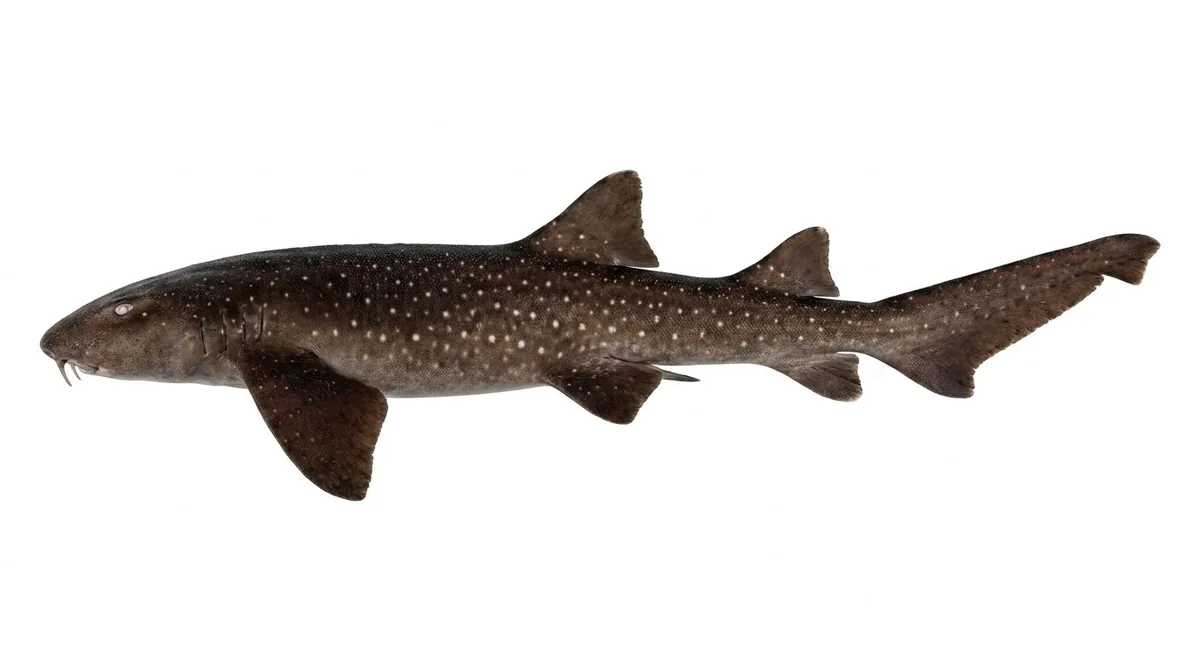
The blind shark (Brachaelurus waddi) is one of two species of carpet sharks in the family Brachaeluridae, along with the bluegrey carpetshark (Brachaelurus colcloughi). Found along the coast of eastern Australia, this nocturnal, bottom-dwelling species is common in rocky areas and seagrass beds from the intertidal zone to a depth of 140 m (460 ft). It often roams in tidal pools where it may be trapped by the receding tide, and can survive for an extended period out of water.
Maturing at under 62–66 cm (24–26 in) long, the blind shark has a stocky, grayish to brownish body with white flecks and darker bands that fade with age. Its head is wide, flattened, and blunt, with small eyes on top and a pair of long barbels underneath. It has large pectoral fins, two nearly equal-sized dorsal fins placed far back on the body, and an anal fin placed close to the caudal fin. The blind shark feeds primarily on small invertebrates and bony fishes. It is aplacental viviparous with females bearing litters of 7–8 pups in the summer. This small shark adapts readily to being kept in captivity. It is not valued by either commercial or recreational fishers, and its hardiness means that incidentally caught individuals are likely to be returned to the water alive. In the absence of substantial threats to its population, the International Union for Conservation of Nature has assessed it as of Least Concern.
Distribution
The range of the blind shark is restricted to the eastern coast of Australia, from Mooloolaba in southern Queensland to Jervis Bay in New South Wales; past reports from off Western Australia and Northern Territory appear to be misidentifications of the brownbanded bamboo shark. The blind shark is a bottom-dwelling species that generally inhabits the continental shelf from the intertidal zone, including tidal pools barely deep enough to cover its body, to a depth of 73 m (240 ft), though it has been recorded as deep as 140 m (460 ft). Preferred habitats are rocky areas and adjacent seagrass beds; juveniles are common in high-energy surge zones. In Nelson Bay, this shark has been observed lying in the open atop sponges.
Description from Wikipedia, available under CC BY-SA.
Where the blind shark lives
Distribution data from GBIF (DOI: 10.15468/dl.8rzs8d).
Also known as
- Brown cat-shark
- Cat shark
- Dusky dogfish
- Requin aveugle des roches
- Blindhai
- Rekin ślepy
- Tiburón ciego de roca
- Sokkohai
- Blinde haai
- Пятнистая шорная акула
- シロボシホソメテンジクザメ
- القرش الاعمى
- کوسه کور
- انی شارک
- Шорна акула плямиста
- 瓦氏長鬚鯊