Fishing Calendar App
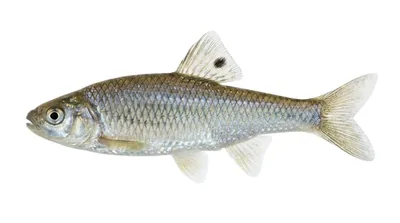
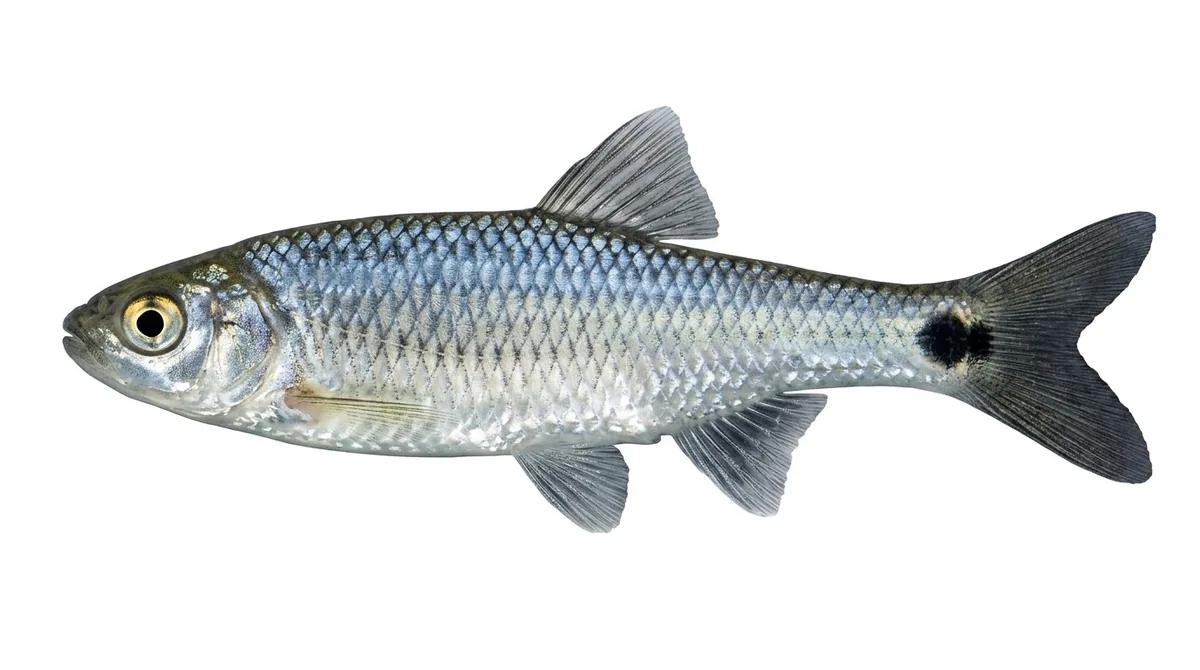
Blacktail shiner
Cyprinella venusta
- Freshwater
- Least Concern
- Max length
- 19 cm
- Class
- Teleostei
- Order
- Cypriniformes
- Family
- Cyprinidae
- Genus
- Cyprinella
- North America - Inland waters
About the blacktail shiner
The blacktail shiner (Cyprinella venusta) is a species of freshwater ray-finned fish in the family Leuciscidae, the shiners, daces and minnows. This fish is found in the United States.
Habitat
The blacktail shiner feeds primarily on invertebrates. Its diet includes algae, seeds, and aquatic and terrestrial insects. Aquatic insects and algae were the most common food items of blacktail shiners in the Blanco River, Texas; sediment and detritus were found in 21% of the 36 guts examined. Blacktail shiners feed primarily during the day. Blacktail shiners may serve as major food resource for piscivorous spotted bass (Micropterus punctulatus) during the summer in Village Creek (Neches River), Texas.
The blacktail shiner is most common in pools and runs of clear, sandy-bottomed, small to medium rivers, typically in areas with sparse vegetation and strong current, but upland populations occur in creeks over substrates with more gravel and rubble. Populations in the western part of the species' range are often found in turbid water. Blacktail shiner mesohabitat is ubiquitously distributed among pools, runs, and riffles with silt, gravel, and bedrock substrates. In the Blanco River, Texas, blacktail shiners were most abundant in swift runs in the spring and summer. The species occurred throughout the year in riffle and sandbank habitats in Village Creek (Neches River), Texas. During summer, most individuals were collected from sandbank habitats; they were also found in deep channel and riffle habitats, though no blacktail shiners longer than 47 millimeters (1.9 in) occurred in riffles. Individuals smaller than 17 millimeters (0.67 in) were found predominately in riffle habitats during fall and winter. Juveniles occurred almost exclusively in sandbank mesohabitat during spring. Blacktail shiners are commonly found in sandy or rocky areas of Lake Texoma (Oklahoma/Texas), generally in clearer water of the downstream area; they are occasionally abundant in the tailwaters, and rarely found in the headwaters.
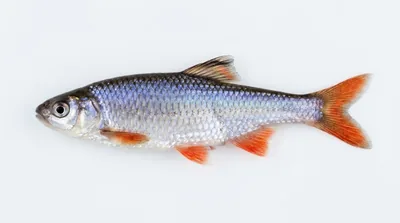
The blacktail shiner hybridizes with the red shiner (C. lutrensis) in Texas and in Illinois.
Distribution
The blacktail shiner occurs in Gulf of Mexico drainages from Suwannee River, Georgia and Florida, to Rio Grande, Texas; Mississippi River basin (mostly on Former Mississippi Embayment) from southern Illinois to Louisiana and west in Red River drainage to western Oklahoma.
Blacktail shiners are found in the southern United States west of the Appalachian Mountains. The species ranges east and west from north central Florida to West Texas, and north to southern Illinois. In Texas, blacktail shiners are unknown in the Panhandle, being found primarily from the Edwards Plateau eastward.
The blacktail shiner has also been found from the Rio Grande basin in Texas, east to the Suwannee River, and north through the Mississippi River basin to the confluence of the Ohio River. Two of the three recognized subspecies occur in Alabama. The slender blacktail shiner, C. v. stigmaturus, is found in the upper Mobile River basin (most frequently above the Fall Line), while the eastern blacktail shiner, C. v. cercositgma, occurs in the lower Mobile River basin and coastal rivers draining the state. Intergradations between these subspecies have been recognized in the Alabama, Cahaba, and Tallapoosa river systems.
Description from Wikipedia, available under CC BY-SA.
Where the blacktail shiner lives
Distribution data from GBIF (DOI: 10.15468/dl.8rzs8d).
Also known as
- Carpita colinegra
- 迷人真小鯉
Where to catch blacktail shiner
- Table Rock Lake United States Reservoir · live river data
- Arkansas River at Salida United States River · live river data
- Cape Fear River United States River · North Carolina
- Green River (Flaming Gorge) United States River · live river data
- Kenai River United States River · Alaska
- Kentucky Lake United States Reservoir · Kentucky-Tennessee