Fishing Calendar App
Bar jack
Caranx ruber
- Saltwater
- Least Concern
- Max length
- 69 cm
- Class
- Teleostei
- Order
- Carangiformes
- Family
- Carangidae
- Genus
- Caranx
- Atlantic, Southwest
- Atlantic, Western Central
About the bar jack
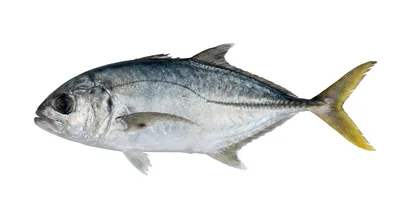
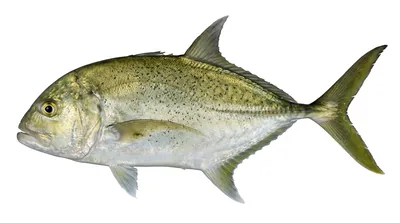
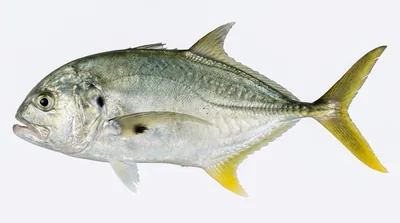
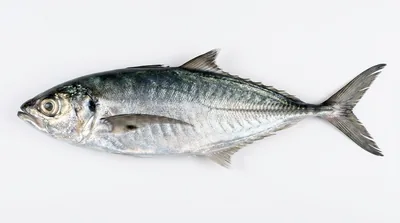
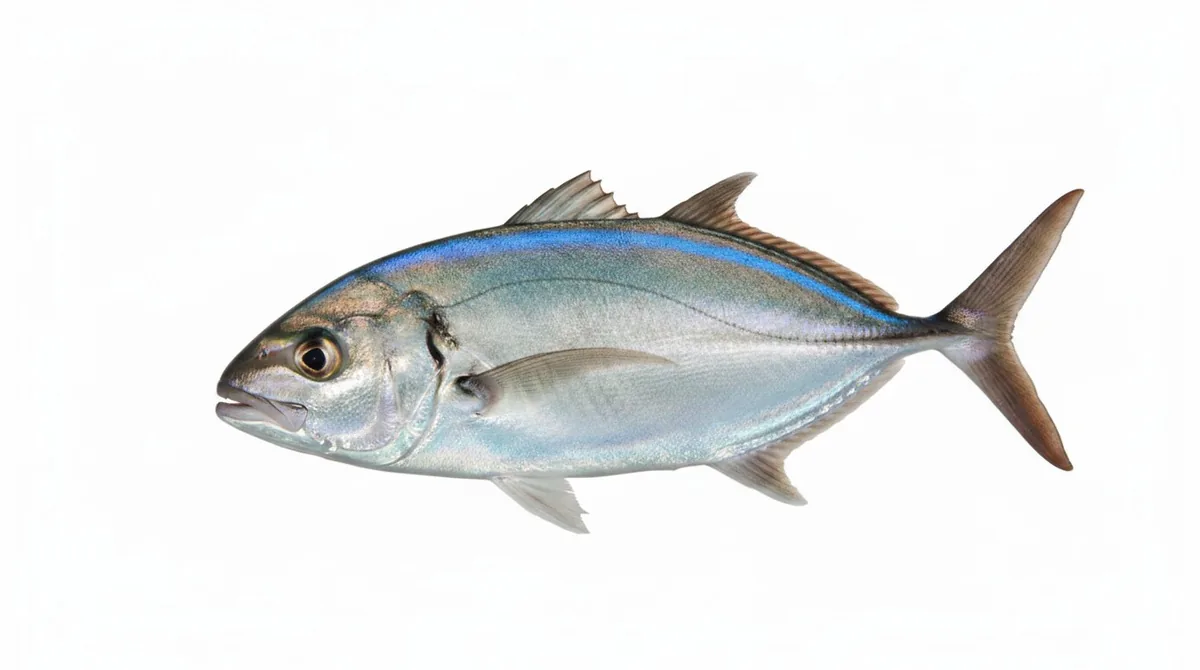
The bar jack (Caranx ruber), also known as the carbonero, cojinúa, red jack, blue-striped cavalla or passing jack, is a common species of inshore marine fish classified in the jack family, Carangidae. The bar jack is distributed through the western Atlantic Ocean from New Jersey and Bermuda in the north to Venezuela and possibly Brazil in the south, with the largest population in the Gulf of Mexico and West Indies. The bar jack is most simply distinguished from similar jacks by its dark horizontal bar which runs along the back and down the caudal fin, often accompanied by an electric blue stripe immediately below it. Other more detailed differences include dentition and soft ray counts. The bar jack is a moderately large species, growing to a recorded maximum of 65 cm (26 in) and a weight of 6.8 kg (15 lb). The species inhabits clear shallow waters, often over coral reefs where it lives either solitarily or in large schools, taking various fishes, crustaceans and cephalopods as prey. Studies in Cuba indicate spawning occurs between March and August, with sexual maturity reached at 26 cm. It is a relatively popular sport fish and can be caught on light tackle with a variety of lures and baits. It is considered to be a good food fish, however many recorded ciguatera cases are attributed to the species, with most cases reported on the island of St. Thomas traced to this single species.
Distribution
The bar jack is widely distributed throughout the tropical and subtropical waters of the western Atlantic Ocean, and is a common species throughout most of its range. The northernmost limit of its range is New Jersey in the northern United States, with its range extending south along the continental coast to Venezuela. It inhabits a number of offshore islands and archipelagos including Bermuda, as well as the West Indies. The bar jack is most abundant in the Gulf of Mexico, the West Indies and Caribbean, but in the Gulf of Mexico is limited to offshore waters. There have been reliable reports of the species from Rio de Janeiro in Brazil and far offshore at Saint Helena in the south central Atlantic, which would extend the species southern limit significantly if correct.
The bar jack generally live in clear shallow water environments, predominantly around coral reefs to depths of around 60 ft (18 m). Tagging studies demonstrate the species is highly mobile, not lingering over one particular reef patch for very long, often moving between reefs over large expanses of sand. Bar jack often venture into lagoons from seaward reefs, preferring to move over the sandy substrate while in these shallow waters, often forming shoals alongside barracudas, stingrays and sharks. Unlike most fish live on both the lagoon and reef, there is no particular age partitioning, with both juveniles and adults entering the lagoon to forage. Records of bar jack taken from Saint Helena came from seamounts in waters deeper than 100 m (330 ft), indicating they live in more offshore pelagic waters also. Juveniles are often found under floating sargassum mats, using the algae for protection. They also inhabit areas around docks and pilings. Juveniles can be caught using a sabiki rig.
Behaviour
The bar jack is a benthopelagic predator, taking its prey both in midwater and along the seafloor. The diet consists mostly of fish, up to 90% of the fish's intake in some studies, with planktonic crustaceans and small cephalopods taken in minor volumes. There is significant change in diet with age in fish studied off Cuba, which may reduce intraspecific competition in the species. Young fish prefer planktonic organisms, predominantly decapod and fish larvae; fish reaching sexual maturity prey on shrimp and small fish, while mature fish feed almost exclusively on small fish. The fish species preferred by bar jack appear to be mostly small sand dwellers such as blennies and gobies or small reef dwellers including wrasses, butterflyfish and filefish, with the diet of the latter leading to the accumulation of coral derived ciguatera toxin in the jack's flesh. Other lesser taken prey items include gastropods, nematodes and benthic algae as well as a range of crustaceans.
Feeding intensity varies throughout the year, and is strongly correlated to changes in the precipitation and wind during cyclical shifts in the climate. Young fish tend to feed intensively throughout the year, but show a peak in the spring and autumn months, while adults intensify their feeding during the dry and rainy seasons, with feeding declining during intermediate periods (winter and early summer). Daily intakes during the period of intensive feeding reach 3–7% of the fish's body weight, and during the periods of decline to 0.5–2%, with the annual intake being 1000–1500% of the body weight. In a 1993 paper, Troy Baird reported a foraging association between bar jacks and puddingwife wrasse, Halichoeres radiatus, in which a jack followed a single wrasse while it foraged for food. These associations were initiated by both jacks and wrasse, with apparently little pilfering of uncovered items, suggesting a beneficial relationship to both parties. While foraging with the wrasse, the jack increases its prey detection levels, which is useful for a species which is more adept at pelagic hunting, allowing it to be more efficient at this less common mode of food gathering.
Description from Wikipedia, available under CC BY-SA.
Where the bar jack lives
Distribution data from GBIF (DOI: 10.15468/dl.8rzs8d).
Also known as
- Never bite
- Xarelete-carvoeiro
- Carangoides ruber
- Cojinuda carbonera
- Carangue comade
- Carangue franche
- Красный каранкс
- شيم أحمر
- شاهگیش نوارآبی
- Каранг червоний
- 紅鰺
Where to catch bar jack
- Cape Fear River United States River · North Carolina
- Florida Bay (Everglades) United States Bay · Florida
- Florida Keys United States Coast · Florida
- Galveston Bay United States Bay · Texas
- Lake Pontchartrain United States Lake · Louisiana
- Port Aransas United States Coast · Texas