Fishing Calendar App
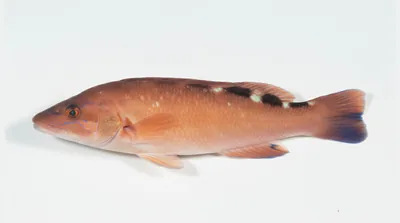
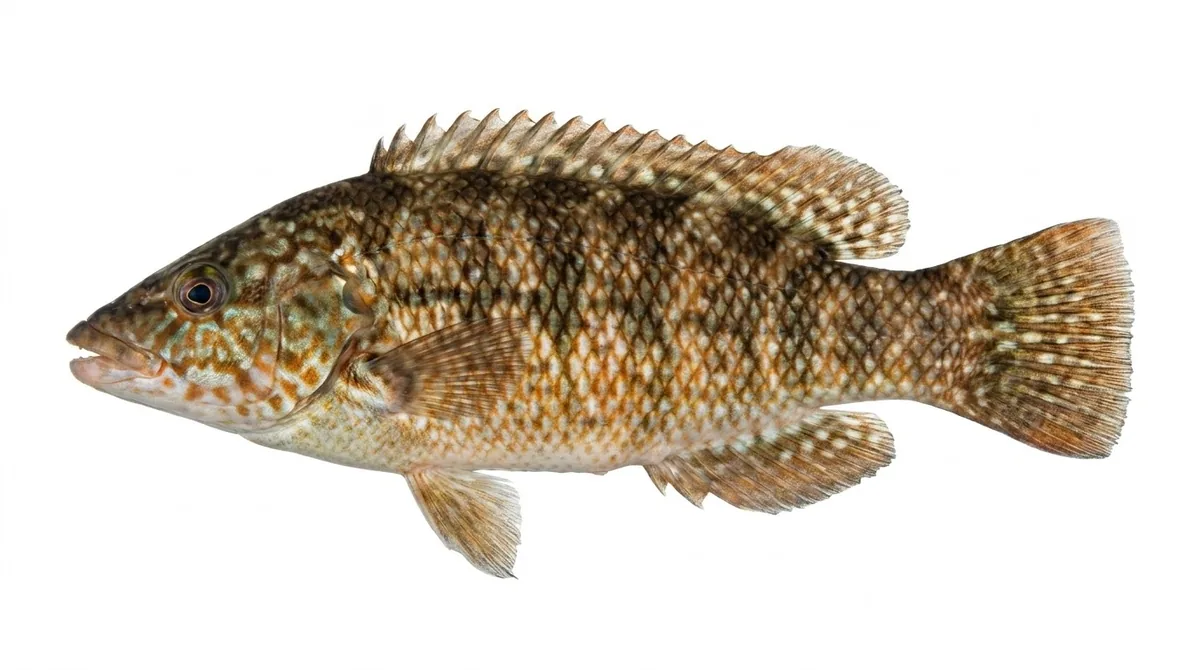
Ballan wrasse
Labrus bergylta
- Saltwater
- Least Concern
- Max length
- 66 cm
- Class
- Teleostei
- Order
- Eupercaria incertae sedis
- Family
- Labridae
- Genus
- Labrus
- Atlantic, Northeast
- Mediterranean and Black Sea
About the ballan wrasse
The ballan wrasse (Labrus bergylta) is a species of marine ray-finned fish from the family Labridae, the wrasses. It is found in the eastern Atlantic Ocean, where it inhabits rocky areas. Like many wrasse species, it is a protogynous hermaphrodite—all fish start life as females, and some dominant fish later become males. It is used as a food fish in some areas and it is also finding use as a cleaner fish in the aquaculture of Atlantic salmon (Salmo salar) in northwestern Europe.
Habitat
They can be found at depths from 1 to 50 m (3.3 to 164.0 ft) amongst rocks, seaweed and reefs. All ballan wrasses are female for their first four to 14 years before a few change into males. Large fish of the species are almost certainly male. The thick lips and sharp front teeth of the ballan wrasse are an adaptation for extracting shellfish from rocks. These are supplemented by powerful pharyngeal teeth which are placed further back in the throat and which can break up shells to access flesh inside. This species also feeds on crustaceans and their diet includes hard-shelled crabs and small lobsters. They will swim into shallower water so that they can prey on the shellfish which cling to underwater cliff faces and inshore rocks. They will also inhabit areas with good covering of kelp and other seaweeds. The male builds a nest of algae in a crevice in the rocks in which one or more females lay eggs. The male defends the nest until the eggs hatch into pelagic larvae after a week or two. The species has been recorded living for up to 34 year.
Ballan wrasse do not have stomachs.
Distribution
Ballan wrasse are native to the northeastern Atlantic Ocean from Norway to Morocco, including the islands of Madeira, the Azores and the Canary Islands. There are records from the Mediterranean Sea but these are regarded as questionable and may be misidentifications of the brown wrasse (Labrus merula).
Description from Wikipedia, available under CC BY-SA.
Where the ballan wrasse lives
Distribution data from GBIF (DOI: 10.15468/dl.8rzs8d).
Also known as
- Old wife
- Wrasse
- Durdo
- Maragota
- Vieille commune
- Grande vieille
- Labre
- Vieille
- Gefleckter Lippfisch
- Lippfisch
- Wargacz kniazik
- Kniazik
- Berggylta
- Margota
- Berggylt
- Pegasta ustnača
- Gwrac'h
- Bestenaga
- Culumbinu
- Cleiriach y Gwymon
- Durdo handi
- Viherhuulikala
- Foltos ajakoshal
- Gevlekte lipvis
- Berggylte
- Kikla
- Радужный губан
- لبروس بالاني
- لبروس بالانى
- Губань райдужний
- 貝氏隆頭魚
Where to catch ballan wrasse
- Dubrovnik Coast Croatia Coast · Dubrovnik-Neretva
- Istria Coast Croatia Coast · Istria
- Kornati Archipelago Croatia Archipelago · Šibenik-Knin
- Kvarner Gulf Croatia Gulf · Kvarner
- Neretva Delta Croatia Delta · live river data
- Pag Channel Croatia Channel · Zadar