Fishing Calendar App
Stoplight parrotfish
Sparisoma viride
- Saltwater
- Least Concern
- Max length
- 64 cm
- Class
- Teleostei
- Order
- Eupercaria incertae sedis
- Family
- Labridae
- Genus
- Sparisoma
- Atlantic, Western Central
About the stoplight parrotfish
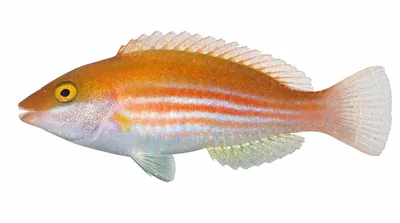
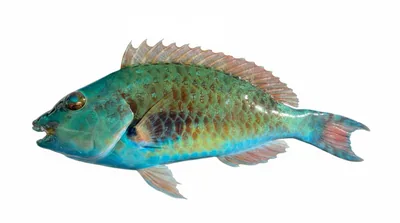
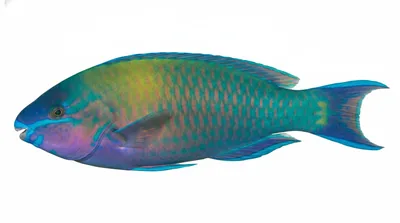
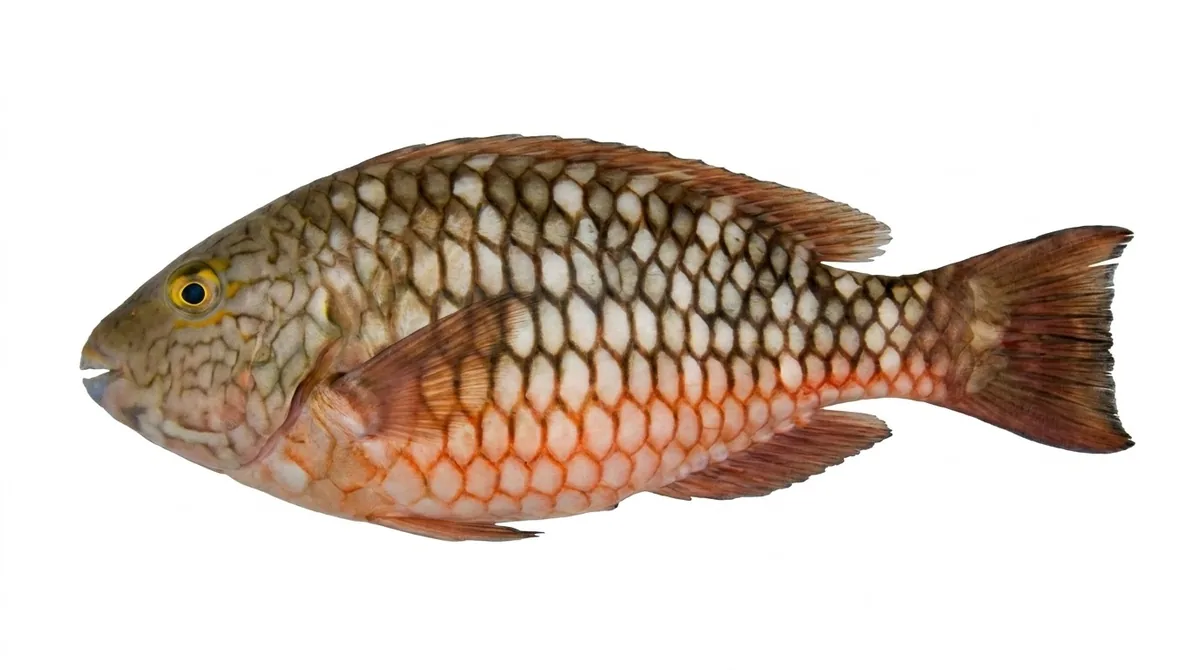
The stoplight parrotfish (Sparisoma viride) is a species of marine ray-finned fish, a parrotfish from the family Scaridae, inhabiting coral reefs in Florida, Caribbean Sea, Gulf of Mexico, Bermuda and as far south as Brazil. It mainly feeds on algae by scraping and excavating it with its teeth. Like most of its relatives, it is able to change sex.
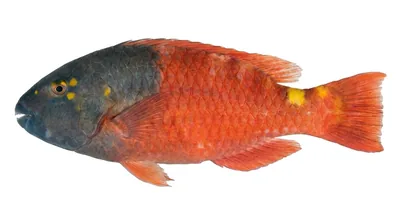
The common name, stoplight, comes from the marked yellow spot near the pectoral fin, which is clearly visible only in specimens in the terminal phase.
Habitat
The stoplight parrotfish inhabit shallow coral reefs not disturbed by humans in Florida, the Caribbean Sea, Gulf of Mexico, Bermuda and Brazil. They are only active during the day and spend most of their time foraging, swimming, or hovering. At night, they remain hidden under coral boulders. Large individuals typically spend more time swimming and spend a significant amount of time sheltering among crevices, while smaller individuals spend more time hovering. The stoplight parrotfish have a high density in areas of higher algal production. As adults, the stoplight parrotfish are site-attached with limited home ranges.
In the Florida Keys, the stoplight parrotfish were found most frequently in areas with high cover of the macroalgae Dictyota. They have also been found to select for the branching coral Porites porites, however Dictyota are an effective recruitment substrate when branching corals are not available.
Due to its abundance in the Caribbean, the stoplight parrotfish are very ecologically important there.
Behaviour
The stoplight parrotfish employs a scraping and excavating grazing mode and feeds almost exclusively on algae that are associated with dead coral substrates. They have higher grazing rates and assimilation efficiencies in areas with high-quality food.
Their preferred food types are large, sparse turfs growing on carbonate substrates that are inhibited by endolithic algae. Algae have high levels of proteins, a high energetic value, along with a high yield, making it preferable to the stoplight parrotfish. As facultative corallivores, adult fish will occasionally feed on living corals (mainly Montastrea annularis). In healthy coral reef environments, the detriment of coral-feeding by parrotfish tends to be offset by the benefits of their algal feeding. In declining coral reefs, however, corallivory by parrotfish may act synergystically with other stressors to depress coral growth and recovery. Crutose corallines are not preferred, whether or not they do or do not have algal turf.
Their foraging strategy is called "search and nip" and they spend short bouts of energy on swimming, feeding, and hovering.
Description from Wikipedia, available under CC BY-SA.
Where the stoplight parrotfish lives
Distribution data from GBIF (DOI: 10.15468/dl.8rzs8d).
Also known as
- Sparysoma szmaragdowa
- Loro brilloso
- Punapapukaijakala
- 綠鸚鯛
Where to catch stoplight parrotfish
- Cape Fear River United States River · North Carolina
- Florida Bay (Everglades) United States Bay · Florida
- Florida Keys United States Coast · Florida
- Galveston Bay United States Bay · Texas
- Lake Pontchartrain United States Lake · Louisiana
- Port Aransas United States Coast · Texas