Fishing Calendar App
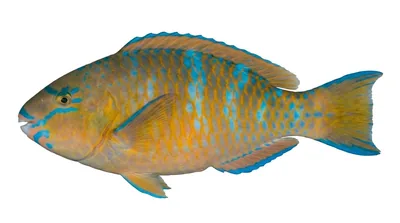
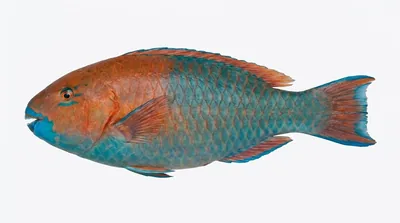
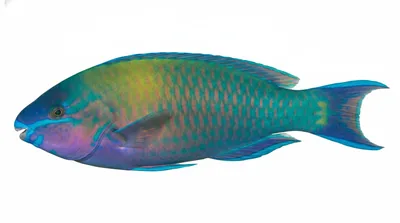
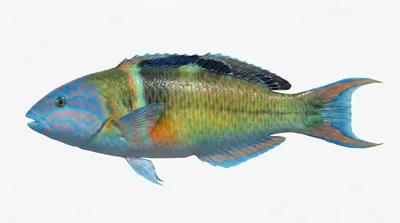
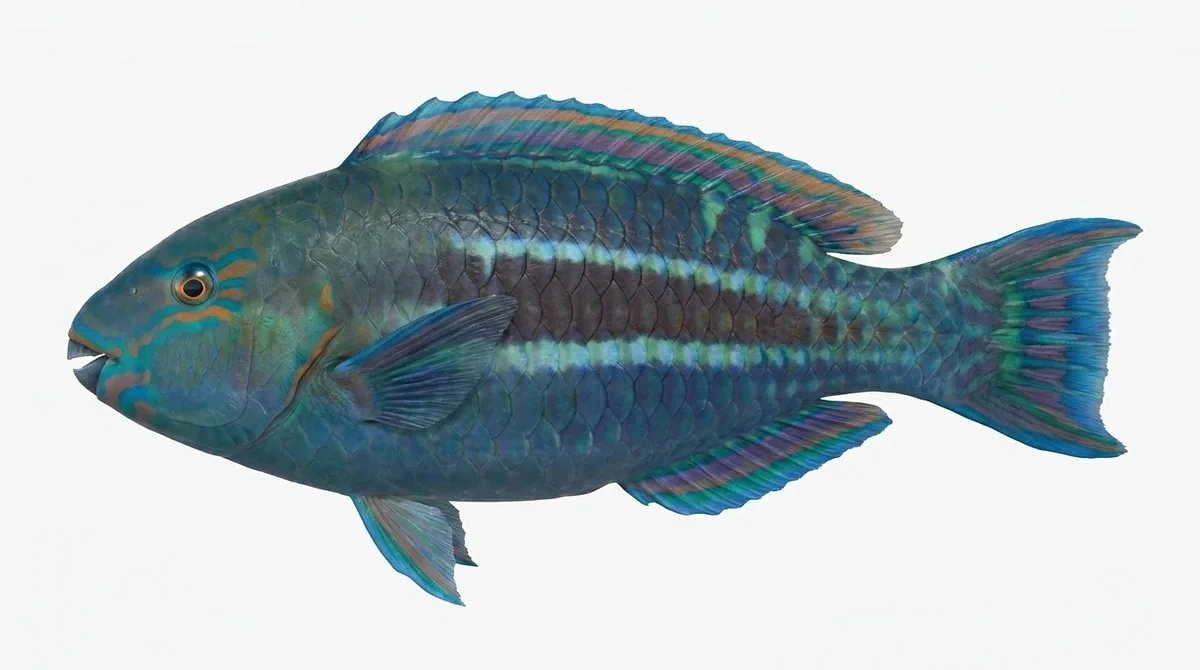
Princess parrotfish
Scarus taeniopterus
- Saltwater
- Least Concern
- Max length
- 35 cm
- Class
- Teleostei
- Order
- Eupercaria incertae sedis
- Family
- Labridae
- Genus
- Scarus
- Atlantic, Western Central
About the princess parrotfish
The princess parrotfish (Scarus taeniopterus) is a species of marine ray-finned fish, a parrotfish, in the family Scaridae. It is typically 20 to 25 centimetres (7.9 to 9.8 in) long, found in the Caribbean, South Florida, the Bahamas, and Bermuda. Its behavior, similar to other parrotfishes, is to swim about the reef and sandy patches during the day, at depths between 3 and 25 metres (9.8 and 82.0 ft), scraping algae on which it feeds.
Distribution
The family Scaridae are important in the ecosystem, supporting commercial fisheries and playing a significant role in the food chain of the coral reef. The fish scrape surfaces and excavate calcareous structures to acquire the nutrition they need. They are known for exerting top-down control on algae and when overfishing of parrotfish occurs in particular habitats, increases in the biomass of algae can be seen. When overfishing is not a concern, the parrotfish are able to graze and maintain coral reefs. Populations of the family Scaridae can be found along the Northern Great Barrier Reef, the Bahamas and the Caribbean. They prefer to graze shallow seas where coral grows under light. They prefer coral reefs but can also be found amongst seagrasses. The abundance of the species decreases with decreasing latitude. In regions where there are greater masses of predators, there is a positive correlation with the diversity of parrotfish. The increasing number of disturbances throughout the past years including coral bleaching events have influenced parrot fish assemblages. Recent research suggests that parrotfish abundance is enhanced by such disturbances because they create bare substratum where successional microbial communities can establish. It is therefore important to maintain monitoring of coral reef habitats.
Behaviour
The diet of Scarus taeniopterus consists of algae, as well as coral polyps, and they are known primarily to be herbivores. By consuming epilithic algae, the fish are able to open space for young coral settlement and growth. They play a significant role in bringing coral reefs to recovery from major disturbances. Their distinct teeth which are fused together with their beak jaws allow them to crush and grind food. Climate change has increasingly started to alter the availability of food for adult populations of Scaridae, primarily in the Caribbean region. Climate change alters ocean currents which can potentially result in the reduction of food.
Description from Wikipedia, available under CC BY-SA.
Where the princess parrotfish lives
Distribution data from GBIF (DOI: 10.15468/dl.8rzs8d).
Also known as
- Pompás papagájhal
- 帶鰭鸚嘴魚
Where to catch princess parrotfish
- Cape Fear River United States River · North Carolina
- Florida Bay (Everglades) United States Bay · Florida
- Florida Keys United States Coast · Florida
- Galveston Bay United States Bay · Texas
- Lake Pontchartrain United States Lake · Louisiana
- Port Aransas United States Coast · Texas