Fishing Calendar App
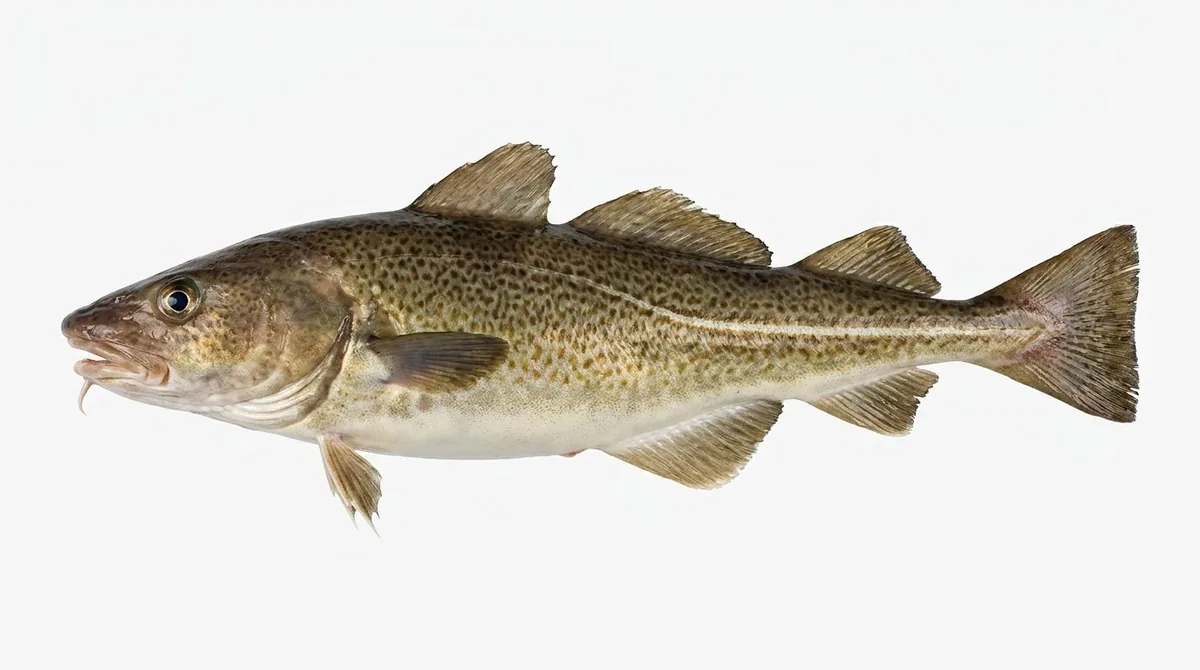
Atlantic cod
Gadus morhua
- Saltwater
- Vulnerable
- Max length
- 180 cm
- Class
- Teleostei
- Order
- Gadiformes
- Family
- Gadidae
- Genus
- Gadus
- Atlantic, Northeast
- Atlantic, Northwest
About the atlantic cod
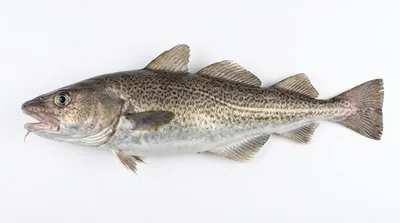
The Atlantic cod (pl.: cod; Gadus morhua) is a fish of the family Gadidae, widely consumed by humans. It is also commercially known as cod or codling.
In the western Atlantic Ocean, cod has a distribution north of Cape Hatteras, North Carolina, and around both coasts of Greenland and the Labrador Sea; in the eastern Atlantic, it is found from the Bay of Biscay north to the Arctic Ocean, including the Baltic Sea, the North Sea, Sea of the Hebrides, areas around Iceland and the Barents Sea.
Atlantic cod can live for up to 25 years and typically grow up to 100–140 cm (40–55 in), but individuals in excess of 180 cm (70 in) and 50 kg (110 lb) have been caught. They will attain sexual maturity between ages two and eight with this varying between populations and has varied over time.
Colouring is brown or green, with spots on the dorsal side, shading to silver ventrally. A stripe along its lateral line (used to detect vibrations) is clearly visible. Its habitat ranges from the coastal shoreline down to 300 m (1,000 ft) along the continental shelf.
Atlantic cod is one of the most heavily fished species. Atlantic cod was fished for a thousand years by north European fishers who followed it across the North Atlantic Ocean to North America. It supported the US and Canadian fishing economy until 1992, when the Canadian Government implemented a ban on fishing cod.
Several cod stocks collapsed in the 1990s (decline of more than 95% of maximum historical biomass) and have failed to fully recover even with the cessation of fishing. This absence of the apex predator has led to a trophic cascade in many areas. Many other cod stocks remain at risk. The Atlantic cod is labelled vulnerable on the IUCN Red List of Threatened Species, per a 1996 assessment that the IUCN notes needs updating. A 2013 assessment covering only Europe shows the Atlantic cod has rebounded in Europe, and it has been relabelled least concern.
Dry cod may be prepared as unsalted stockfish, and as cured salt cod or clipfish.
Behaviour
The diet of the Atlantic cod consists of fish such as herring, capelin (in the Eastern Atlantic Ocean), and sand eels, as well as squid, mussels, clams, tunicates, comb jellies, brittle stars, sand dollars, sea cucumbers, crustaceans, and polychaetes. Stomach sampling studies have discovered that small Atlantic cod feed primarily on crustaceans, while large Atlantic cod feed primarily on fish. In certain regions, the main food source is decapods with fish as a complementary food item in the diet. Wild Atlantic cod throughout the North Sea depend, to a large extent, on commercial fish species also used in fisheries, such as Atlantic mackerel, haddock, whiting, Atlantic herring, European plaice, and common sole, making fishery manipulation of cod significantly easier. Ultimately, food selection by cod is affected by the food item size relative to their own size. However, providing for size, cod do exhibit food preference and are not simply driven by availability.
Atlantic cod practice some cannibalism. In the southern North Sea, 1–2% (by weight) of stomach contents for cod larger than 10 cm (4 in) consisted of juvenile cod. In the northern North Sea, cannibalism was higher, at 10%. Other reports of cannibalism have estimated as high as 56% of the diet consists of juvenile cod.
When hatched, cod larvae are altricial, entirely dependent on a yolk sac for sustenance until mouth opening at ~24 degree days. The stomach generally develops at around 240 degree days. Before this point the intestine is the main point of food digestion using pancreatic enzymes such as trypsin.
Description from Wikipedia, available under CC BY-SA.
Where the atlantic cod lives
Distribution data from GBIF (DOI: 10.15468/dl.8rzs8d).
Also known as
- Cod
- Codling
- Morue de l'Atlantique
- Cabillaud
- Cabillaud de l'Atlantique
- Morue
- Morue franche
- Morus
- Morue commune
- Atlantischer Kabeljau
- Dorsch
- Kabeljau
- Torsk
- Baccalà
- Merluzzo
- Merluzzo bianco
- Trska
- Bacalao
- Bacalao común
- Bacalao del Atlántico
- Dorsz atlantycki
- Dorsz
- Watlusz
- Bacalhau-do-atlântico
- Bacalhau
- Skrei
- Atlantiese kabeljou
- Atlantik treskası
- Ikan tongkol Atlantik
- Moru
- Bacallà
- Treska obecná
- Penfras
- Moruo
- Tursk
- Bakailao
- Turska
- Kabbeljau
- Bacallau
- Atlanti tőkehal
- Bakalau atlantik
- Atlantshafsþorskur
- Bakanyado
- Kabbeljauw
- Molí
- Menkė
- Menca
- Dörsk
- Kabeljauw
- Tr'osku
- Cabio
- Dorski
- Atlantik morinası
- Bakalar
- 대서양대구
- Атлантическая треска
- タイセイヨウダラ
- بقلة أطلسية
- قد اطلسى
- Траска атлантычная
- Траска
- Треска
- Μπακαλιάρος του Ατλαντικού
- روغنماهی اطلسی
- בקלה אטלנטית
- ვირთევზა
- Сетінек
- Атлански бакалар
- Бакалар
- Тәрәч
- Тріска атлантична
- Cá tuyết Đại Tây Dương
- 大西洋鳕
- 大西洋鱈
Where to catch atlantic cod
- Limfjord Denmark Fjord · North Jutland
- Skagen Coast Denmark Coast · North Jutland
- Helsinki Archipelago Finland Archipelago · Uusimaa
- Rügen (Baltic Coast) Germany Coast · Mecklenburg-Vorpommern
- Sylt (Wadden Sea) Germany Coast · Schleswig-Holstein
- Dingle Bay Ireland Bay · Munster