Fishing Calendar App
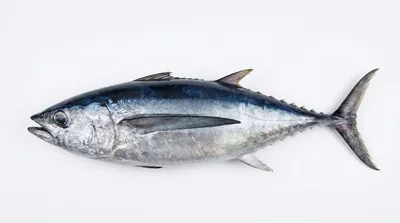
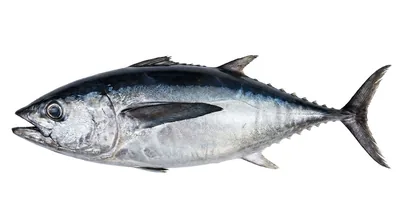
Atlantic bluefin tuna
Thunnus thynnus
- Saltwater
- Least Concern
- Max length
- 384 cm
- Class
- Teleostei
- Order
- Scombriformes
- Family
- Scombridae
- Genus
- Thunnus
- Atlantic, Northeast
- Atlantic, Northwest
- Atlantic, Western Central
- Indian Ocean, Western
- Mediterranean and Black Sea
- Pacific, Eastern Central
About the atlantic bluefin tuna
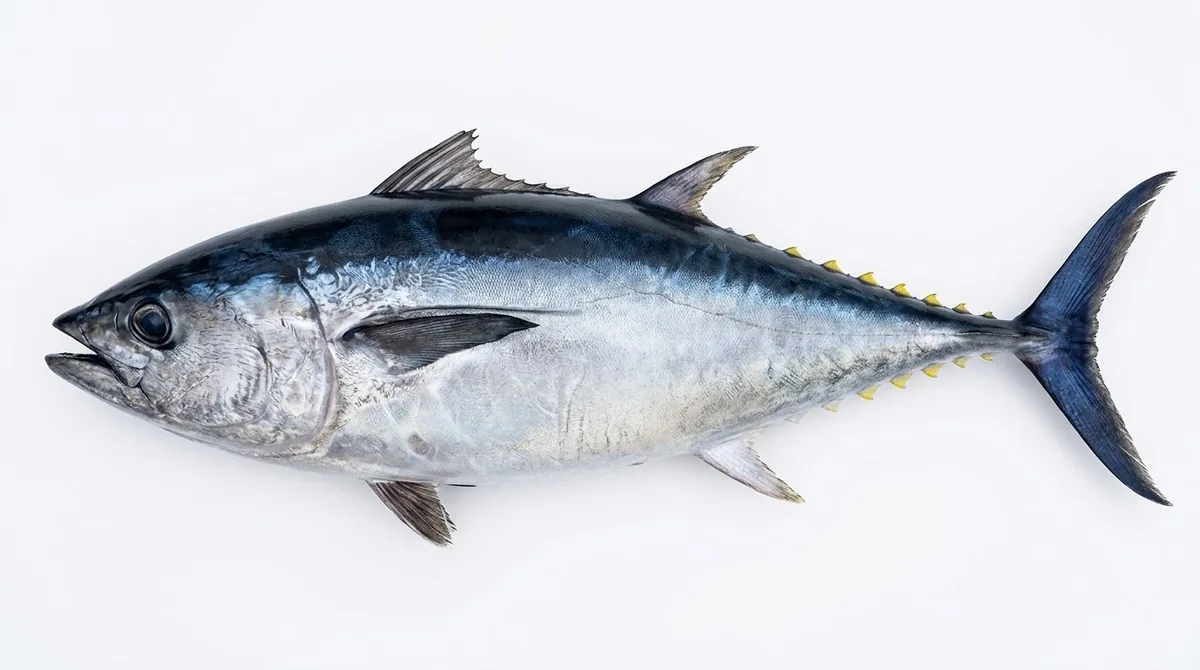
The Atlantic bluefin tuna (Thunnus thynnus) is a species of tuna in the family Scombridae. It is variously known as the northern bluefin tuna (mainly when including Pacific bluefin as a subspecies), giant bluefin tuna (for individuals exceeding 150 kg [330 lb]), and formerly as the tunny.
Atlantic bluefins are native to both the western and eastern Atlantic Ocean, as well as the Mediterranean Sea. They have become regionally extinct in the Black Sea. The Atlantic bluefin tuna is a close relative of one of the other two bluefin tuna species, the Pacific bluefin tuna. The southern bluefin tuna, on the other hand, is more closely related to other tuna species such as yellowfin tuna and bigeye tuna, and the similarities between the southern and northern species are due to convergent evolution.
Atlantic bluefin tuna have been recorded at up to 680 kg (1,500 lb) in weight, and rival the black marlin, blue marlin, and swordfish as one of the largest Percomorpha (though these species are vastly outweighed by the enormous Molidae species). Throughout recorded history, the Atlantic bluefin tuna has been highly prized as a food fish. Besides their commercial value as food, the great size, speed, and power they display as predators has attracted the admiration of fishermen, writers, and scientists.
The Atlantic bluefin tuna has been the foundation of one of the world's most lucrative commercial fisheries. Medium-sized and large individuals are heavily targeted for the Japanese raw-fish market, where all bluefin species are highly prized for sushi and sashimi.
This commercial importance has led to severe overfishing. The International Commission for the Conservation of Atlantic Tunas affirmed in October 2009 that Atlantic bluefin tuna stocks had declined dramatically over the last 40 years, by 72% in the Eastern Atlantic, and by 82% in the Western Atlantic. On 16 October 2009, Monaco formally recommended endangered Atlantic bluefin tuna for an Appendix I CITES listing and international trade ban. In early 2010, European officials, led by the French ecology minister, increased pressure to ban the commercial fishing of bluefin tuna internationally. However, a UN proposal to protect the species from international trade was voted down (68 against, 20 for, 30 abstaining). Since then, enforcement of regional fishing quotas has led to some increases in population. As of 4 September 2021 the Atlantic bluefin tuna was moved from the category of Endangered to the category of Least Concern on the IUCN Red List of Threatened Species. However, many regional populations are still severely depleted, including western stocks which spawn in the Gulf of Mexico.
Most bluefins are captured commercially by professional fishermen using longlines, purse seines, assorted hook-and-line gear, heavy rods and reels, and harpoons. Recreationally, bluefins have been one of the most important big-game species sought by sports fishermen since the 1930s, particularly in the United States, but also in Canada, Spain, France, England, and Italy.
Habitat
Bluefins dive to depths of 1,006 m (3,301 ft). The Atlantic bluefin tuna typically hunts small fish such as sardines, herring, mackerel, and eels, and invertebrates such as squid and crustaceans. They exhibit opportunistic hunting in schools of fish organized by size. Their white skeletal muscle allows for large contractions which aids burst swimming to ensure prey capture.
The species is host to over 70 parasites although none have been yet described as causing harm to the species. The tetraphyllidean tapeworm Pelichnibothrium speciosum is one parasite of the species. As the tapeworm's definite host is the blue shark, which does not generally seem to feed on tuna, the Atlantic bluefin tuna likely is a dead-end host for P. speciosum.
Atlantic bluefin tuna are eaten by a wide variety of predators. When they are newly hatched, they are eaten by other fishes that specialize in eating plankton, as well as by other plankton organisms like jellyfish. They may even be eaten by their own, with some populations of larvae demonstrating cannibalism. At that life stage, their numbers are reduced dramatically. Therefore, adult bluefin tuna spawn at specific locations and time of the moon cycle to minimize predation on their offspring. Those that survive face a steady increase in the size of their predators. Adult Atlantic Bluefin are not eaten by anything other than the very largest billfishes, toothed whales, and some open ocean shark species.
Description from Wikipedia, available under CC BY-SA.
Where the atlantic bluefin tuna lives
Distribution data from GBIF (DOI: 10.15468/dl.8rzs8d).
Also known as
- Bluefin tuna
- Blue-fin tunny
- Horse mackerel
- Northern bluefin tuna
- Tuna
- Tunny
- Thon rouge
- Thon rouge de l'Atlantique
- Thon rouge du nord
- Roter Thun
- Atlantischer blauflossen Thun
- Blauflossenthunfisch
- Großer Thun
- Nordatlantischer Thun
- Roter Thunfisch
- Thunfisch
- Tonfisk
- Blåfenad tonfisk
- Röd tonfisk
- Tonno
- Tonno rosso
- Modroplavuti tun
- Atún
- Atún aleta azul
- Atún común
- Atún de aleta azul del Atlántico
- Atún rojo
- Tuńczyk pospolity
- Orkinos
- Tunczyk
- Tuńczyk błękitnopłetwy
- Tuńczyk czerwony
- Tuńczyk niebieskopłetwy
- Tuńczyk północny
- Tuńczyk zwykły
- Atum
- Atum-rabilho
- Rabio
- Makrellstørje
- Tunfisk
- Blouvin-tuna
- Toun ruz
- Tonyina
- Tuňák obecný
- Tiwna
- Atlantisk tun
- Harilik tuun
- Hegalabur
- Tonnikala
- Tuna karakarawa
- Atún vermello
- Tunj
- Kékúszójú tonhal
- Blauwvintonijn
- Ton roșu
- Tuniak modroplutvý
- Tuna sirip biru atlantik
- 대서양참다랑어
- Обыкновенный тунец
- タイセイヨウクロマグロ
- تن أزرق الزعنفة
- تن ازرق الزعنفه
- Червен тон
- Ερυθρός τόνος
- تن بالهآبی شمالی
- טונה כחולת-סנפיר אטלנטית
- თინუსი
- Атлантска туна плавоперка
- ปลาทูน่าครีบน้ำเงินเหนือ
- Тунець блакитний
- Cá ngừ vây xanh Đại Tây Dương
- 北方蓝鳍金枪鱼
Where to catch atlantic bluefin tuna
- Dubrovnik Coast Croatia Coast · Dubrovnik-Neretva
- Istria Coast Croatia Coast · Istria
- Kornati Archipelago Croatia Archipelago · Šibenik-Knin
- Kvarner Gulf Croatia Gulf · Kvarner
- Neretva Delta Croatia Delta · live river data
- Pag Channel Croatia Channel · Zadar