Fishing Calendar App
Albacore
Thunnus alalunga
- Saltwater
- Least Concern
- Max length
- 140 cm
- Class
- Teleostei
- Order
- Scombriformes
- Family
- Scombridae
- Genus
- Thunnus
- Atlantic, Eastern Central
- Atlantic, Northeast
- Atlantic, Northwest
- Atlantic, Southwest
- Atlantic, Western Central
- Indian Ocean, Western
- Mediterranean and Black Sea
- Pacific, Eastern Central
- Pacific, Southwest
About the albacore
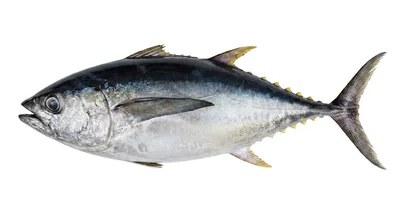
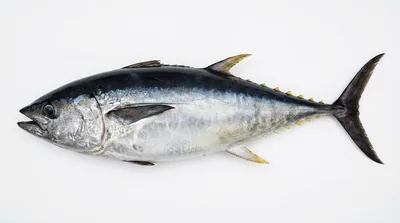
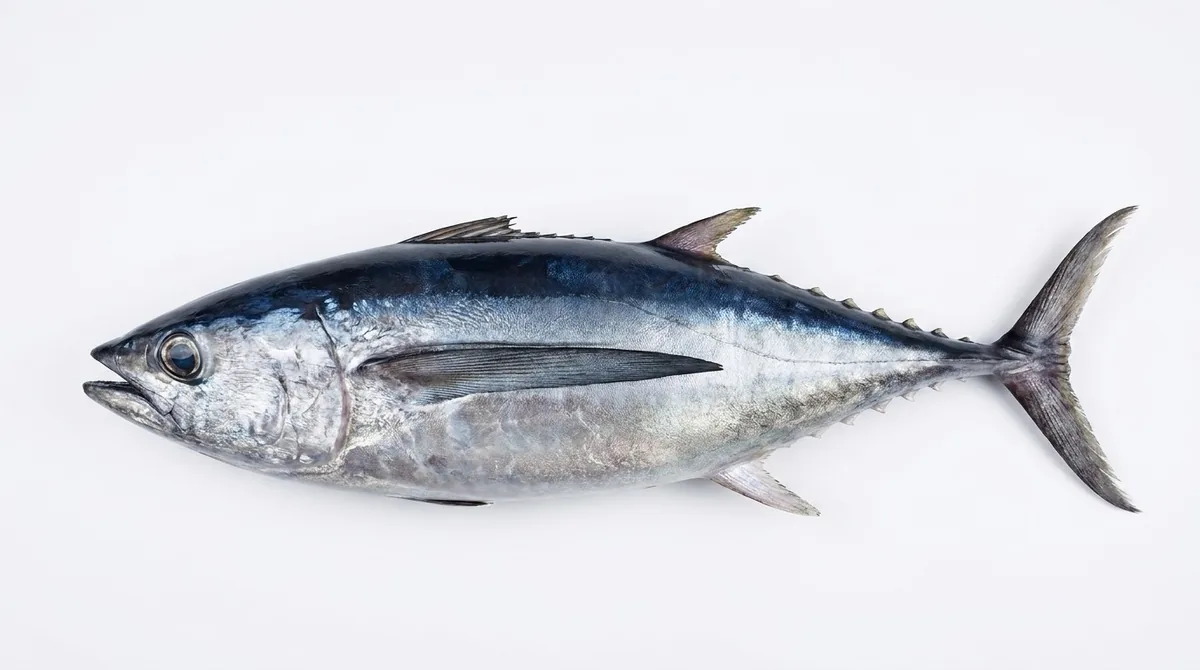
The albacore (Thunnus alalunga), known also as the albicore or longfin tuna, is a species of tuna of the order Scombriformes. It lives in temperate and tropical waters across the globe in the epipelagic and mesopelagic zones. There are six distinct stocks known globally in the Atlantic, Pacific, and Indian oceans, as well as in the Mediterranean Sea. The albacore has an elongate, fusiform body with a conical snout, large eyes, and remarkably long pectoral fins. Its body is a deep blue dorsally and shades of silvery white ventrally. Individuals can reach up to 1.4 m (4 ft 7 in) in length.
Albacore are pelagic predators, eating a wide variety of foods, including fish, crustaceans, and cephalopods. They are unique among tuna in that their primary food-source is cephalopods, with fish making up a much smaller portion of their diet. Reproduction usually occurs from November to February and is oviparous. An adult female can release over two million eggs in a single cycle. Fry (juvenile fish) generally stay near where they were spawned for about a year before moving on. Albacore form schools based on their stage in the life cycle, but also combine with other tuna like the skipjack tuna, yellowfin tuna, and bluefin tuna. Schools of grown albacore are highly migratory.
The albacore is a very economically important fish and is a target of commercial and recreational fisheries. It was originally the basis for the United States tuna canning industry and is no less important today, making up significant percentages of the gross domestic products of various Pacific nations. Previously listed as
"Near Threatened" by the International Union for Conservation of Nature (IUCN) because of the threat of overfishing, the species moved to the category "Least Concern" in 2021. Several stocks were in significant decline but are now recovering thanks to the enforcement of regional fishing quotas.
Distribution
The albacore has a cosmopolitan distribution in tropical and temperate waters across the globe and in every ocean as well as the Mediterranean Sea.
Its latitudinal range extends from 59°N to 46°S. Its temperature range is 10–25 °C (50–77 °F). Its depth range is 0–600 m (0–1,969 ft; 0–328 fathoms) in the epipelagic and mesopelagic zones. It is most often found in surface waters 15.6–19.4 °C (60.1–66.9 °F) in temperature, though larger individuals can be found in deeper waters 13.5–25.2 °C (56.3–77.4 °F). It can survive at temperatures as low as 9.5 °C (49.1 °F) for short periods of time. It favors areas where warm and cool water mix.
Behaviour
Albacore tuna are pelagic (open-sea) predators. Their diets vary little from season to season. Unlike other tuna that eat primarily fish, for example the bigeye and yellowfin tuna, the albacore's main source of food is cephalopods. The most abundant cephalopod in its diet is Heteroteuthis dispar, a tiny deep-water squid found in the Mediterranean Sea and Atlantic Ocean. Another cephalopod species preyed upon is Berryteuthis anonychus. Other food sources of the albacore include fish (including Cololabis saira, Engraulis japonicus, and Engraulis mordax), crustaceans, and gelatinous organisms. Not much is known about the food pattern of the albacore, however, mostly because it dives over 400 m (1,300 ft) underwater when searching for food, and tagging and tracking has been unsuccessful thus far.
Description from Wikipedia, available under CC BY-SA.
Where the albacore lives
Distribution data from GBIF (DOI: 10.15468/dl.8rzs8d).
Also known as
- Long-fin tuna
- Long-fin tunny
- Alalunga brauner
- Beli tun
- Albacora
- Atún blanco
- Germon
- Germon atlantique
- Thon blanc
- Weißer Thun
- Weisser Thunfisch
- Tuńczyk biały
- Långfenad tonfisk
- Albakore
- Voador
- Albakor
- Sisék
- Albakoor
- Toun gwenn
- Bacora
- Barilis
- Tuňák křídlatý
- Tiwna Asgell-Hir
- Hegaluze
- Valkotonnikala
- Bonito do norte
- Dugoperajna tuna
- Albakora
- Hvíti túnfiskur
- Witte tonijn
- Uzunkanat orkinos
- Panit
- Длиннопёрый тунец
- 날개다랑어
- ビンナガ
- تونة بيضاء
- تونه بيضاء
- Uzunüzgəc tunes
- Дългопера риба тон
- ماسی توونەی باڵدرێژ
- Μακρυπτέρυγος τόνος
- تن بالهدراز
- אלבקור
- Альбакор
- Албакор
- குளிர்கடல் வெள்ளைச் சூரை
- ปลาทูน่าครีบยาว
- 长鳍金枪鱼
Where to catch albacore
- Dubrovnik Coast Croatia Coast · Dubrovnik-Neretva
- Istria Coast Croatia Coast · Istria
- Kornati Archipelago Croatia Archipelago · Šibenik-Knin
- Kvarner Gulf Croatia Gulf · Kvarner
- Neretva Delta Croatia Delta · live river data
- Pag Channel Croatia Channel · Zadar