Fishing Calendar App
Trout cod
Maccullochella macquariensis
- Freshwater
- Vulnerable
- Max length
- 30 cm
- Class
- Teleostei
- Order
- Centrarchiformes
- Family
- Percichthyidae
- Genus
- Maccullochella
- Oceania - Inland waters
About the trout cod
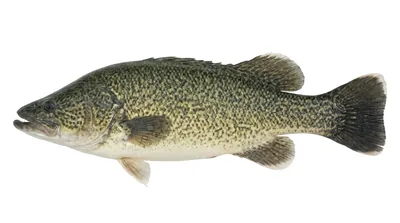
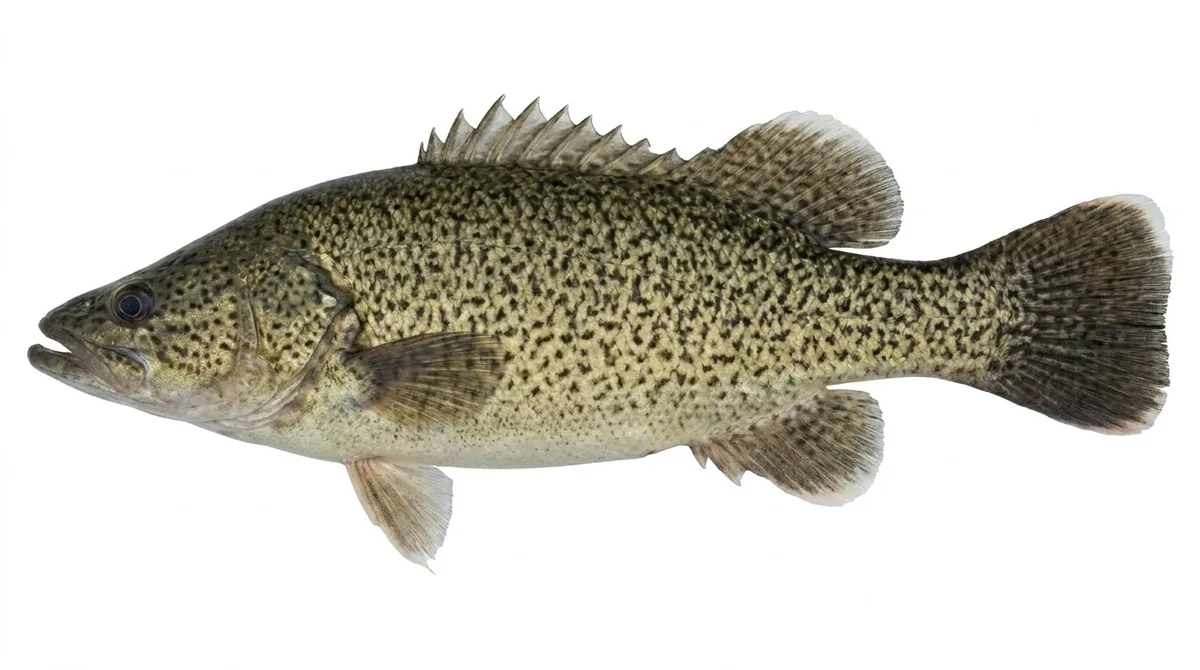
The trout cod (Maccullochella macquariensis) or bluenose cod, is a large predatory freshwater fish of the genus Maccullochella and the family Percichthyidae, closely related to the Murray cod. It was originally widespread in the south-east corner of the Murray-Darling river system in Australia, but is now an endangered species.
In the 19th and early 20th centuries, when trout cod were widely recognised as a separate species by commercial fishermen, recreational fishermen, riverside residents and fisheries scientists, they were generally known as bluenose cod or simply bluenose, particularly in Victoria. In some parts of New South Wales however they were also known as trout cod, and this common name was adopted when the species status of the fish was finally confirmed by genetic studies in the early 1970s. This choice of official common name was perhaps unfortunate; it has been suggested that bluenose cod is a more appropriate name as the name trout cod causes confusion amongst the Australian public. (Trout cod are an Australian native freshwater fish; they are not a hybrid between Murray cod and introduced trout species.) Trout cod are a listed species on a number of different registers including Endangered under the New South Wales Fisheries Management Act 1994, the Australian Commonwealth's Environment Protection and Biodiversity Conservation Act 1999, the Australian Capital Territory's Nature Conservation Act 1980 and by the World Conservation Union (IUCN). They are also listed as Threatened under the Victorian Flora and Fauna Guarantee Act 1998.
Fossils of genus Maccullochella can be found from Miocene epoch (from about 23.03 to 5.332 million years ago) to recent age, while the species Maccullochella macquariensis is present from Lower Pliocene (3.6–5.3 mya) to recent age.
Habitat
Although there is/was a very substantial overlap in range, trout cod are essentially a more specialised upland sister species to Murray cod. Therefore, the trout cod's main habitats were the larger upland rivers and creeks, which they usually co-inhabited with Macquarie perch and one or both of the blackfish species. Historical research is confirming a primarily upland distribution for trout cod; recent governmental literature lacking such historical research and suggesting trout cod are primarily a lowland fish species must be considered inaccurate.
Division into specialist upland and primarily lowland species is a relatively common phenomena in native fish genera of the Murray-Darling and East Coast systems with other notable pairs shown in the following table: Trout cod are often found close to cover and in faster currents and in cooler waters than Murray cod. Their diet is essentially the same as Murray cod with adjustment made for size, eating mainly other fishes, freshwater mussels, crustaceans, aquatic insects, small mammals and water fowl. However, recent anecdotal evidence suggests terrestrial insects made up a significant proportion of the trout cod's diet in upland rivers and streams.
In the surviving Murray River population trout cod tend to stick to areas of deep water near banks, around snags, rocks or other large structure. However, historical accounts of trout cod in upland river habitats stated that trout cod were often found in shallow riffles and runs. Generally speaking, radio-tracked trout cod in the surviving Murray River population have small home ranges and may be a species which does not move away from their original base, except during the breeding season when they follow a common trend in Murray-Darling fish of migrating upstream prior to spawning. It seems likely that trout cod follow a similar pattern to Murray cod and return post spawning to their original location.
Behaviour
Trout cod are carnivores and feed on other fish, crustaceans (such as crayfish, yabbies and freshwater shrimp) as well as aquatic and terrestrial insects. Larvae are pelagic fish and eat zooplankton.
Description from Wikipedia, available under CC BY-SA.
Where the trout cod lives
Distribution data from GBIF (DOI: 10.15468/dl.8rzs8d).
Also known as
- Jätteflodabborre
- 송어대구
- روغنماهی بینیکبود
- 突吻麥鱈鱸