Fishing Calendar App
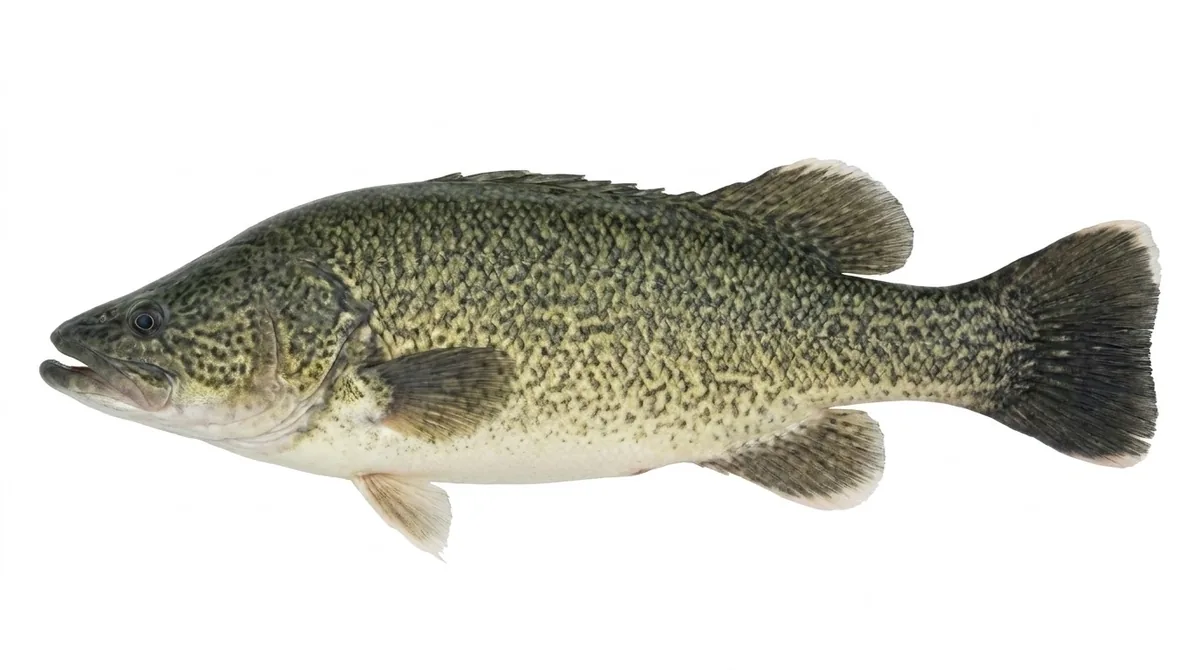
Murray cod
Maccullochella peelii
- Freshwater
- Vulnerable
- Max length
- 180 cm
- Class
- Teleostei
- Order
- Centrarchiformes
- Family
- Percichthyidae
- Genus
- Maccullochella
- Oceania - Inland waters
About the murray cod
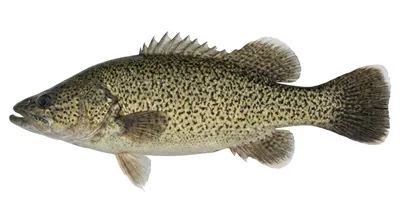
The Murray cod (Maccullochella peelii) is a large Australian predatory freshwater fish of the genus Maccullochella in the family Percichthyidae. Although the species is called a cod in the vernacular, it is not related to the Northern Hemisphere marine cod (Gadus) species. The Murray cod is an important part of Australia's vertebrate wildlife—as an apex predator in the Murray-Darling River system—and also significant in Australia's human culture. The Murray cod is the largest exclusively freshwater fish in Australia, and one of the largest in the world. Other common names for Murray cod include cod, greenfish, goodoo, Mary River cod, Murray perch, ponde, pondi and Queensland freshwater cod.
The scientific name of Murray cod derives from an early Australian fish researcher Allan Riverstone McCulloch and the river from which the explorer Major Mitchell first scientifically described the species, the Peel River. This was for a number of years changed to M. peelii peelii to differentiate Murray cod from Mary River cod, which were designated as a subspecies of Murray cod. However, as of 2010, Mary River cod have been raised to full species status (M. mariensis), thus Murray cod have reverted simply to M. peelii.
Murray cod populations have declined severely since European colonisation of Australia due to a number of causes, including severe overfishing, river regulation, and habitat degradation and are now a listed threatened species. However, they once inhabited almost the entire Murray-Darling basin, Australia's largest river system, in very great numbers.
A long-lived fish, adult Murray cod are carnivorous and eat crustaceans (shrimp, yabbies, crays), fish and freshwater mussels. The species exhibits a high degree of parental care for their eggs, which are spawned in the spring and are generally laid in hollow logs or on other hard surfaces. Murray cod are a popular angling target and aquaculture species. Often available through the aquarium trade, they are also a popular aquarium species in Australia.
Habitat
Hundreds of thousands, perhaps more than a million, submerged timber "snags", mainly river red gum, have been removed from lowland reaches of the Murray-Darling basin over the past 150 years. The removal of such a vast number of snags has had devastating impacts on Murray cod and river ecosystems. Snags are critical habitats and spawning sites for Murray cod. Snags are also critical for the functioning of lowland river ecosystems — as one of the few hard substrates in lowland river channels composed of fine silts snags are crucial sites for biofilm growth, macroinvertebrate grazing and general in-stream productivity.
Vegetation clearing and cattle trampling river banks create severe siltation, which fill in pools, degrade river ecosystems and make rivers and streams uninhabitable for Murray cod. This is exacerbated by removal of riparian (riverbank) vegetation which causes siltation and degrades river ecosystems in many ways.
Distribution
The Murray cod is named after the Murray River, part of the Murray-Darling basin in eastern Australia, Australia's largest and most important river system, draining around 14% of the continent. The Murray cod's natural range encompasses virtually the whole Murray-Darling basin, particularly the lowland areas, and extending well into upland areas — to about 700 m (2,300 ft) elevation in the southern half of the basin and to about 1,000 m (3,300 ft) in the northern half of the basin. Consequently, Murray cod inhabit a remarkably wide variety of habitats, from cool, clear, fast-flowing streams with riffle-and-pool structure and rocky substrates in upland areas to large, slow flowing, meandering rivers in the extensive alluvial lowland reaches of the Murray-Darling basin.
Murray cod have died out in many of their upland habitats, particularly in the southern Murray-Darling basin, due to a combination of overfishing, siltation, dams and weirs blocking migration, pollution from arsenic-based sheep-dips, mining, and in some cases, introduced trout stockings, which causes competition between juvenile Murray cod and introduced trout species.
Murray cod have also been introduced into other drainage basins, such as the Cooper Basin in Queensland.
Behaviour
The Murray cod is the apex aquatic predator in the rivers of the Murray-Darling basin, and will eat almost anything smaller than itself, including finned fishes such as smaller Murray cod, golden perch, silver perch, bony bream, eel-tailed catfish, western carp gudgeon, and Australian smelt and introduced fish such as carp, goldfish, and redfin (English perch), as well as crustaceans such as yabbies, freshwater shrimp, and Murray crayfish. Fish are eaten when abundant by mature Murray cod in lowland river and impoundment habitats but crustaceans tend to dominate the diet under natural conditions, and freshwater mussels were commonly eaten in the past. Murray cod have also been known to eat ducks, cormorants, freshwater turtles, water dragons, snakes, mice, and frogs. The observations of the recreational fishermen fishing for Murray cod with surface lures at night reveal that the popular description of Murray cod as a demersal ambush predator is only partially correct. While this behaviour is typical during the day, at night, Murray cod are active pelagic predators, venturing into shallow waters and frequently taking prey from the surface.
Description from Wikipedia, available under CC BY-SA.
Where the murray cod lives
Distribution data from GBIF (DOI: 10.15468/dl.8rzs8d).
Also known as
- Morue de Murray
- Murraytorsk
- Jättibassi
- Trosc Murray
- Maccullochella peelii peelii
- 머리대구
- マーレーコッド
- قد موراي
- موراى القد
- سبزماهی
- מקולוצלה פלי
- Cá tuyết Murray
- 墨瑞鱈