Fishing Calendar App
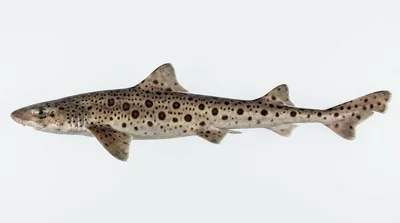
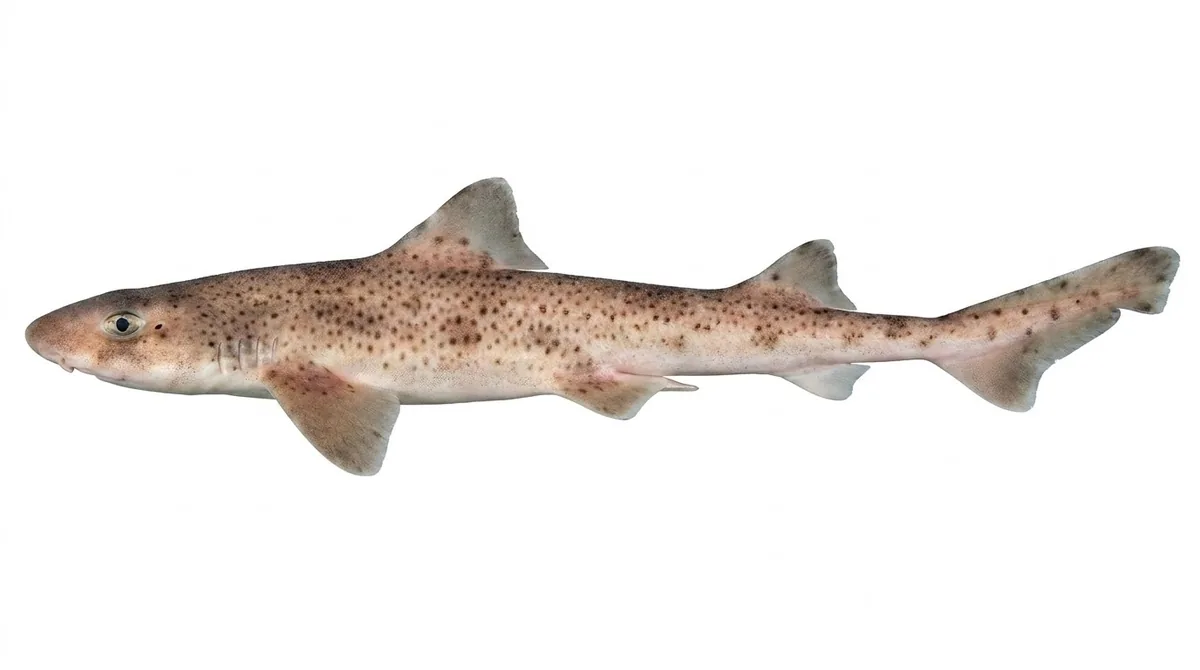
Small-spotted catshark
Scyliorhinus canicula
- Saltwater
- Least Concern
- Max length
- 100 cm
- Class
- Elasmobranchii
- Order
- Carcharhiniformes
- Family
- Scyliorhinidae
- Genus
- Scyliorhinus
- Atlantic, Northeast
- Mediterranean and Black Sea
About the small-spotted catshark
The small-spotted catshark (Scyliorhinus canicula), also known as the sandy dogfish, lesser-spotted dogfish, rough-hound or morgay (in Scotland and Cornwall), is a catshark of the family Scyliorhinidae. It is found on the continental shelves and the uppermost continental slopes off the coasts of Norway and the British Isles south to Senegal and in the Mediterranean, between latitudes 63° N and 12° N. It can grow up to a length of 1 m (3 ft 3 in), and it can weigh more than 2 kg (4.4 lb). It is found primarily over sandy, gravelly, or muddy bottoms from depths of a few metres down to 400 m (1,300 ft). S. canicula is one of the most abundant elasmobranchs in the northeast Atlantic and Mediterranean Sea. The majority of the populations are stable in most areas.
Behaviour
S. canicula is an opportunistic species, preying on a wide variety of organisms. Decapod crustaceans, molluscs and fishes are their main prey, but echinoderms, polychaetes, sipunculids and tunicates may also be eaten. Dietary preferences change with age; younger animals prefer small crustaceans, while older animals prefer hermit crabs and molluscs. Feeding intensity is highest during the summer due to the higher availability of prey life. Diet composition varies with body size.
There are no significant differences in feeding habits between male and female S. canicula.
Juveniles of S. canicula feed by anchoring the prey item on the dermal denticles near their tail, and tearing bite-sized pieces off with rapid head and jaw movements, a behaviour known as "scale rasping". Use of dermal denticles to assist in feeding was first documented in this species.
Description from Wikipedia, available under CC BY-SA.
Where the small-spotted catshark lives
Distribution data from GBIF (DOI: 10.15468/dl.8rzs8d).
Also known as
- Dogfish
- Lesser spotted dogfish
- Rough hound
- Sandy dogfish
- Petite rousette
- Petite roussette
- Kleingefleckter Katzenhai
- Kleiner Katzenhai
- Småfläckig rödhaj
- Gattucio
- Navadna morska mačka
- Gato
- Pintarroja
- Rekinek psi
- Rekinek
- Pataroxa
- Småflekket rødhai
- Touilh-traezh
- Gat de mar
- Gattucciu
- Máčka skvrnitá
- Småplettet rødhaj
- Harilik koerhai
- Katuarrain
- Pistepunahai
- Catsúileach ballach
- Biorach
- Melgacho
- Kispettyes macskacápa
- Hondshaai
- Žralok škvrnitý
- Mačka bljedica
- Обыкновенная кошачья акула
- Акула кошачья мелкопятнистая
- Кошачья акула
- ハナカケトラザメ
- Дребнопетниста акула
- גלדן כלבי
- نکی ٹھمکنی بلی شارک
- Котяча акула дрібноплямиста
Where to catch small-spotted catshark
- Dubrovnik Coast Croatia Coast · Dubrovnik-Neretva
- Istria Coast Croatia Coast · Istria
- Kornati Archipelago Croatia Archipelago · Šibenik-Knin
- Kvarner Gulf Croatia Gulf · Kvarner
- Neretva Delta Croatia Delta · live river data
- Pag Channel Croatia Channel · Zadar