Fishing Calendar App
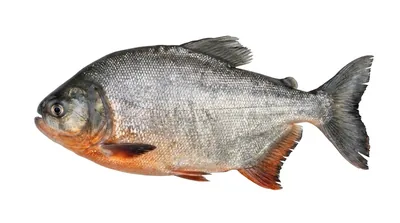
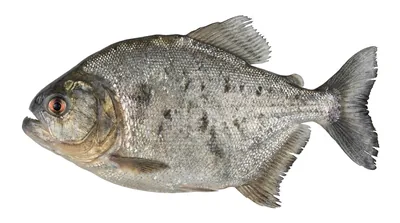
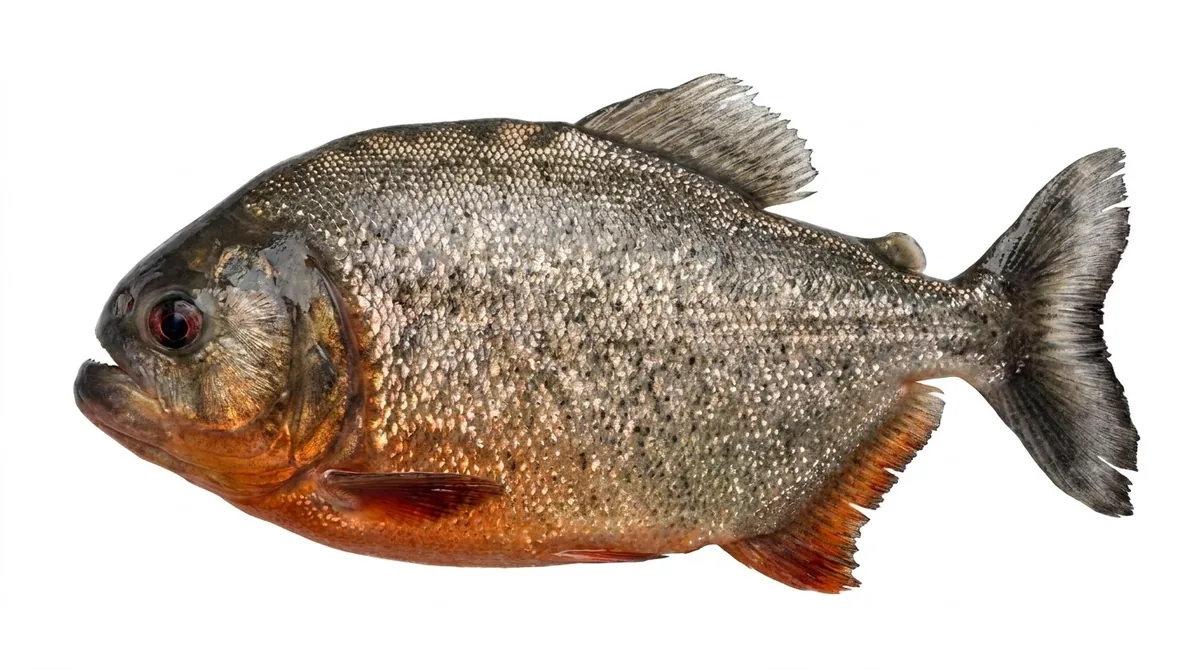
Red-bellied piranha
Pygocentrus nattereri
- Freshwater
- Least Concern
- Max length
- 50 cm
- Class
- Teleostei
- Order
- Characiformes
- Family
- Serrasalmidae
- Genus
- Pygocentrus
- North America - Inland waters
- South America - Inland waters
About the red-bellied piranha
The red-bellied piranha, also known as the red piranha (Pygocentrus nattereri), is a species of freshwater ray-finned fish belonging to the family Serrasalmidae, which includes the pacus, piranhas and related fishes. The red-bellied piranha occurs in South America, found in the Amazon, Paraguay, Paraná and Essequibo basins, as well as coastal rivers of northeastern Brazil. This fish is locally abundant in its freshwater habitat.
They are carnivorous foragers and feed on insects, worms, crustaceans and fish. As opportunistic feeders, they will also take advantage of edible aquatic plants as well as any fruits, nuts or seeds that may fall into the waters. They are not a migratory species but do travel to seek out conditions conducive to breeding and spawning during periods of increased rainfall. Red-bellied piranhas often travel in shoals as a predatory defense but rarely exhibit group hunting behavior. Acoustic communication is common and is sometimes exhibited along with aggressive behaviors. They are a popular aquarium fish.
Distribution
The red-bellied piranha is distributed widely throughout the South American continent and is found in the Neotropical rivers of Argentina, Brazil, Bolivia, Colombia, Ecuador, Guyana, Paraguay, Peru, Uruguay, and Venezuela. They live in the warm freshwater drainages of several major rivers including the Amazon, Paraguay, Paraná, and Essequibo, as well as numerous smaller systems.
They can live in waters that are between 15 and 35 °C (59–95 °F) but are able to survive temperatures as low as 10 °C (50 °F) for a period. They are mainly found in whitewater, but have also been recorded in blackwater and clearwater. The red-bellied piranha live in major rivers, streams, lakes (such as oxbows and artificial lakes formed by dams), floodplains, and flooded forests. They were introduced to China, probably by the aquarium trade. First detected in 1990 they have since become invasive in the country.
No piranha is found in the United States including this one. In 1998 a single specimen was found in a lake in a golf course in Simi Valley, Ventura County, California. California and Washington prohibit P. nattereri and encourage surveillance to prevent its introduction.
Behaviour
Pygocentrus nattereri encompasses a larger geographic area than any other piranha species, covering much of the Neotropical region. When red-bellied piranhas are introduced to other parts of the American continent, there are usually negative consequences for the local fish fauna, partially due to its generally aggressive behavior. This aggressive behavior is sometimes marked by the acoustic sounds they produce.
The red-bellied piranha is not a migratory species but does search for conditions conducive to reproduction during seasons of increased rainfall. Red-bellied piranhas are omnivores and primarily foragers. They feed on insects, fish, plants, and organic debris. Bechara et al., 1996 finds P. nattereri is almost immune to gas bubble disease which is devastating to almost all fish in the same environment.
Description from Wikipedia, available under CC BY-SA.
Where the red-bellied piranha lives
Distribution data from GBIF (DOI: 10.15468/dl.8rzs8d).
Also known as
- Red piranha
- Rdeča piranja
- Natterers Sägesalmler
- Pirania natterera
- Rödbukspiraya
- Piranha-vermelha
- Coicoa
- Rødbukpiraya
- Piranya roja
- Piraňa červená
- Punapiraaja
- Punapiraija
- Vöröshasú pirája
- Roodbuikpiranha
- Kutu paña
- Kırmızı karınlı pirana
- Обыкновенная пиранья
- 붉은배피라냐
- ピラニア・ナッテリー
- بيرانا حمراء البطن
- سمكة البيرانا ذات بطن احمر
- Червена пираня
- লাল পিরানহা
- پیرانای شکمقرمز
- פיראנה אדומת בטן
- Պիրանյա սովորական
- ആവോലിമറ്റാൻ
- ปลาปิรันยาแดง
- Піранья звичайна
- Piranha bụng đỏ
- 納氏臀點脂鯉
Where to catch red-bellied piranha
- Arkansas River at Salida United States River · live river data
- Cape Fear River United States River · North Carolina
- Green River (Flaming Gorge) United States River · live river data
- Kenai River United States River · Alaska
- Kentucky Lake United States Reservoir · Kentucky-Tennessee
- Lake Champlain United States Lake · live river data