Fishing Calendar App
Ocean sunfish
Mola mola
- Saltwater
- Vulnerable
- Max length
- 300 cm
- Class
- Teleostei
- Order
- Tetraodontiformes
- Family
- Molidae
- Genus
- Mola
- Atlantic, Eastern Central
- Atlantic, Northeast
- Atlantic, Northwest
- Atlantic, Southeast
- Atlantic, Southwest
- Atlantic, Western Central
- Indian Ocean, Eastern
- Indian Ocean, Western
- Mediterranean and Black Sea
- Pacific, Eastern Central
- Pacific, Northeast
- Pacific, Northwest
- Pacific, Southwest
About the ocean sunfish
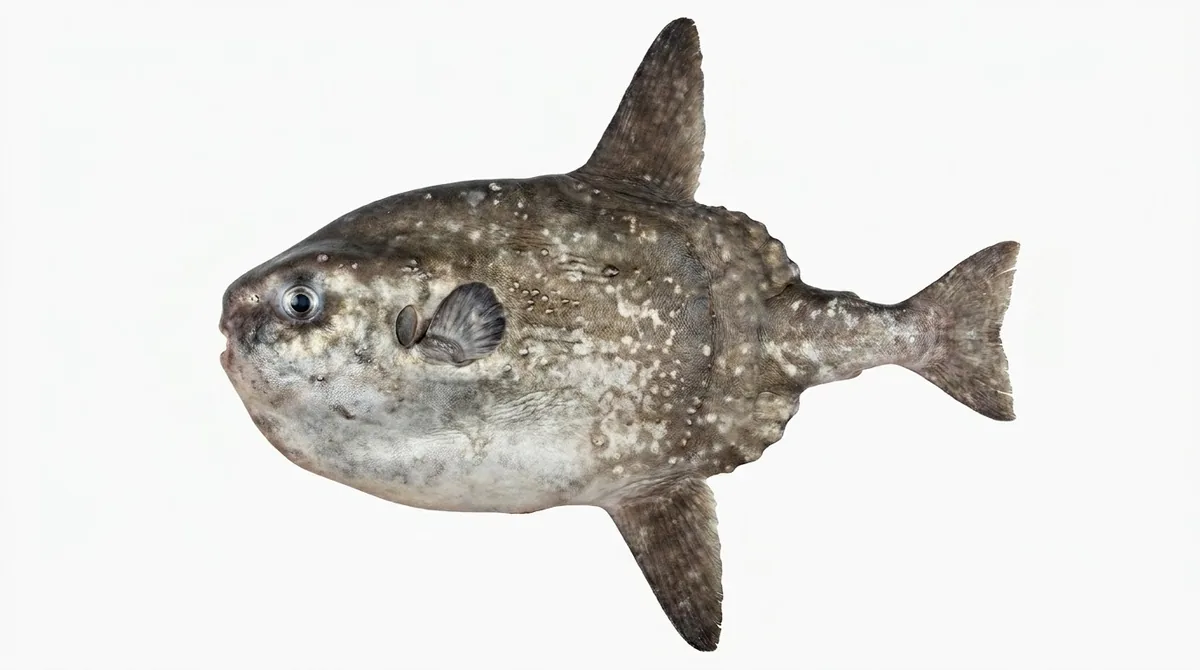
The ocean sunfish (Mola mola), also known as the common mola, is one of the largest bony fish in the world. It is the type species of the genus Mola, and one of five extant species in the family Molidae. It was formerly misidentified as the heaviest bony fish, which is actually a different and closely related species of sunfish, Mola alexandrini. Adults typically weigh between 247 and 1,000 kg (545 and 2,205 lb). It is native to tropical and temperate waters around the world. It resembles a fish head without a tail, and its main body is flattened laterally. Sunfish can be as tall as they are long (175 cm, or about 6 ft) when their dorsal and ventral fins are extended.
Many areas of sunfish biology remain poorly understood, including mating practices and spawning locations, early life stages, movement and migration patterns, population structure and status, diet and trophic ecology, and post-release survival rates, and various research efforts are underway, including aerial surveys of populations, satellite surveillance using pop-off satellite tags, genetic analysis of tissue samples, and collection of amateur sighting data.
Adult sunfish are vulnerable to few natural predators, but sea lions, killer whales, and sharks will consume them. Sunfish are considered a delicacy in some parts of the world, including Japan, Korea, and Taiwan. In the European Union, regulations ban the sale of fish and fishery products derived from the family Molidae. Sunfish are frequently caught in gillnets.
Distribution
Ocean sunfish are native to the temperate and tropical waters of every ocean in the world. Mola genotypes appear to vary widely between the Atlantic and Pacific, but genetic differences between individuals in the Northern and Southern hemispheres are minimal.
Although early research suggested sunfish moved around mainly by drifting with ocean currents (which has resulted in the sunfish sometimes being characterized as a megaplankton), individuals have been recorded swimming 26 km (16 mi) in a day at a cruising speed of 3.2 km/h (1.7 kn). Contrary to the perception that the fish spend much of their time basking at the surface, M. mola adults actually spend a large portion of their lives actively hunting at depths greater than 200 m (660 ft), occupying both the epipelagic and mesopelagic zones. Sunfish are most often found in water warmer than 10 °C (50 °F); prolonged periods spent in water at temperatures of 12 °C (54 °F) or lower can lead to disorientation and eventual death. Surface basking behavior, in which a sunfish swims on its side, presenting its largest profile to the sun, may be a method of "thermally recharging" following dives into deeper, colder water in order to feed. Sightings of the fish in colder waters outside of its usual habitat, such as those southwest of England, may be evidence of increasing marine temperatures.
Sunfish are typically observed in solitary environments, though infrequently they may be encountered in pairs.
Behaviour
The diet of the ocean sunfish was formerly thought to consist primarily of various jellyfish and other gelatinous zooplankton, such as ctenophores, salps, and medusae. However, genetic analysis reveals that sunfish are actually generalist predators that consume mostly small fish (such as flounder), fish (eel) larvae, squid, other molluscs, crustaceans, and other soft-bodied invertebrates, with jellyfish and salps making up only around 15% of the diet. Occasionally, they will ingest eel grass. This range of food items indicates that the sunfish feeds at many levels, from the surface to deep water, and occasionally down to the seafloor in some areas.
Description from Wikipedia, available under CC BY-SA.
Where the ocean sunfish lives
Distribution data from GBIF (DOI: 10.15468/dl.8rzs8d).
Also known as
- Common sunfish
- Giant sunfish
- Sunfish
- Common mola
- Mola
- Môle
- Mole commun
- Poisson-lune
- Mondfisch
- Samogłów
- Klumpfisk
- Peixe-lua
- Månefisk
- Morski mesec
- Sonvis
- Bot
- Pesciu tondu
- Měsíčník svítivý
- Pysgodyn Haul
- Kuukala
- Atalo
- Möhkäkala
- Iasc gréine
- Peixe roda
- Veliki bucanj
- Holdhal
- Tunglfiskur
- Paprastoji mėnulžuvė
- Mēnesszivs
- Trondromasoandro
- Maanvis
- Pește-Lună oceanic
- Bucanj veliki
- Mesačník svietivý
- hikuy
- kala Mola Mola
- Güneş balığı
- Cá thái dương
- Molao
- Обыкновенная луна-рыба
- Рыба-голова
- Рыба-солнце
- 개복치
- マンボウ
- سمكة شمس المحيط
- سمكه شمس المحيط
- Okean günəş balığı
- Риба луна
- মহাসাগরীয় গোলদেহী সূর্যমাছ
- Φεγγαρόψαρο
- خورشیدماهی اقیانوسی
- דג שמש מגובשש
- महासागरीय सूर्यमछली
- Айбалық
- ഓഷൻ സൺഫിഷ്
- साधा मोला
- Łóóʼnteeltsoh
- Велики буцањ
- பெருங்கடல் கதிரவமீன்
- ปลาแสงอาทิตย์
- Риба-місяць
- 翻車魚
Where to catch ocean sunfish
- Dubrovnik Coast Croatia Coast · Dubrovnik-Neretva
- Istria Coast Croatia Coast · Istria
- Kornati Archipelago Croatia Archipelago · Šibenik-Knin
- Kvarner Gulf Croatia Gulf · Kvarner
- Neretva Delta Croatia Delta · live river data
- Pag Channel Croatia Channel · Zadar